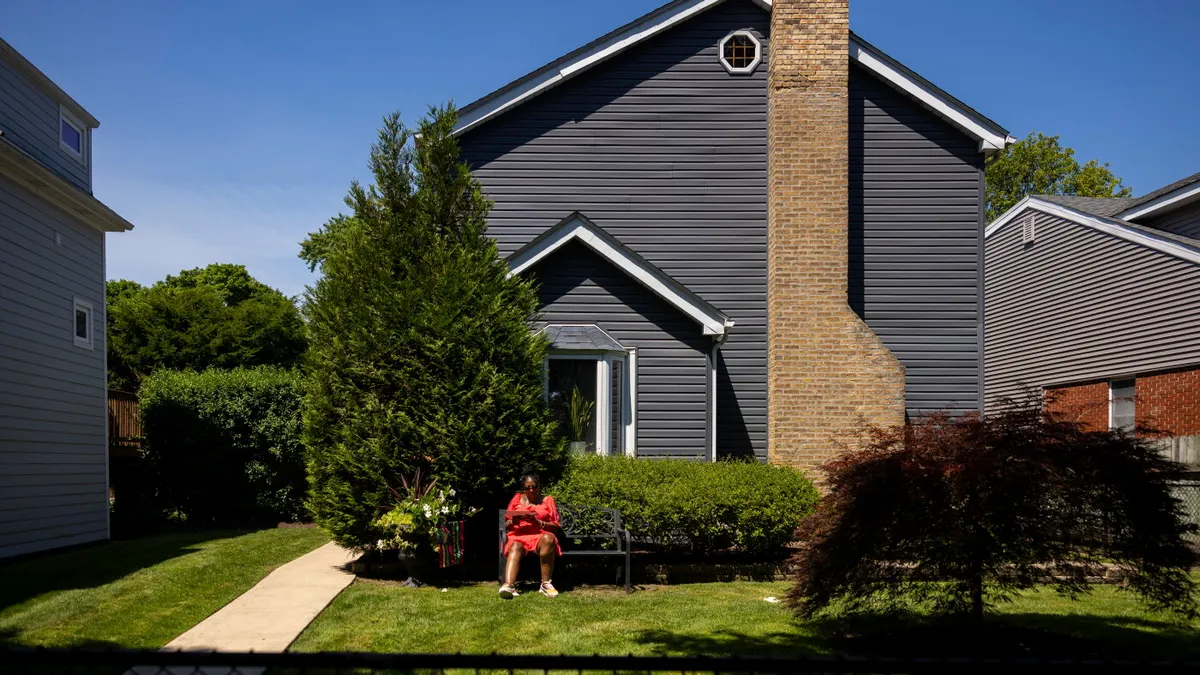
Allie Zemtseff grew up in the 1960s, watching her Black mother repeatedly turned away from apartments in white neighborhoods. So, when the Trump administration — via the Justice Department — accused Evanston, Illinois, of racial discrimination, Zemtseff was probably more than a little surprised.
Evanston's alleged offense? Creating the U.S.'s first reparations program to compensate Black residents for decades of historical housing segregation. Zemtseff herself received an apology and a $25,000 grant, which she promptly used to renovate her kitchen. Since 2021, over 300 people have received these grants, injecting new energy into the reparations movement nationwide.
The Irony Isn't Lost on Everyone
The Justice Department announced in June it would join a lawsuit filed by a conservative group called Judicial Watch. Their claim: Evanston's plan is racially discriminatory because only Black people qualify. Yes, a program designed to address historical racial discrimination is being challenged for... racial discrimination.
We're a new kind of news feed.
Regular news is designed to drain you. We're a non-profit built to restore you. Every story we publish is scored for impact, progress, and hope.
Start Your News DetoxAlvin Tillery, a professor at Northwestern University, called it "the most important civil rights story that no one has heard of." He believes expecting white people to receive the same benefits when trying to fix harms done to people of color is, to put it mildly, missing the point.
Harmeet Dhillon, the Justice Department's civil rights chief, argued that "simply handing out money based on race... is not the answer." She labeled it "race discrimination, pure and simple," citing the Constitution's equal protection clause, which prohibits government discrimination based on race. The legal argument hinges on whether addressing past discrimination with race-specific remedies constitutes new discrimination.
How a City Took on History
The seed for Evanston's program was planted in 2019 by then-city councilmember Robin Rue Simmons. She noticed the Black population in the city's 5th Ward shrinking, tracing it back to a 1921 zoning law that funneled Black residents into a single neighborhood. For decades, local banks then refused mortgages there, effectively kneecapping wealth building for an entire community.
Rue Simmons realized that "targeted redress" was needed to counter the targeted harm. A city-commissioned report confirmed that Evanston's own policies were largely to blame for the segregation. The City Council then did something truly rare: they apologized. And committed $20 million from cannabis sales and real estate transfer taxes to fund those $25,000 payments.
To qualify, applicants had to be Black and prove they or an ancestor lived in Evanston between 1919 and 1969 — the peak of housing segregation. The goal, Rue Simmons explained, is to "build wealth" and help Black families stay in Evanston, a city many were systematically excluded from for generations.
The Fight Ahead
Laurice Bell, who runs the Shorefront Legacy Center, saw countless people digging through their family histories for proof of residency during the application period. But Michael Bekesha, the attorney for Judicial Watch, argues this is precisely the problem: the program doesn't require proof of individual discrimination, only residency and race. The six non-Black plaintiffs in the lawsuit claim they would have qualified "but for the color of their skin."
Evanston Mayor Daniel Biss pushed back, stating the program aims to undo the consequences of racial discrimination. He points to "deliberate decisions" that inflated property values for white residents while deflating them for Black residents, creating a lasting wealth gap.
Reparations experts worry the Trump administration's challenge could undermine all similar efforts. But Kimberly Holmes-Ross's family offers a glimpse of the program's impact. Her mother found closing documents from their 1960s home, bought on a high-interest contract because banks denied them a mortgage. Holmes-Ross used her grant to renovate her mother's house; her son is using his to create an apartment in her basement, allowing him to stay in Evanston.
Evanston leaders plan to continue payments, lawsuit or not. Rue Simmons encourages other cities to proceed carefully but believes this challenge has only "emboldened" and "strengthened" their resolve. Because sometimes, the fight for what's right is just getting started.