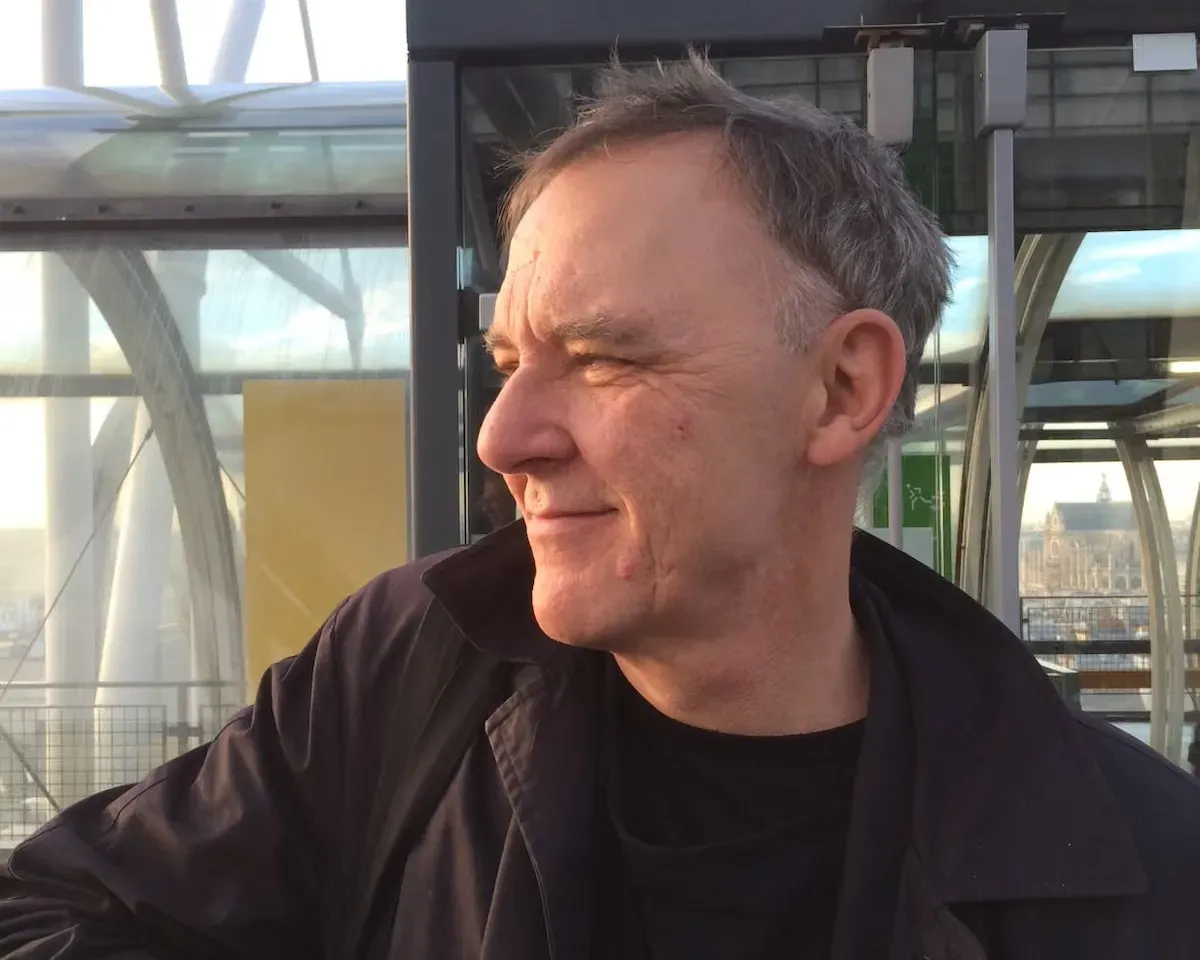
Adrian Searle is leaving his post as the Guardian's chief art critic at the end of March, closing a 30-year chapter that fundamentally shaped how Britain sees contemporary art. His final piece—a reflection on three decades of looking, thinking, and writing—appears April 1. He'll keep contributing occasionally, but the daily grind of reviews and deadlines is over.
Searle arrived at the Guardian in 1996 as a former painter, which mattered. He didn't come to art criticism as an outsider theorizing from a distance. He'd made work himself, knew the studio, understood what it cost to make something that didn't work. That sensibility—part insider, part witness—became his signature.
When the Young British Artists exploded across London in the 1990s, Searle was there early, writing about Steve McQueen, Gillian Wearing, and Chris Ofili when they were still finding their footing. He had an eye for artists before the market did: Peter Doig, Marlene Dumas, Isaac Julien, Philippe Parreno. He championed them in print, and those pieces became part of the historical record of how we recognized genius.
We're a new kind of news feed.
Regular news is designed to drain you. We're a non-profit built to restore you. Every story we publish is scored for impact, progress, and hope.
Start Your News DetoxA career beyond the byline
His influence extended beyond weekly reviews. He sat on the Turner Prize jury in 2004. He organized major exhibitions at the Hayward Gallery, the Serpentine, the Reina Sofía in Madrid. He was a tastemaker and a curator and a critic—roles that rarely separate cleanly in someone who actually understands the work.
In a statement, Katharine Viner, the Guardian's editor-in-chief, described his reviews as "perceptive, insightful, and often funny." That last word matters. Searle could be sharp without being cruel, could find humor in the absurd without dismissing the earnest. He looked at art "with incredible care, even tenderness," Viner said—noticing the details that make a piece sing or collapse.
Searchle himself called the three decades "an exhilarating ride" through seismic cultural and political shifts. But he's not done with writing. He wants fewer deadlines, more space, the freedom to follow curiosity without the weekly clock. At a certain point, that's not stepping back—it's stepping into something different.
Jonathan Jones will continue covering major exhibitions, including May's Venice Biennale. Charlotte Jansen, Eddy Frankel, Chloë Ashby, and newcomer Ben Eastham round out the roster. The Guardian's art coverage doesn't end. It just shifts, the way any vital thing does when its architects step aside.