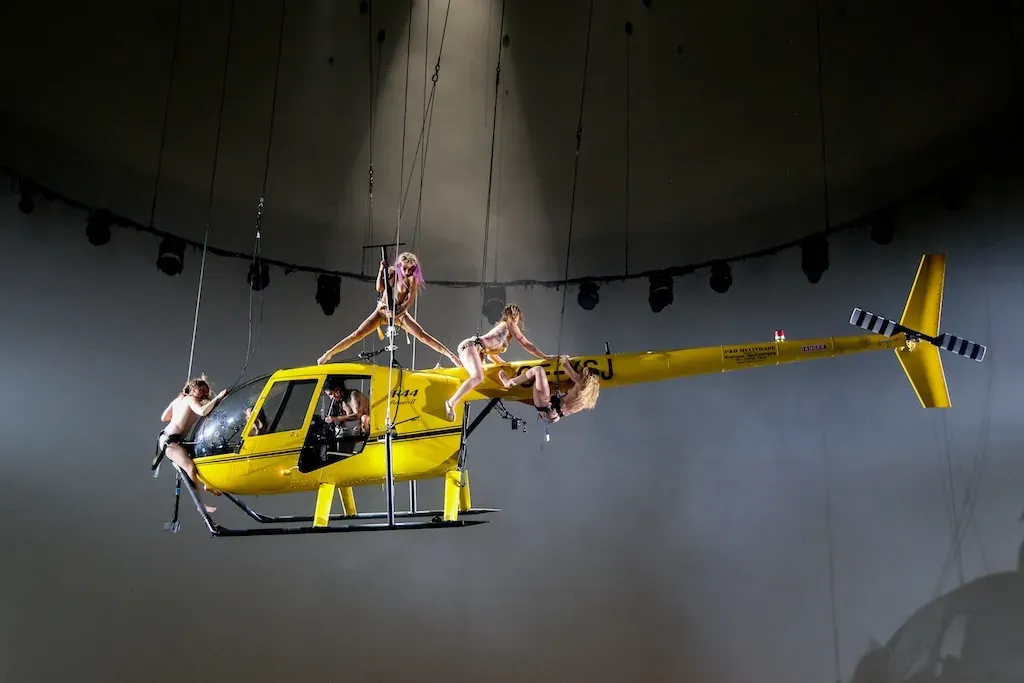
Florentina Holzinger has spent the last decade filling European opera houses and theaters with motorbikes, helicopters, and performances that push the human body to its limits. She's won major awards, been selected four years running for Berlin's Theatertreffen, and held a residency at the Volksbühne. But until now, she'd never had gallery representation.
That changes this year. Thaddaeus Ropac, one of Europe's most influential gallerists, has announced he'll represent Holzinger—a shift that matters for both of them. For her, it opens a new context for work that has always questioned where art belongs and who gets to be on which stage. For Ropac, whose program has traditionally centered painters and sculptors, it signals something larger: the lines between performance and visual art have become genuinely porous.
Seaworld Venice
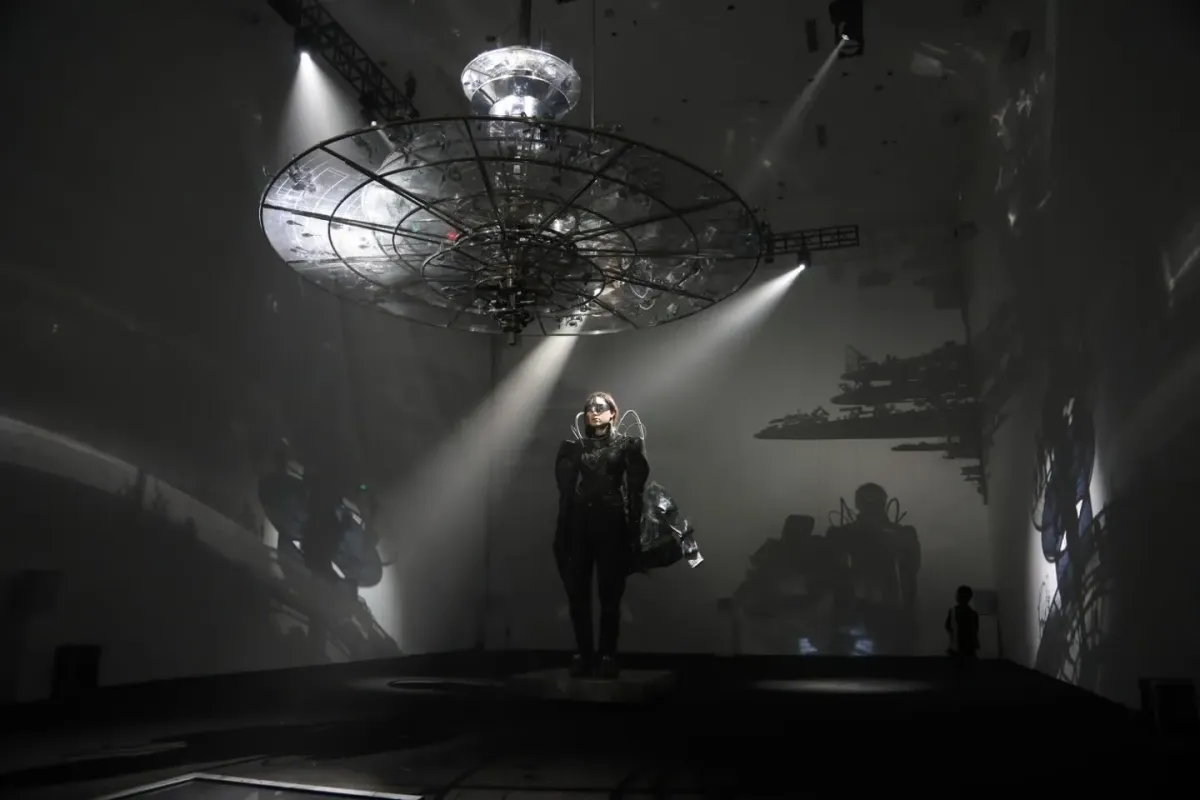
The timing is deliberate. Holzinger is representing Austria at the 61st Venice Biennale later this year with a project called Seaworld Venice. The work takes the Austrian Pavilion as its starting point and expands across the city through performances on water, in the air, and on land. It's built on her long fascination with water as both material and metaphor—a way to think about rising sea levels, waste systems, and the human body as both agent and casualty in a damaged ecosystem.
We're a new kind of news feed.
Regular news is designed to drain you. We're a non-profit built to restore you. Every story we publish is scored for impact, progress, and hope.
Start Your News DetoxCurator Nora-Swantje Almes describes the pavilion as "an organism of sorts: part underwater theme park, part sewage plant, part sacred site." The work moves between spectacle and ritual, between what looks like ballet with motorbikes and performers suspended from hooks. Almes has called the imagery something she'd "never seen before"—which matters because it suggests Holzinger's practice doesn't fit neatly into existing categories. That's partly the point. "My work thrives on navigating or surfing between genres," Holzinger has said. "It looks for different contexts to exist within and explores questions of who belongs in which space, who belongs on which stage and who belongs in which gallery."
Why Gallery Representation Changes Things
Performance artists traditionally operate outside the commercial art market, relying on public funding, festivals, and institutional support. Gallery representation offers a different structure: a way to place objects, documentation, and relics into collections, and to support production at a larger scale. Ropac's first gallery presentation of Holzinger's work is planned for 2027, after Venice has done its work.
The announcement's timing feels strategic because it is. Representing a nation at Venice guarantees global attention. Seaworld Venice promises the kind of imagery that travels—that becomes photographs, videos, stories that move far beyond the pavilion itself. Holzinger's work is built for headlines and for institutional credibility, with a visual language that can translate from stage to exhibition space. For Ropac, the partnership signals confidence that performance is now a central force in contemporary art, not a peripheral one. For Holzinger, it means her questions about belonging, bodies, and spectacle will now play out in both theaters and white cubes.
Venice, a city defined by water and spectacle, becomes her proving ground. The gallery world is watching.