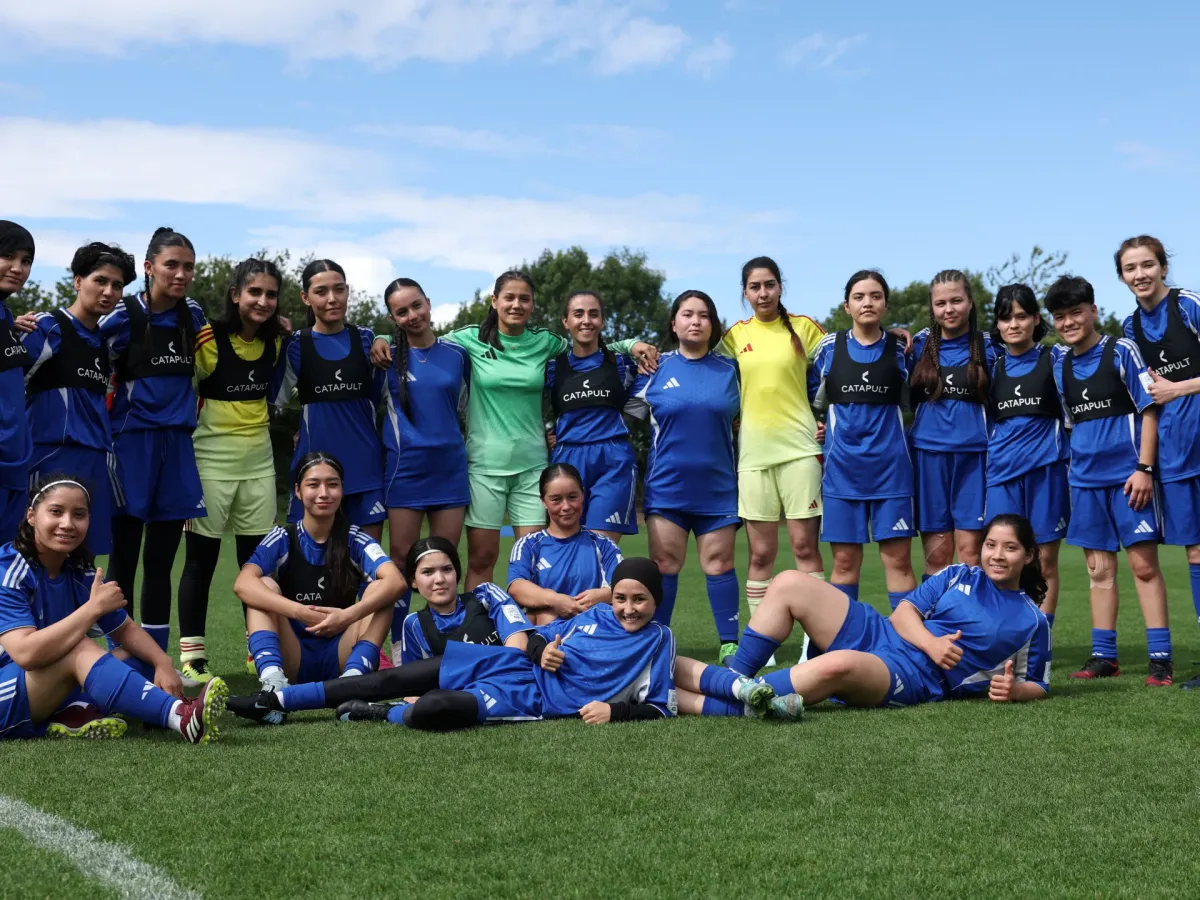
Nearly five years after fleeing the Taliban, the Afghanistan women's refugee football team, Afghan Women United, has officially been cleared to play in international competitions. Because apparently, even FIFA has its limits when it comes to denying athletes their game.
The decision came down from the FIFA Council in Vancouver, Canada, where they wisely adjusted their rules to recognize the team. While they're a bit late for the 2027 Women's World Cup (scheduling, am I right?), the 2028 Olympics in Los Angeles is now firmly on their radar. Let that sink in: from fleeing a regime to potentially competing on the world stage.
FIFA President Gianni Infantino, sounding rather chuffed, noted that this initiative isn't just for them, but for any other teams who find themselves in similar, impossible situations. Because, you know, sometimes a country's rules get a little... restrictive.
We're a new kind of news feed.
Regular news is designed to drain you. We're a non-profit built to restore you. Every story we publish is scored for impact, progress, and hope.
Start Your News DetoxTheir journey to official recognition started last October with a tournament in Morocco, where they played against teams from Chad, Libya, and Tunisia. This followed years of relentless effort by the players, their former captain Khalida Popal, and a few human rights groups who clearly don't take no for an answer.
Popal, understandably, is ecstatic. For half a decade, she'd been told their dream was dead thanks to the Taliban's ban on women's sports. Now? "This decision changes the future for Afghan women," she declared. And hopefully, for any other team facing similar, frankly absurd, sacrifices.
The Unstoppable Squad
More than 80 Afghan refugee players are currently scattered across Australia, the U.S., and Europe. Recently, they managed to pull off two training camps – one in England, one in Australia – proving that distance is merely a suggestion when you're determined to kick a ball around. Coached by Pauline Hamill, they're gearing up for exhibition matches in June, opponents still TBD.
Nazia Ali, a player now based in Australia, perfectly summed up the team's spirit: "We have played under many names, but in our hearts, we were always the national team." She's now looking forward to possibly wearing their flag officially again. Which, if you think about it, is both a testament to their resilience and a quiet, dignified defiance.
The last time the Afghan women's team played a competitive match was 2018. When the Taliban took over in 2021 and banned all women's sports, these players had to flee for their lives. Before the takeover, Afghanistan had 25 women under contract for football, most of whom now call Australia home.
It's worth noting that before the Taliban's ban, the Afghanistan Football Federation was embroiled in its own scandal – allegations of rape and abuse in its women's program, leading to a lifetime ban for its president, Keramuddin Keram, from FIFA. Yet, despite FIFA's anti-discrimination rules, the Afghan federation wasn't suspended and didn't even acknowledge the women's team. Convenient, that.
Minky Worden from Human Rights Watch praised FIFA for "doing the right thing" by finally closing a loophole that allowed discriminatory policies to infect global sports. Maybe, just maybe, this sets a precedent for how sports bodies should react when athletes are told they can't play because of who they are.