
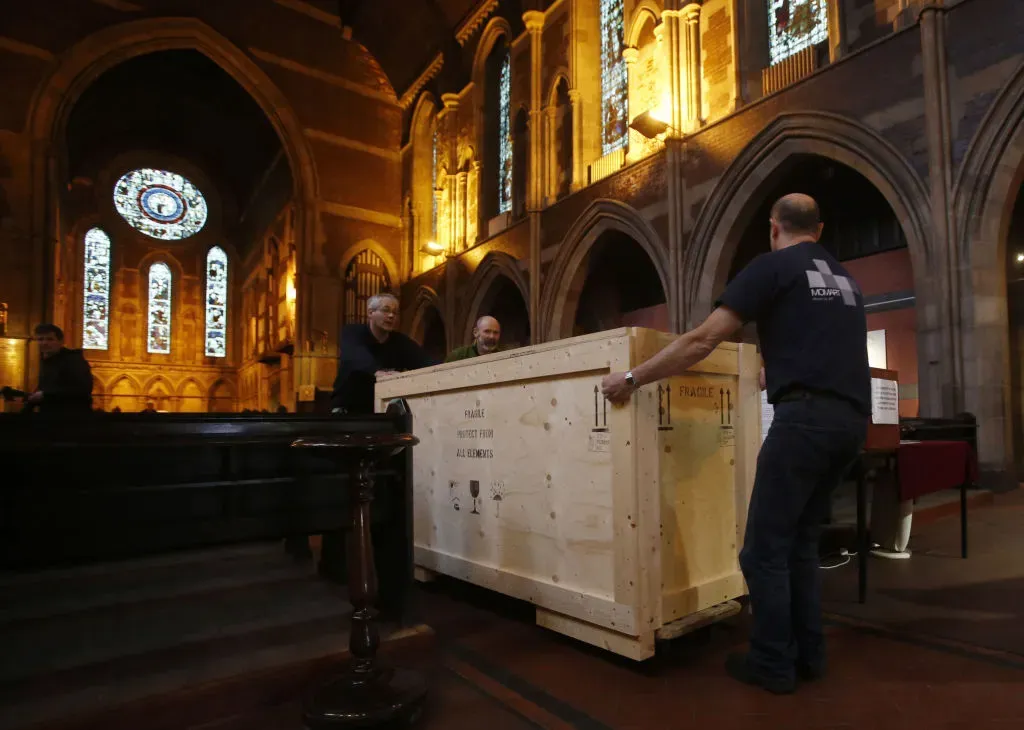
Good news for anyone who appreciates ancient history, community spirit, and the sheer grit it takes to see a project through a decade of delays: Govan Old, a church in Glasgow with roots stretching back to the 5th century, is finally transforming into a museum and cultural hub.
This isn't just any old renovation. This is a story of a local trust taking on a monumental task, battling pandemics, rising costs, and what we can only assume was an endless parade of red tape. The Govan Heritage Trust stepped up in 2016, with a vision to turn this historic site into a vibrant, community-run complex. Because apparently that's where we are now: turning ancient churches into profit-generating engines for good. Which, if you think about it, is both impressive and slightly terrifying.
Stones, Sarcophagi, and Six Million Bucks
The original Govan Old Parish Church served as a place of worship for an astonishing 1,500 years, from the 5th century all the way until 2007. The current building itself is a relative newcomer, built in the late 1800s. But the real stars here are the Govan Stones.
We're a new kind of news feed.
Regular news is designed to drain you. We're a non-profit built to restore you. Every story we publish is scored for impact, progress, and hope.
Start Your News DetoxDiscovered in the mid-19th century, these early Christian sculptures include a sarcophagus and about 40 carved stones, many of which are already on display. Imagine unearthing that in your churchyard. Your weekend gardening just got a lot more interesting.
Pat Cassidy from the Govan Heritage Trust confirmed the renovation can finally begin. The pandemic, naturally, threw a wrench in the works and hiked up the price tag. But the $6 million redevelopment, detailed in a 2024 plan by jm architects, is now full steam ahead. The goal? To create a museum and tourist attraction, complete with an accessible extension, new bathrooms (a modern necessity even for 5th-century sites), and business spaces. The profits from those businesses will, cleverly, cover the running costs. Because even ancient history needs a sustainable business model these days. And frankly, after a decade, that's a satisfying number to finally see moving forward.