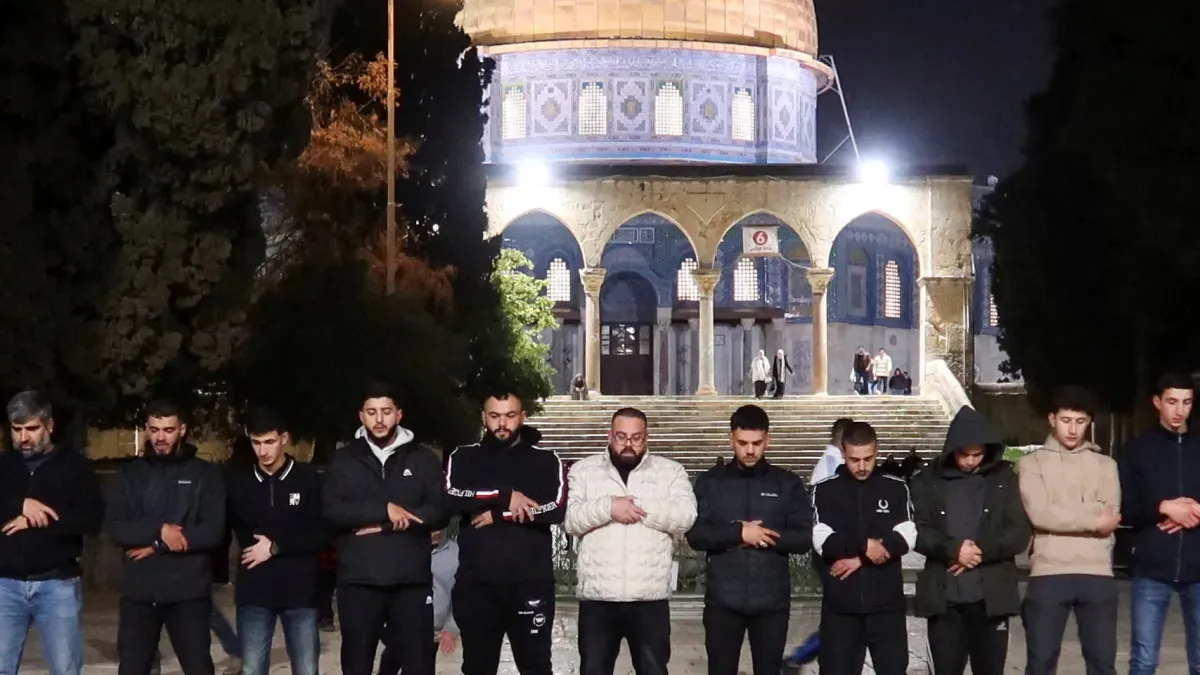
After a 40-day closure that turned one of the holiest sites in Jerusalem into a no-go zone, the Al-Aqsa Mosque compound has finally reopened its gates to Palestinian worshippers. The morning prayers on Thursday saw roughly 3,000 people enter, a sight that had been off-limits since late February.
For over a month, access to major Christian, Jewish, and Muslim holy sites in East Jerusalem had been restricted. The official reason? Escalating tensions related to the US-Israeli conflict with Iran. Which, if you think about it, is a rather broad brush to paint over deeply personal acts of faith.
The Islamic Waqf Department, the Jordanian-affiliated religious authority managing the mosque, confirmed the reopening. Volunteers had been busy, sweeping courtyards and preparing prayer areas, no doubt with a palpable sense of relief.
We're a new kind of news feed.
Regular news is designed to drain you. We're a non-profit built to restore you. Every story we publish is scored for impact, progress, and hope.
Start Your News DetoxIsraeli authorities announced the decision on Wednesday evening, citing "updated instructions from the Israeli Home Front Command." Let that sink in: a military command dictating when people can pray. The announcement also came with a heavy security presence: hundreds of officers and border guards descended on the Old City, securing roads leading to the sacred spots.
This isn't just about a few weeks of inconvenience. The past six weeks of regional conflict have seen Jerusalem's holy sites under strict security and frequent closures. This meant that major celebrations like Lent, Passover, and Ramadan were all affected, with countless worshippers unable to access places central to their faith.
Perhaps most jarringly, Eid al-Fitr prayers at Al-Aqsa were banned this year – a first since Israel occupied East Jerusalem in 1967. The bans were finally lifted just days before Orthodox Christians celebrate Easter, a week after Catholics and Protestants.
The Lingering Shadow
While the mosque compound reopened, the broader situation remains tense. Israeli raids continue across the occupied West Bank. The Palestinian news agency Wafa reported that Israeli forces detained a woman and assaulted a man in Nablus on Thursday, while the Palestinian health ministry in Ramallah confirmed the killing of 28-year-old Alaa Khaled Mohammed Sbeih near Tayasir village.
The UN Office for the Coordination of Humanitarian Affairs (OCHA) reports that over 1,100 Palestinians have been killed by Israeli forces and settlers in the occupied West Bank since 2023, with at least 10,000 forcibly displaced. The reopening of Al-Aqsa offers a moment of respite, but the daily realities for many Palestinians remain stark.