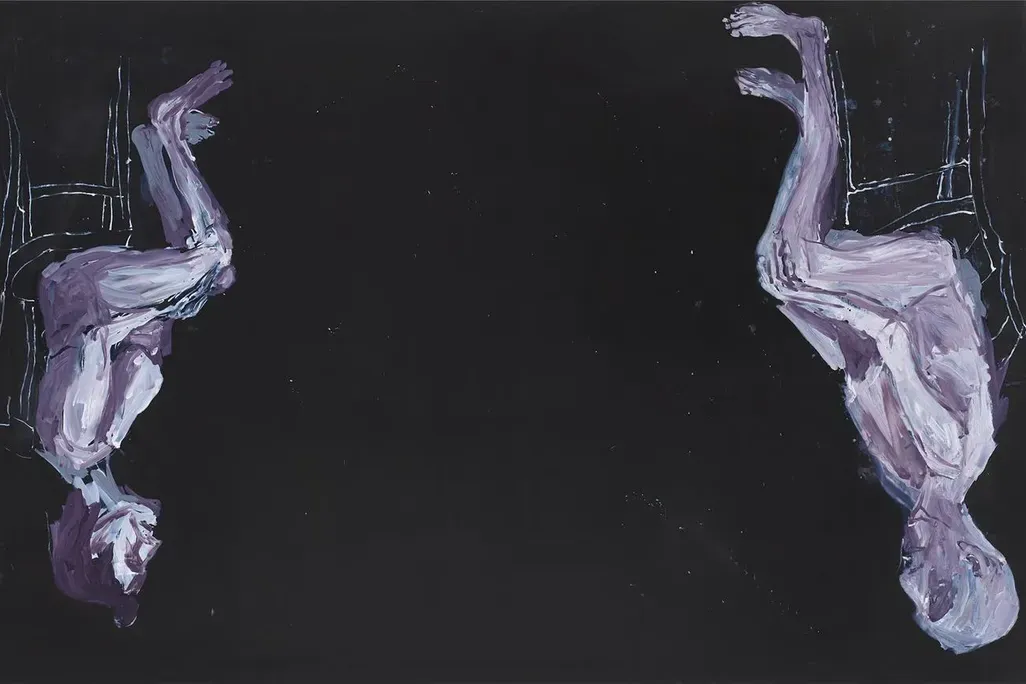
In 1956, 18-year-old Hans-Georg Bruno Kern was expelled from art school in East Berlin. He resisted a mandatory work assignment at an industrial site, a requirement under East Germany's communist rule. This act of defiance set the stage for a career that challenged artistic traditions.
Kern moved to West Berlin and changed his name to Georg Baselitz, after his hometown, Deutschbaselitz. He became known for his prolific paintings, which earned international recognition. Baselitz passed away on April 30 at 88 years old. He is remembered for literally turning his canvases, and the art world of postwar Germany, upside down.
Challenging Tradition
Baselitz often spoke about his experiences growing up in a "destroyed order" after World War II. He told Artforum in 1995 that he didn't want to reestablish order. Instead, he felt compelled to question everything and start anew.
We're a new kind of news feed.
Regular news is designed to drain you. We're a non-profit built to restore you. Every story we publish is scored for impact, progress, and hope.
Start Your News DetoxHis first solo exhibition in 1963 caused a stir. Police seized two paintings depicting men with large penises. Baselitz faced charges of offending public morality, but these charges did not stick. He believed that while a citizen follows conventions, an artist must reject them.
In the late 1960s, Baselitz developed his "Fracture Paintings." These works showed woodsmen, animals, and forests in fragmented, irregular ways. This disorienting style reflected a Germany that was divided. The public especially connected with these works when Baselitz displayed the subjects completely upside down.
The Man In the Tree and The Wood On Its Head were early examples of this style. They drew inspiration from small German villages, similar to Baselitz's own upbringing. He continued this upside-down approach with six portraits of working Germans in 1969. This style became his signature, and his art was shown in museums worldwide, including the Metropolitan Museum of Art in New York and the Munch Museum in Oslo.
A Lasting Impact
Baselitz remained a provocateur throughout his career. In 1980, he contributed a sculpture to the Venice Biennale that some thought resembled a Nazi salute. He denied this intention for years.
His art is highly sought after by collectors. In 2014, his 1938 work Der Brückechor (The Brücke Chorus) sold for $7.4 million. His 1965 piece Mit Roter Fahne (With Red Flag) fetched about $10 million in 2017.
Baselitz once said, "This idea of ‘looking toward the future’ is nonsense." He believed it was better to look backward, like standing at the stern of a boat and watching what has passed.