AI Weighs in on Anne Boleyn's True Face
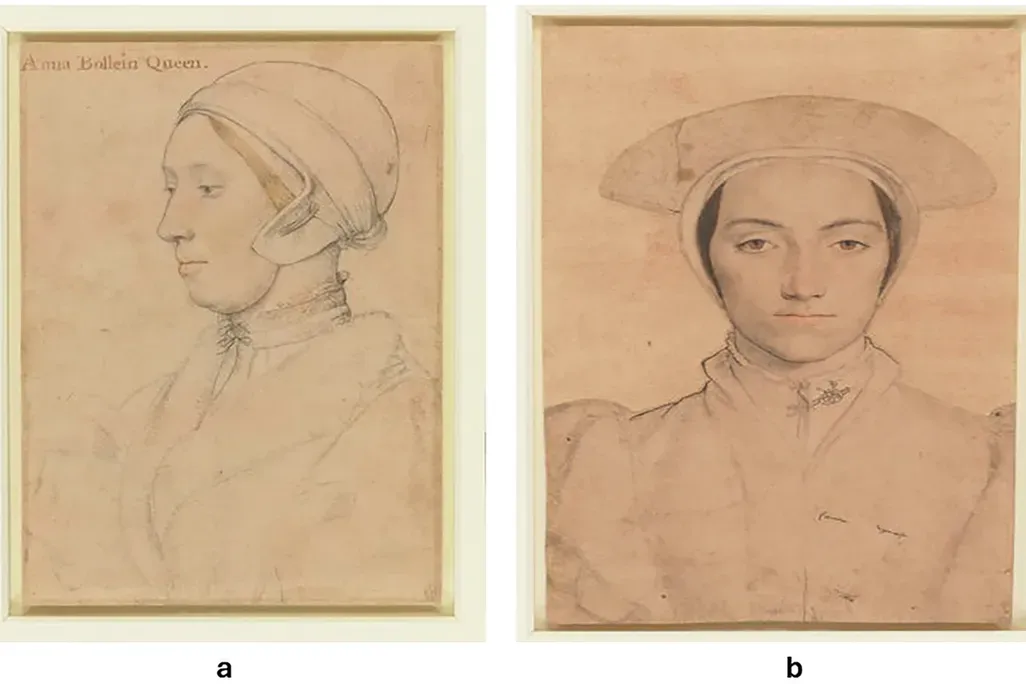
A team of researchers used artificial intelligence (AI) to tackle a long-standing art history puzzle. They wanted to identify an unknown figure from Tudor times. Their findings, published in npj Heritage Science, suggest a 16th-century sketch in Britain’s Royal Collection Trust is Anne Boleyn. She was the second wife of King Henry VIII, who was executed at the Tower of London.
The study also claims that another sketch, long thought to be Anne Boleyn, is actually her mother, Elizabeth Howard. This new idea adds to an ongoing debate among experts about what the queen truly looked like.
Karen Davies, an independent historian and the study's lead author, hopes this research will spark a wider discussion. She told the Guardian that they are "not making a claim and that’s the thing settled."
We're a new kind of news feed.
Regular news is designed to drain you. We're a non-profit built to restore you. Every story we publish is scored for impact, progress, and hope.
Start Your News DetoxHowever, not everyone agrees. Charlotte Bolland, a senior curator at the National Portrait Gallery, noted to BBC News that there isn't a single, absolutely certain painted portrait of Anne Boleyn from her lifetime to use as a comparison.
How AI Analyzed Tudor Portraits
About 500 years ago, German painter Hans Holbein the Younger worked in England. He created many portraits of the Tudor court. Around 85 of his drawings are still at Windsor Castle. These drawings are important for historians studying King Henry VIII's inner circle.
Only about 30 of these drawings have been clearly identified. Others were labeled in the 1700s, but some modern scholars question these old labels. For example, one portrait was labeled Anne Boleyn, while another showed an unknown woman. Historical records suggest one of Holbein's drawings is indeed Anne Boleyn, but which one?
Davies believed modern technology could help. AI has recently been used to analyze brushstrokes in an El Greco painting and to investigate a disputed Vermeer canvas.
Davies teamed up with Hassan Ugail, a mathematician from the University of Bradford, and David Stork, from Stanford University. They used facial recognition to study portraits of Anne Boleyn's family, including her daughter, Elizabeth I. They looked for similarities in facial features.
Stork explained to the Times of London that Holbein's drawings were like "technical blueprints" for painted portraits. This made them ideal for biometric analysis, which measures bone structure and proportions rather than hairstyles or clothing.
The researchers' analysis suggests the sketches should be relabeled. They believe the unidentified woman is the true Anne Boleyn. They also argue this finding matches written descriptions of the queen's appearance.
However, art historian Bendor Grosvenor remains unconvinced. He posted on social media that the research conclusions are based on "statistical noise." He also questioned how reliable it is to compare facial similarities between portraits by different artists using different materials.
Deep Dive & References
Did facial recognition find a lost portrait of Anne Boleyn? Scholars debate whether A.I. solved or merely muddled an art history mystery - npj Heritage Science, 2026