Remember when wastewater treatment was just about, you know, treating water? Simpler times. Now, thanks to climate change, resource scarcity, and a general societal need for everything to be smarter, those facilities are being asked to do a whole lot more.
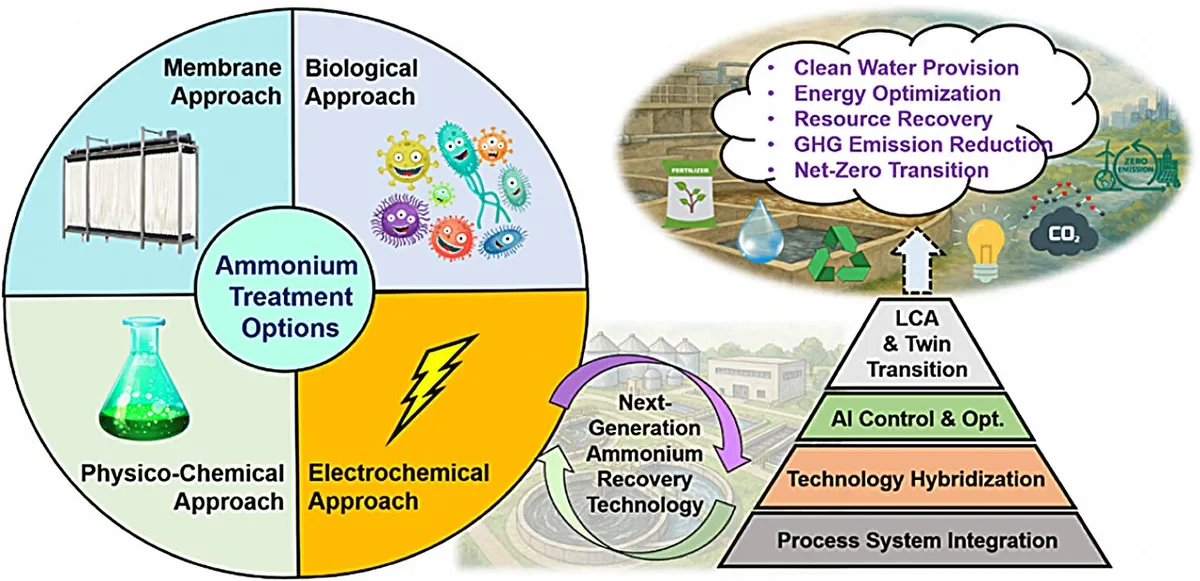
Good news: researchers have cooked up a new system that uses AI to babysit wastewater treatment plants in real time. The goal? Keep the environment safe and squeeze every last useful bit out of the water. It’s a concept they’re calling “twin transition,” which sounds like a superhero duo, but is actually about making facilities predict their own health and optimize energy use. Because apparently, your toilet water needs a therapist and a life coach.
The real star of this show is ammonia-nitrogen. Left unchecked, it’s a menace to aquatic life and a pain for treatment plants. But if you play your cards right, nitrogen can be recovered and reused. Think of it as a tiny, stinky step towards a circular economy, where everything gets a second (or third) life.
We're a new kind of news feed.
Regular news is designed to drain you. We're a non-profit built to restore you. Every story we publish is scored for impact, progress, and hope.
Start Your News DetoxThe Smart, Green Future of Sewage
A study in Water Research dives into this “Twin Transition,” which is essentially a fancy way of saying wastewater management needs to get both greener and smarter. More sustainable, more data-driven, and easier to control. This is particularly handy for nitrogen, which has a notoriously complex and moody personality in wastewater.
Instead of just scrubbing out pollutants, engineers are starting to see ammonia-nitrogen not as a villain, but as a key player in a bigger nitrogen cycle. With better designs, monitoring, and AI-powered decision-making tools, wastewater plants could transform into nutrient recovery hubs, emission reducers, and general resource circulation champions. Which, if you think about it, is both impressive and slightly terrifying.
Digital tools are the secret sauce here: sensors, data analytics, process modeling, and smart controls help operators understand the microscopic drama unfolding inside the tanks. These tools stabilize systems, cut down on wasted energy, and help make better calls when the wastewater throws a curveball. Meanwhile, green tech does its part to lessen environmental harm and make nitrogen recovery a breeze.
Professor Shu-Yuan Pan from National Taiwan University sums it up: the twin transition offers a new way to link digital innovation with sustainable nitrogen management. Essentially, it’s about wastewater systems evolving from mere pollution control to full-blown resource recovery. So, next time you flush, just know there might be an AI quietly optimizing its journey to a second life. You’re welcome.