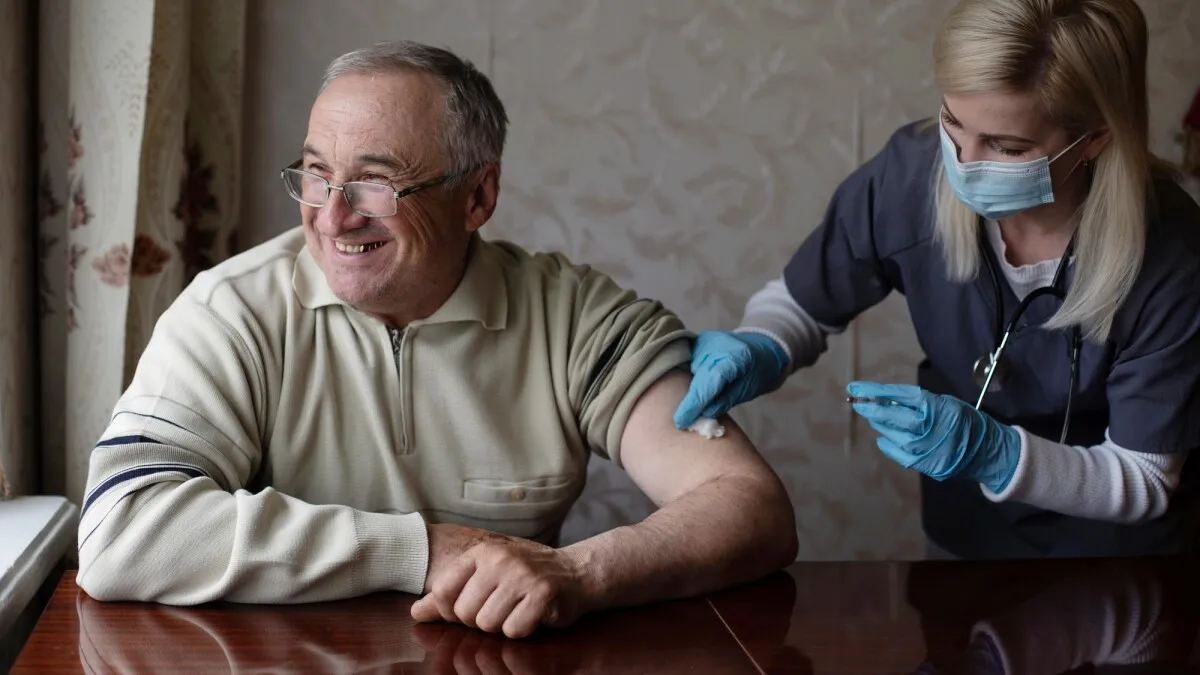
Your mind might be more powerful medicine than you realize. A new study found that people trained to think positively after vaccination produced significantly more antibodies — the proteins your immune system uses to recognize and fight disease. It's not wishful thinking. It's neuroscience.
Researchers at Tel Aviv University worked with 85 people, teaching them to activate a specific part of their brain called the ventral tegmental area, or VTA. This region sits deep in the brain and controls reward processing — the feeling you get anticipating something good. The training wasn't complicated. Participants imagined a future trip, visualized something they were excited about, or used other mental imagery techniques to trigger that reward response.
After these sessions, everyone received a hepatitis B vaccine. The key finding: people who best activated their VTA showed measurably higher antibody levels weeks later. Not everyone responded equally — some people found the mental training easier than others — but those who did master it saw real immune benefits.
We're a new kind of news feed.
Regular news is designed to drain you. We're a non-profit built to restore you. Every story we publish is scored for impact, progress, and hope.
Start Your News Detox"Consciously generated positive expectations can engage reward circuitry to influence immune function," the researchers wrote in Nature Medicine. What they're describing is a bridge between mind and body that's been hinted at for decades but rarely this clearly demonstrated.
You've probably heard of the placebo effect — the strange reality that believing a sugar pill will help you can actually make it help you. This study suggests something even more intriguing: that same mind-body connection might amplify how well real medicine works. The researchers weren't replacing vaccines with positive thinking. They were showing that pairing vaccines with a trained mental state could enhance the vaccine's actual effectiveness.
This matters because vaccine response varies. Some people's immune systems respond robustly to vaccination; others respond weakly. Age, genetics, stress, and health status all play a role. If mental training could nudge people toward stronger immune responses, it would be a genuinely non-invasive tool — no drugs, no side effects, just learning to think in a way your brain already knows how to do.
The findings are preliminary. The study was small, focused on one vaccine, and involved people who could benefit from brain training. Researchers will need to test this across different vaccines, age groups, and health conditions. But the direction is clear: the conversation about vaccine effectiveness is shifting from "just the injection" to "injection plus what's happening in your head."