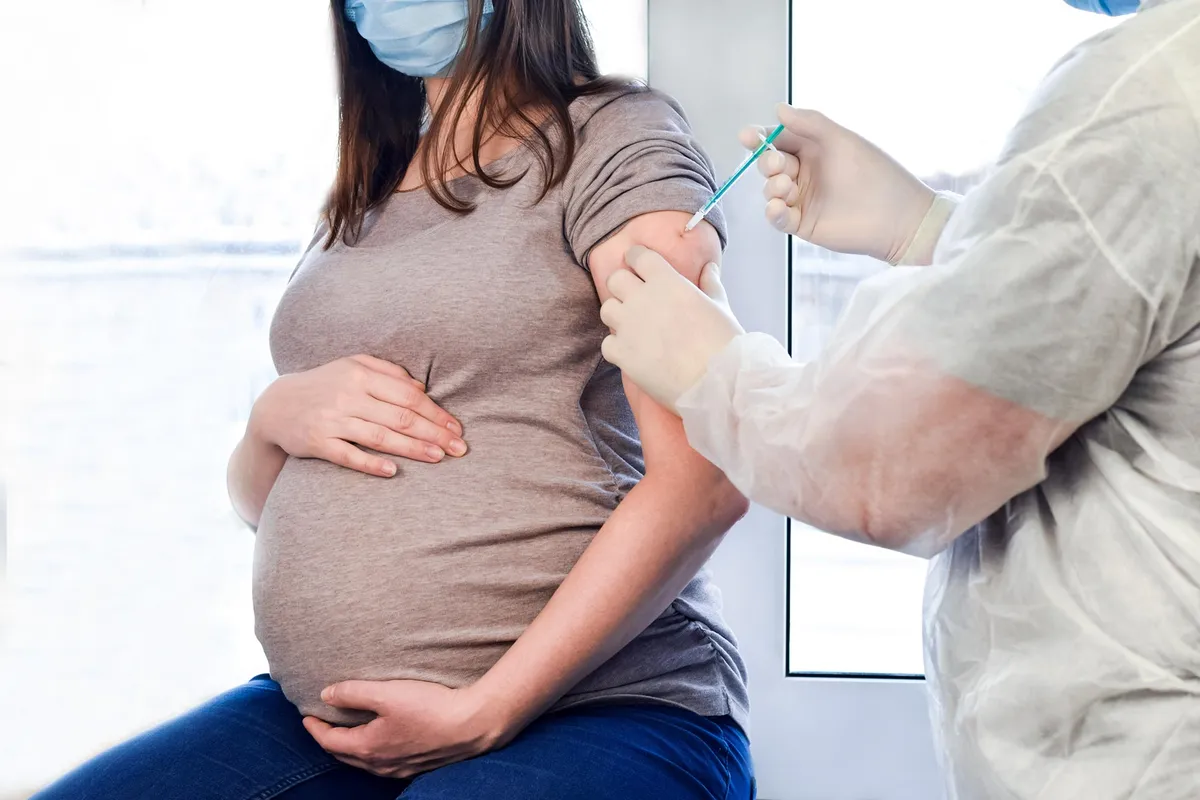
Pregnant people who received an mRNA COVID-19 vaccine—either during pregnancy or in the month before—gave birth to children with the same developmental outcomes as those born to unvaccinated mothers. The finding, presented at the 2026 Pregnancy Meeting of the Society for Maternal-Fetal Medicine, adds another layer of evidence to what researchers have been building for years: these vaccines are safe during pregnancy.
This matters because the question has lingered. Even as health organizations have consistently recommended COVID vaccination for pregnant people, some have hesitated, worried about risks that haven't materialized in the data. That hesitation can be costly—pregnant people who get COVID face higher risks of severe illness, preterm birth, and other complications. A child protected in the womb is a child protected from the start.
The Study
Researchers from the NIH's Maternal-Fetal Medicine Units Network followed 434 toddlers between 18 months and 2½ years old. Half were born to mothers who had received at least one mRNA COVID vaccine during pregnancy or within 30 days before conception. The other half were born to unvaccinated mothers. To make the comparison fair, they matched mothers on delivery location, date of birth, insurance type, and race.
We're a new kind of news feed.
Regular news is designed to drain you. We're a non-profit built to restore you. Every story we publish is scored for impact, progress, and hope.
Start Your News DetoxThe children were assessed using standard developmental screening tools—measures that look at communication, motor skills, problem-solving, and social behavior. Researchers also used autism-specific screening checklists. The results were consistent: no difference between the two groups.
"Neurodevelopment outcomes in children born to mothers who received the COVID-19 vaccine during or shortly before pregnancy did not differ from those born to mothers who did not receive the vaccine," said George R. Saade, senior researcher and chair of obstetrics and gynecology at Old Dominion University.
The study excluded pregnancies with complications (preterm births, multiples, major birth defects) to focus on straightforward cases where the vaccine's effects could be isolated. That methodological rigor is part of why this finding carries weight—it wasn't a quick survey, but a careful, multi-center comparison.
Why This Moment Matters
Misinformation about vaccines and pregnancy has real consequences. Pregnant people have sometimes skipped vaccination out of caution, then faced severe COVID infection. This study won't convince everyone—no single study does—but it's the kind of evidence that accumulates. Each new finding in the same direction makes the picture clearer.
The vaccine itself was never the mystery. Researchers have understood how mRNA vaccines work for years. The question was empirical: what actually happens to children? Now we have another answer, from a rigorous trial network, funded by the National Institute of Child Health and Human Development.
Two types of COVID vaccines are available in the U.S.—mRNA and protein subunit—and both are considered safe at any point in pregnancy. The recommendation stands: vaccination protects both mother and baby.