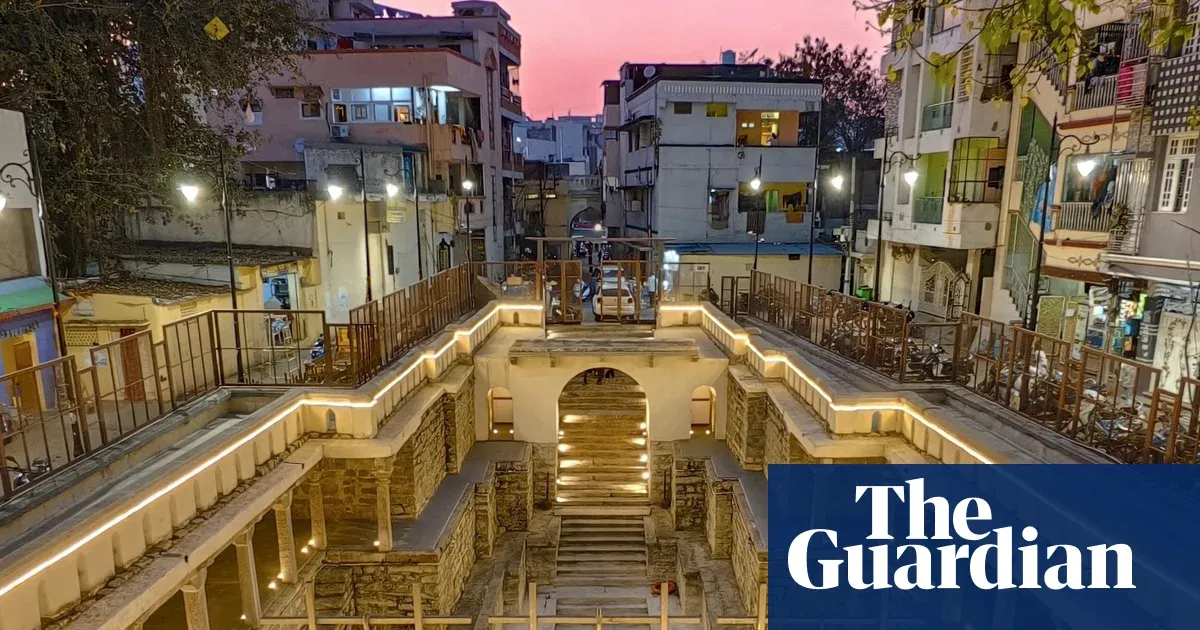
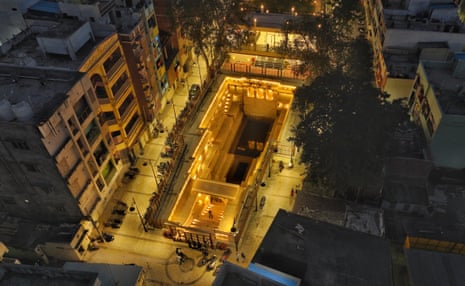
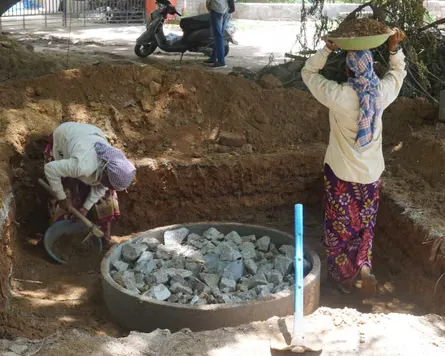
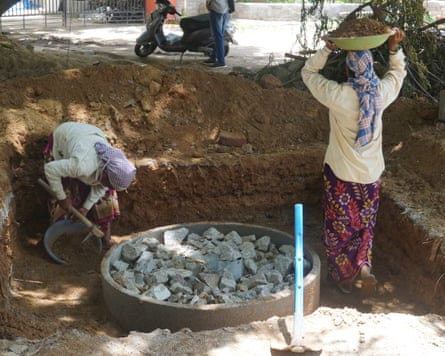
A cheer went up in Bansilalpet, a neighbourhood in Hyderabad, when water first trickled from the ground in December 2022. After 18 months of clearing 3,000 tonnes of rubbish and restoring stone walls, a 17th-century stepwell had become a source of clean drinking water for the first time in four decades.
Hajira Adeeb, 45, watched the well transform from her childhood water source into a dumping ground. "It was such a joyous moment to see water collecting after clearing 40 years of garbage," she says. "I visit almost every day. The area is clean and lit up in the evenings. I enjoy sitting there."
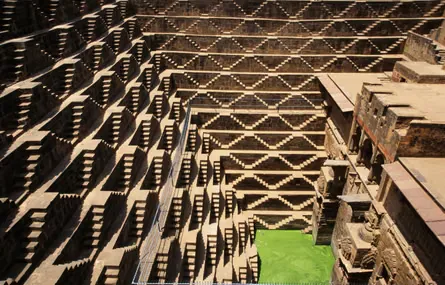
India built thousands of stepwells between the 11th and 18th centuries — multi-storey structures with descending steps and platforms that reached groundwater near natural aquifers. They were abandoned under British colonial rule, which deemed them unhygienic. By the late 20th century, many had become dumping grounds. The Stepwell Atlas, a collaborative research project, documents more than 3,000 remaining wells. About 100 sit in Telangana state, with nearly half in Hyderabad.
We're a new kind of news feed.
Regular news is designed to drain you. We're a non-profit built to restore you. Every story we publish is scored for impact, progress, and hope.
Start Your News DetoxSome of the largest — like the 9th-century Chand Baori in Rajasthan with its 3,500 steps, or the Unesco-listed Rani-ki Vav in Gujarat — have been restored as heritage sites. They draw tourists and Bollywood film crews. But they don't provide usable water. Of the thousands of deteriorated stepwells, only a small number have been restored for their original purpose, and fewer still provide drinking water.
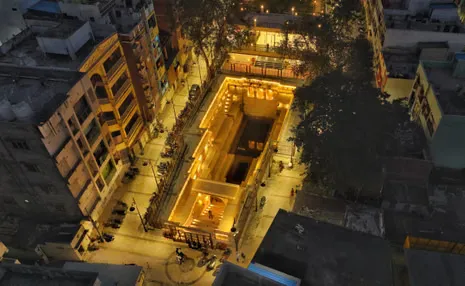
Bansilalpet became the first in Telangana to provide drinking water, and it's now a template for reviving others. The well has maintained nine metres of water depth even through summer months. The transformation came from architect Kalpana Ramesh, who has now restored 25 stepwells across the state as sustainable water sources, working with Telangana's Municipal Administration and the Rainwater Project, a social enterprise she co-founded.
Ramesh has harvested rainwater in her own home for 15 years, freeing herself from reliance on water tankers her neighbours depend on. "I was sure that the system of harvesting rain to recharge groundwater would work on a larger scale, even today when concrete and asphalt leave very little natural ground for rainwater to seep in," she says.

Why This Matters Now
India is running out of water. The country holds 18% of the world's population but only 4% of its fresh-water resources. More than 600 million Indians already face high-to-extreme water stress. By 2030, water demand is projected to double. Nine states — from Punjab and Delhi in the north to Tamil Nadu and Telangana in the south — are heading toward "day zero," when groundwater availability reaches zero. India consumes a quarter of the world's groundwater, and over-extraction is unsustainable.
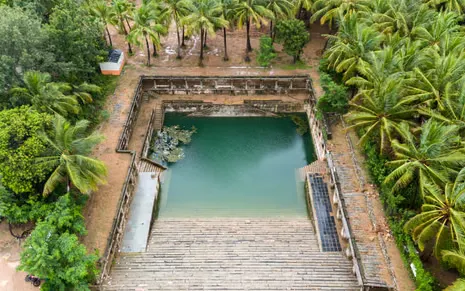

Telangana is responding with a multipronged approach: 500,000 rainwater-harvesting projects, plans to supply grey water to datacentres, river rejuvenation, reservoir restoration, and fines for water waste. Stepwells fit naturally into this strategy. Originally built in open areas where rain could seep into the ground and replenish aquifers, they now require modern adaptation. Rainwater is captured and directed through underground channels and trenches, filtered through layers of sand, gravel, and pebbles, then channelled into recharging pits that replenish aquifers. The system provides free, accessible, clean water year-round.
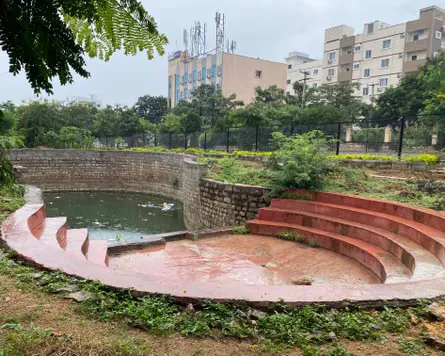
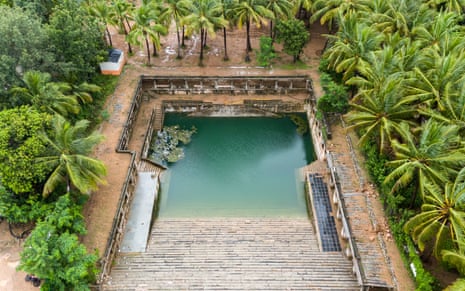
Pandith Mandure, former director of Telangana's ground water department, has seen the impact firsthand. Between 2021 and 2023, groundwater levels in the Hyderabad region rose six to seven metres due to lake clearing, drain restoration, and stepwell revival. Ramesh hopes to equip all 25 restored wells with filtration systems to make their water safe to drink. "If the water from all the stepwells became potable, it would then encourage people to preserve these systems," she says.

Stepwells alone won't solve India's water crisis. A full transformation is needed — clean ponds, lakes, rivers, rainwater systems, and community engagement working together. But Ramesh's work shows what's possible when ancient infrastructure meets modern need. The next phase is scaling up: encouraging communities to maintain local water bodies and prevent rainwater from running into drains. "There is enough potential to make rainwater work for cities," she says.