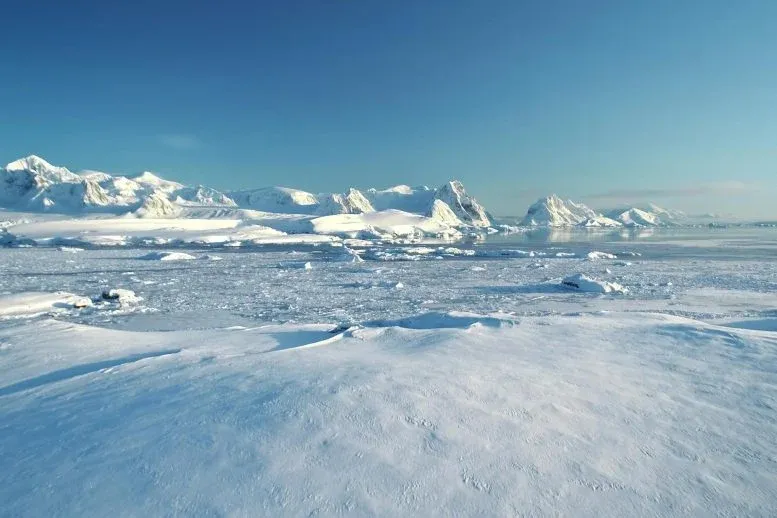
Picture this: Antarctica, the poster child for melting ice, just threw a curveball. Between 2021 and 2023, the East Antarctic Ice Sheet actually gained a whopping 695 billion tons of ice. That's the largest two-year increase ever recorded by GRACE satellites.
Before you start popping champagne corks, let's be clear: this doesn't mean the continent's long-term melt is over. Far from it. Antarctica has been shedding an average of 140.5 billion tons of ice annually for the past two decades. This recent surge was a temporary anomaly, but a fascinating one, because it points to something unexpected: the tropics.
The Butterfly Effect, But With Way More Ice
New research, published in Nature by a team led by the Chinese Academy of Sciences, links this massive ice gain to unusually warm waters in the tropical western Pacific and eastern Indian Ocean. Yes, you read that right. Thousands of miles away, a warm swimming pool-sized area of ocean helped dump a colossal amount of snow on Antarctica.
We're a new kind of news feed.
Regular news is designed to drain you. We're a non-profit built to restore you. Every story we publish is scored for impact, progress, and hope.
Start Your News DetoxHere’s how it worked: The extra warmth in the tropics kicked off something called a Rossby wave. This atmospheric ripple traveled south, reshaping air patterns over East Antarctica. The result? A sort of atmospheric funnel that redirected a massive amount of moisture from the Indian Ocean straight to the icy continent, like an express delivery service for snow.
Think of it as the weather equivalent of a giant, invisible slingshot, flinging moisture across the globe. Simulations showed this moist air caused heavy snowfall, particularly in the Queen Mary Land–Wilkes Land region, piling on the tons.
Interestingly, while global warming is definitely a thing, human activity was responsible for only about 9% of this particular snowfall increase. This event was largely a natural, albeit dramatic, demonstration of how interconnected our planet's climate systems truly are. These "tropical warm pool" events happen roughly once a decade, suggesting a previously underappreciated link between distant ocean conditions and Antarctic snowfall.
A Drop in the (Very Cold) Bucket
So, while 695 billion tons sounds like a lot – and it is – it's a temporary reprieve, not a reversal. The West Antarctic Ice Sheet is still shrinking, and even parts of East Antarctica are melting from below thanks to warming ocean currents. This study just highlights a complex, previously underrecognized "teleconnection pathway" that shows how distant ocean conditions can temporarily change snowfall across the continent.
Basically, the tropics decided to give East Antarctica a very large, very cold, and very temporary hug. Which, if you think about it, is both impressive and slightly terrifying. Now, if you'll excuse us, we're off to check on our own tropical warm pools. Just in case.