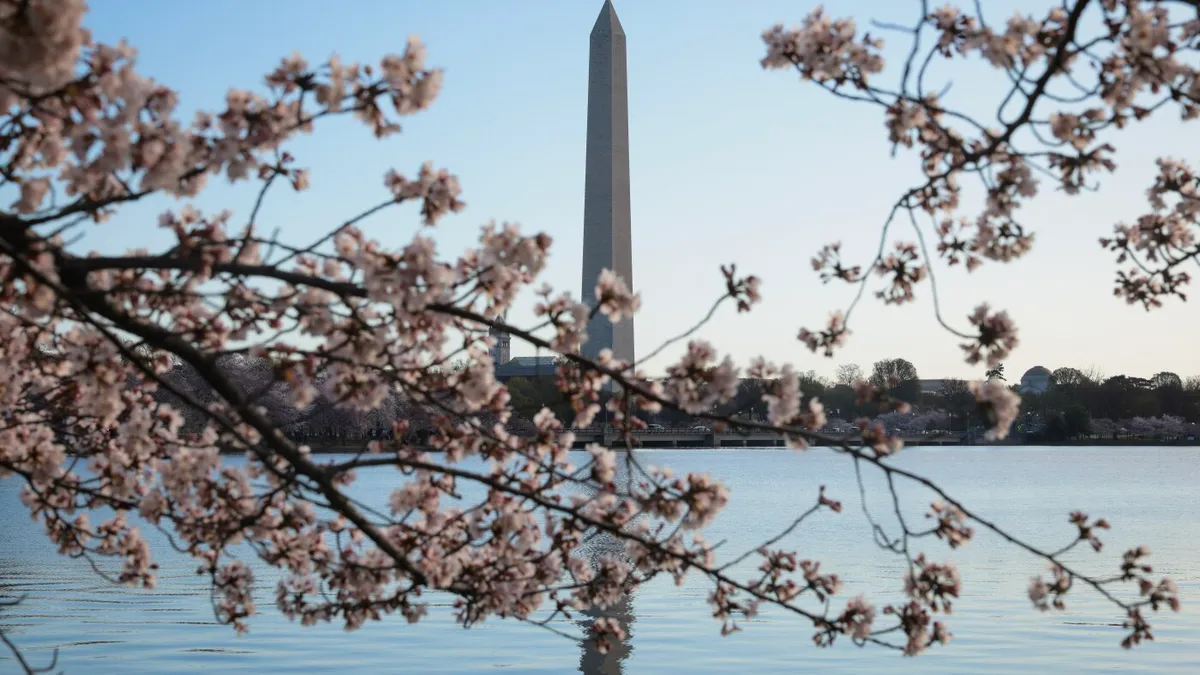
Those stunning cherry blossoms painting Washington, D.C., pink right now? They're about to hit peak bloom, drawing over a million visitors. But here's the kicker: some of these trees are over a century old, direct descendants of the very first batch planted way back when.
Turns out, this beautiful gift of friendship from Japan in 1912 had a seriously dramatic beginning.
The Great Tree Disaster of 1910
The idea for cherry trees along the Potomac came from a journalist, Eliza Ruhamah Scidmore, back in 1885. It took 24 years, but First Lady Helen Taft finally said yes to 2,000 trees donated by Japan in 1909.
We're a new kind of news feed.
Regular news is designed to drain you. We're a non-profit built to restore you. Every story we publish is scored for impact, progress, and hope.
Start Your News DetoxBut when that first shipment arrived in 1910, it was a total disaster. The trees were infested with insects and diseased. To protect American farms, every single one had to be burned. Seriously, burned.
Tokyo's mayor, Yukio Ozaki, didn't give up. He suggested another, even bigger donation: 3,020 trees. He saw them as a symbol of beauty, renewal, and hope, a perfect way to show lasting friendship. And on March 26, 1912, these new trees, representing 12 different kinds of cherries, finally made it to D.C.
First Lady Taft and the wife of the Japanese Ambassador planted the first two Yoshino cherry trees on the Tidal Basin. As a thank you, the U.S. sent 50 dogwood trees back to Japan. That's a pretty cool exchange of green diplomacy.
From Vandalism to Lasting Bonds
The first real festival-like celebration happened in 1927, with school kids re-enacting the original planting. The official National Cherry Blossom Festival kicked off in 1935.
Things got rough during World War II, though. Some trees were cut down and vandalized after Pearl Harbor. One even had a nasty message carved into it. But the festivals came roaring back after the war in 1948, proving friendship can weather almost anything.
Fast forward to today: Japan is sending 250 more cherry blossom trees for America's 250th birthday. These new trees will be planted near the Washington Monument, a fresh reminder of that enduring bond.
So next time you see a picture of D.C.'s cherry blossoms, remember their wild backstory. They're not just pretty flowers; they're living proof that even after a fiery start, friendship can bloom for over a century. Just make sure to admire them from a distance – no climbing or branch-pulling allowed!