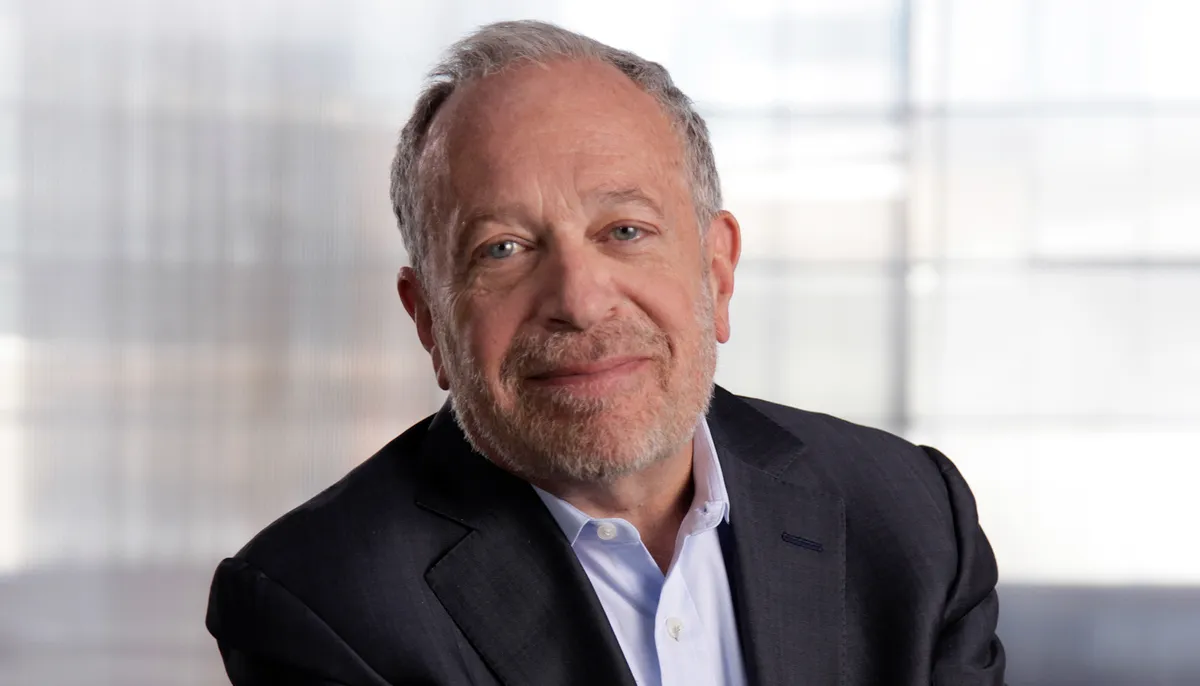
Robert B. Reich has dedicated six decades to social justice and teaching. For him, these two commitments are deeply connected.
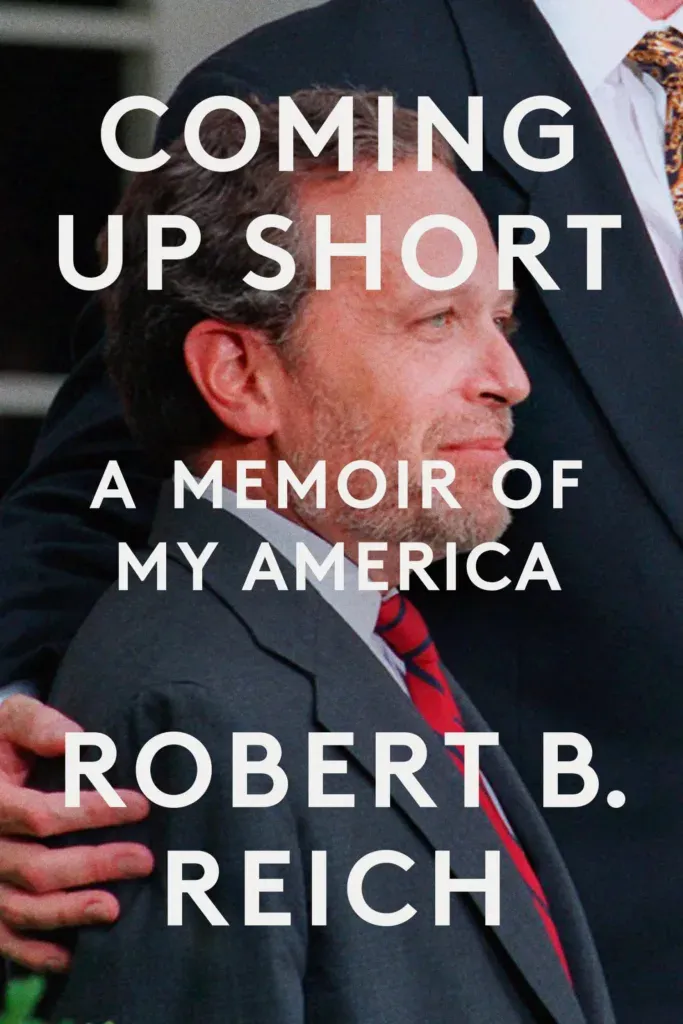
Reich, now an emeritus professor at UC Berkeley, is a well-known public figure. He appears on TV, was the subject of a 2025 film called The Last Class, and his autobiography, Coming Up Short, was a bestseller. He also hosts a podcast and is active online, often speaking out against policies that harm disadvantaged people or democracy.
He is set to deliver UC Berkeley's 2026 commencement speech on May 16. In a recent interview, Reich reflected on the challenges facing graduates today, comparing them to the turbulent times he experienced graduating in the late 1960s.
We're a new kind of news feed.
Regular news is designed to drain you. We're a non-profit built to restore you. Every story we publish is scored for impact, progress, and hope.
Start Your News DetoxA Career of Public Service and Education
Reich's career has spanned a period of significant change in America. Before joining the UC Berkeley Goldman School of Public Policy in 2006, he advised political leaders from both major parties. He also served as Secretary of Labor under President Bill Clinton for four years. He has written 18 books and received many awards.
While often seen as a progressive voice, Reich emphasizes the importance of questioning one's own beliefs and being open to different viewpoints. This is a message he has shared with students for generations.
Addressing Graduates in a Challenging World
Reich plans to focus his commencement speech on the graduating students. He acknowledges the immense challenges they face, including a difficult job market and widespread uncertainty.
"I don’t remember a time when the country was more challenged, when the job market was more difficult, when uncertainty reigned as intensely," Reich said. Despite this, he wants to deliver a positive and inspiring message.
Reich believes that many major issues facing the country and its graduates are not about left or right politics. He argues that a key problem is the focus on political polarization. He has always encouraged his students to learn by talking with those who hold different opinions. This helps test ideas against diverse values and assumptions.
Echoes of the Past: 1968 vs. Today
Reich graduated from Dartmouth in 1968, a year marked by significant turmoil. Robert F. Kennedy and Martin Luther King Jr. were assassinated, cities experienced unrest, and the Vietnam War was ongoing. He recalls friends being drafted and protests at the Democratic Convention.
"The country is enormously resilient. We have been through terrible times before. We always seem to learn something," Reich noted.
He sees many similarities between 1968 and today, with some people then believing the "American experiment was over" due to extreme polarization. He remembers his own graduation speaker urging students to leave the country to avoid the draft, leading to arguments among parents.
Reich maintained his optimism then, and he does now. He believes in the country's resilience and finds hope in young people. He met Bill Clinton on a boat to England as a Rhodes Scholar, and they discussed politics endlessly.
While students in 1968 faced the Vietnam War, today's graduates face a more challenging economy and job market. However, Reich believes today's students are more diverse, interesting, and perhaps smarter.
Reich acknowledges that both his graduating class and current students share a sense of insecurity about the future. While 1968 graduates faced political turmoil, today's graduates face significant economic uncertainty, alongside political challenges.
He points out that while he graduated from a prestigious university with good economic prospects, today's Berkeley graduates also hold a privileged position. He considers Berkeley the best public university in the world, giving its graduates a head start.
Questioning Assumptions and Embracing Failure
Reich is not surprised by the current lack of widespread student protests. He notes that periods of student activism come and go. He doesn't believe that any administration can truly silence students if they wish to speak out.
In his autobiography, Reich wrote that "Teaching is about getting students to re-examine the assumptions they entered the classroom with." He encourages students to question common beliefs, such as:
- Efficiency is always good.
- Economic growth is always positive.
- The free market always knows best.
- Big corporations are always bad.
- Wealthy people are always suspect.
If he could advise his 22-year-old self from 1968, he would say: "Be patient. Don’t worry about failing. You’re gonna fail, inevitably. … If you don’t fail, it means you haven’t tried. Everything will work out fine, barring ill health and bad luck."
He would also advise being true to one's integrity and loving oneself. This self-love allows one to be authentic and true to important values.
Reich holds UC Berkeley in high regard, calling it an "extraordinary institution." He praises the students for being kind, smart, and helpful, and the faculty for their brilliance and dedication to teaching. He believes Berkeley is a model for what higher education should be.