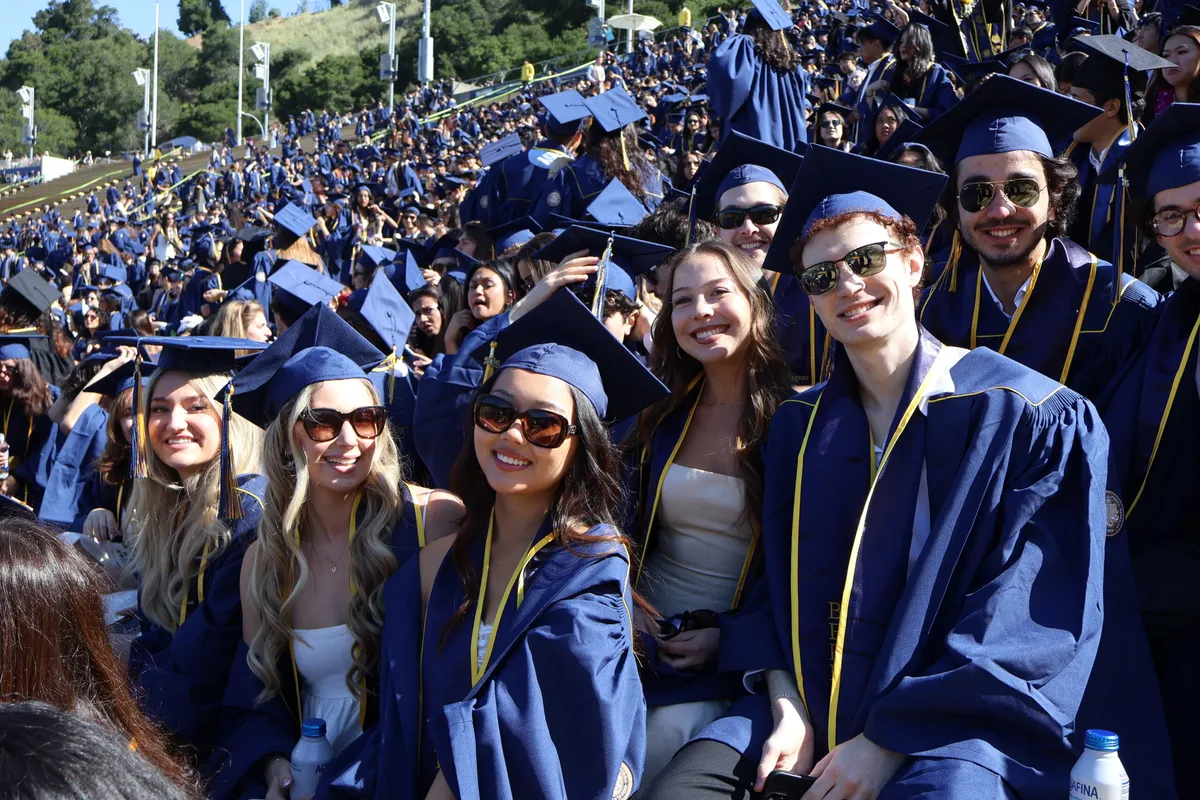
More than 7,000 graduating students and 25,000 guests attended UC Berkeley's campuswide commencement ceremony at California Memorial Stadium.
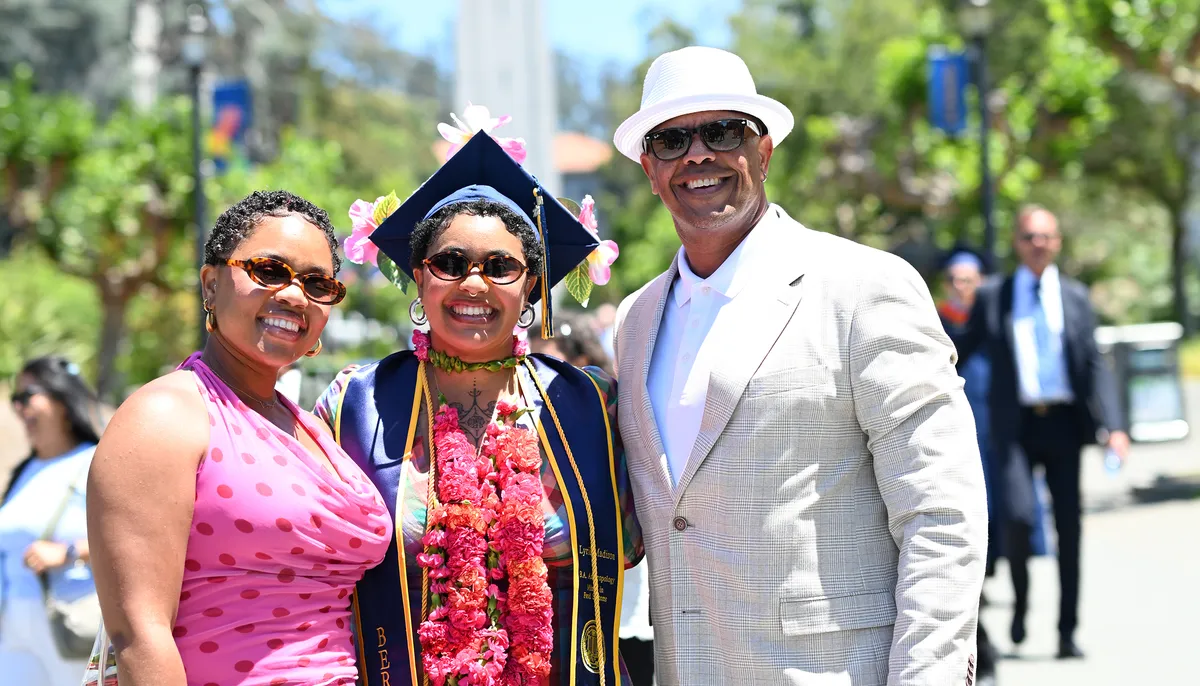
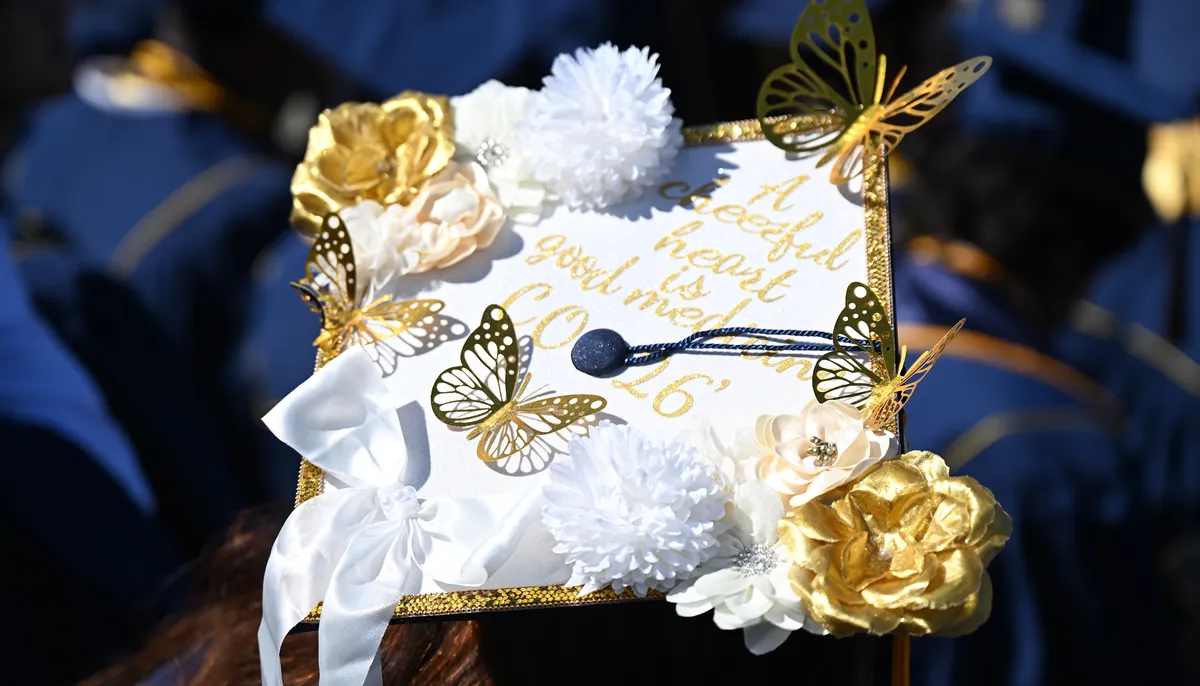
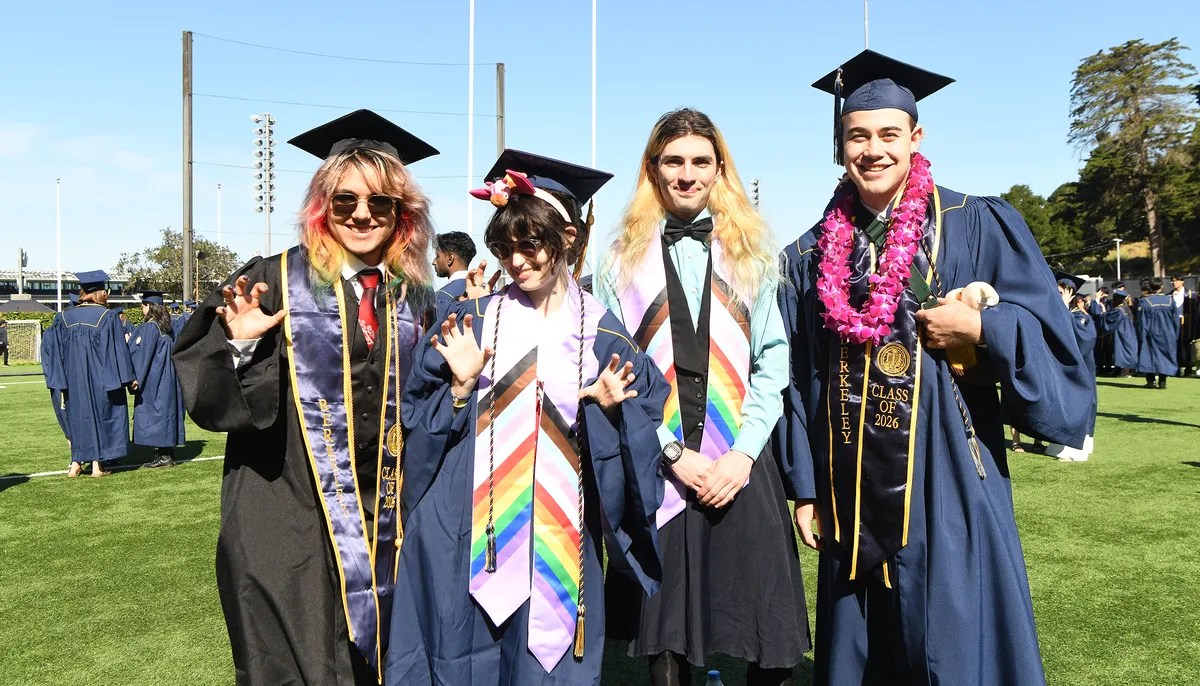
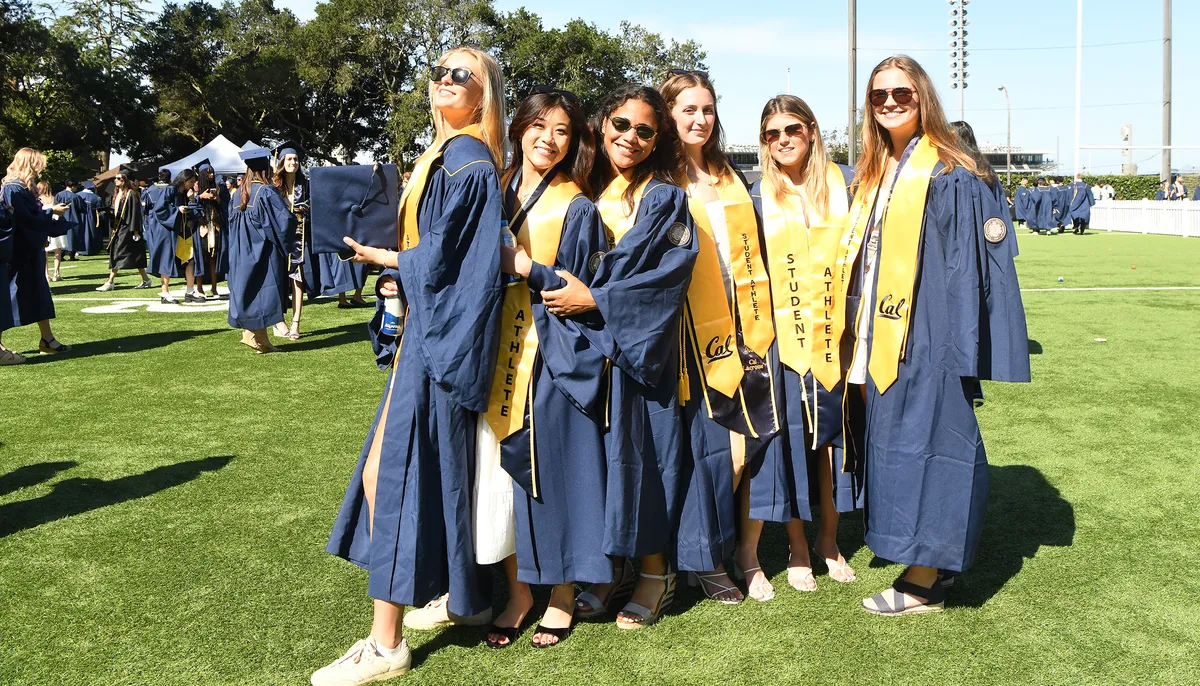
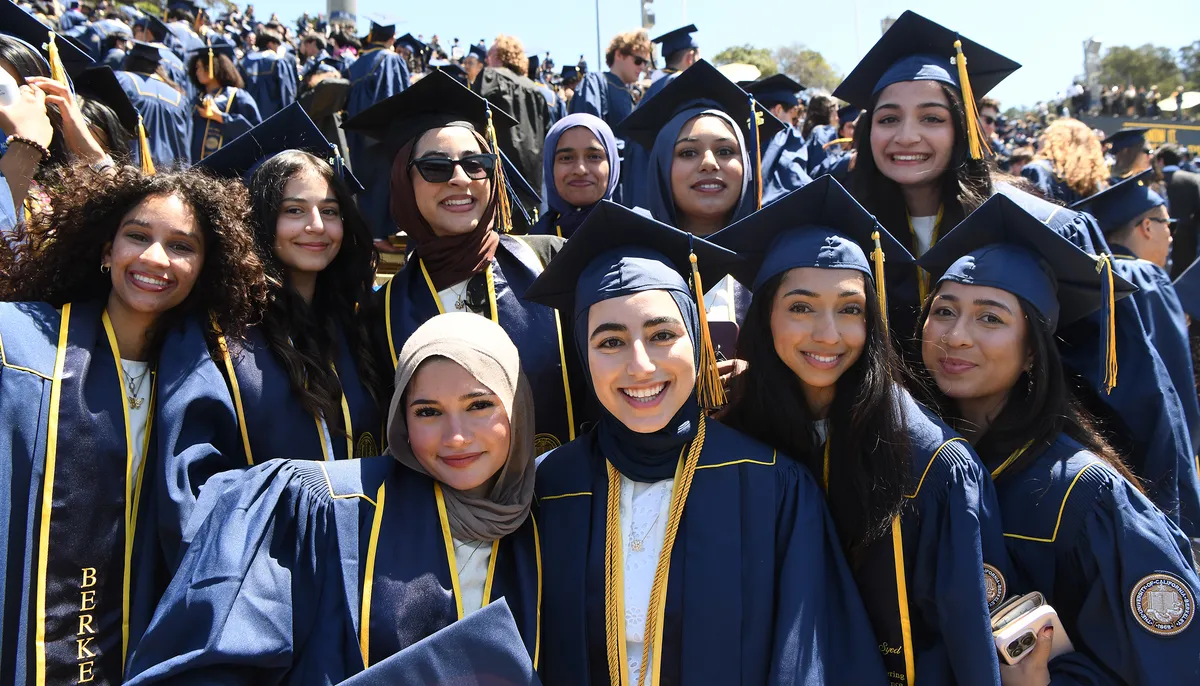
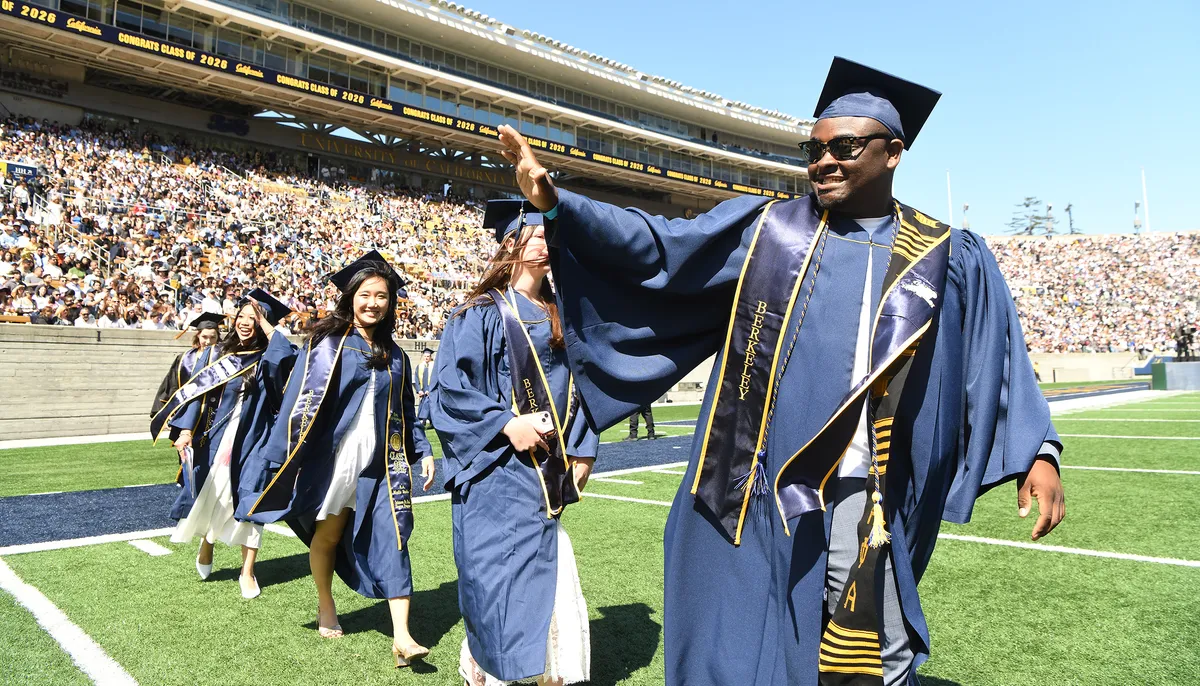
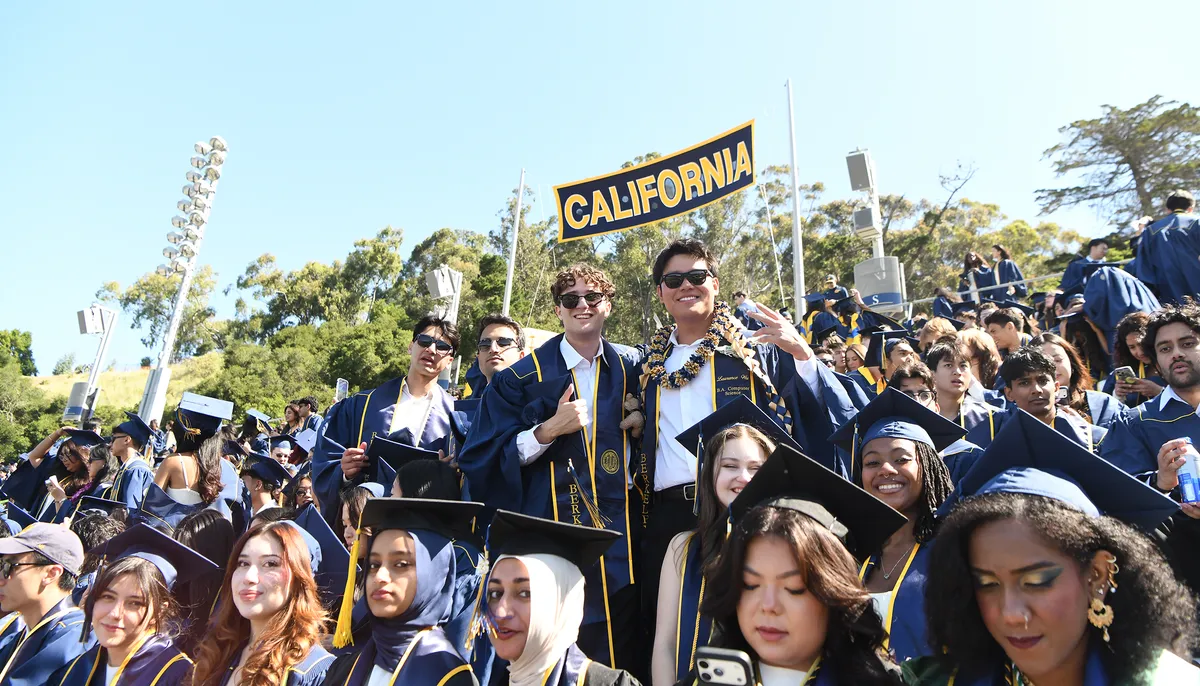
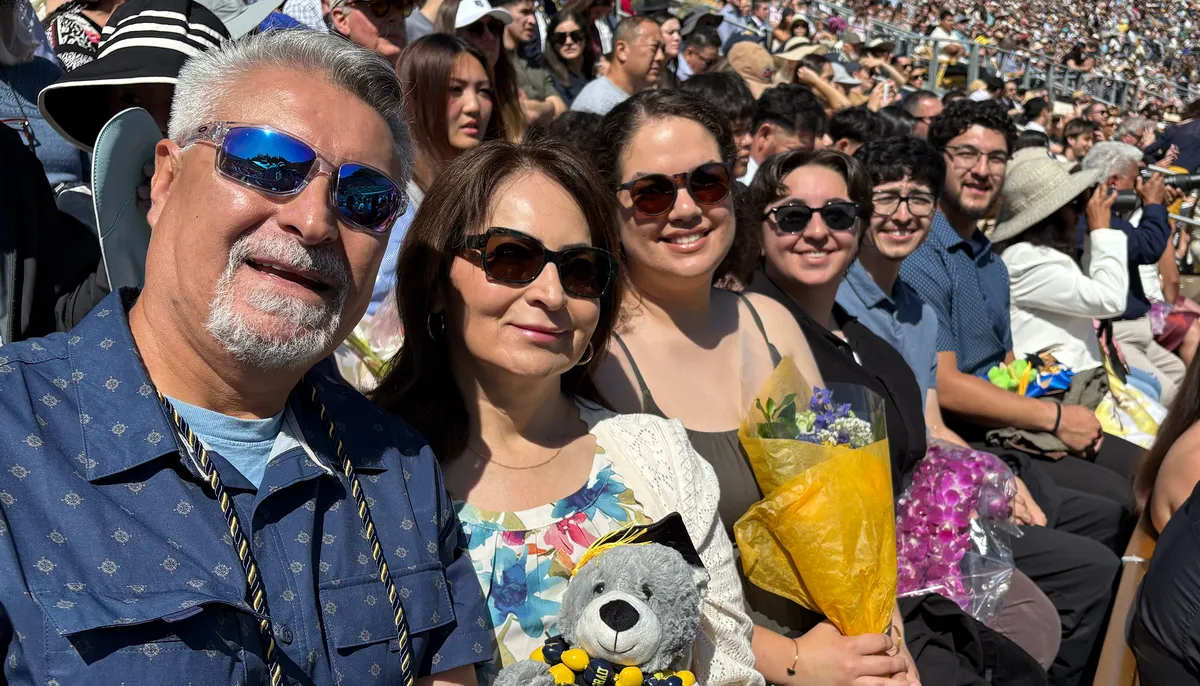
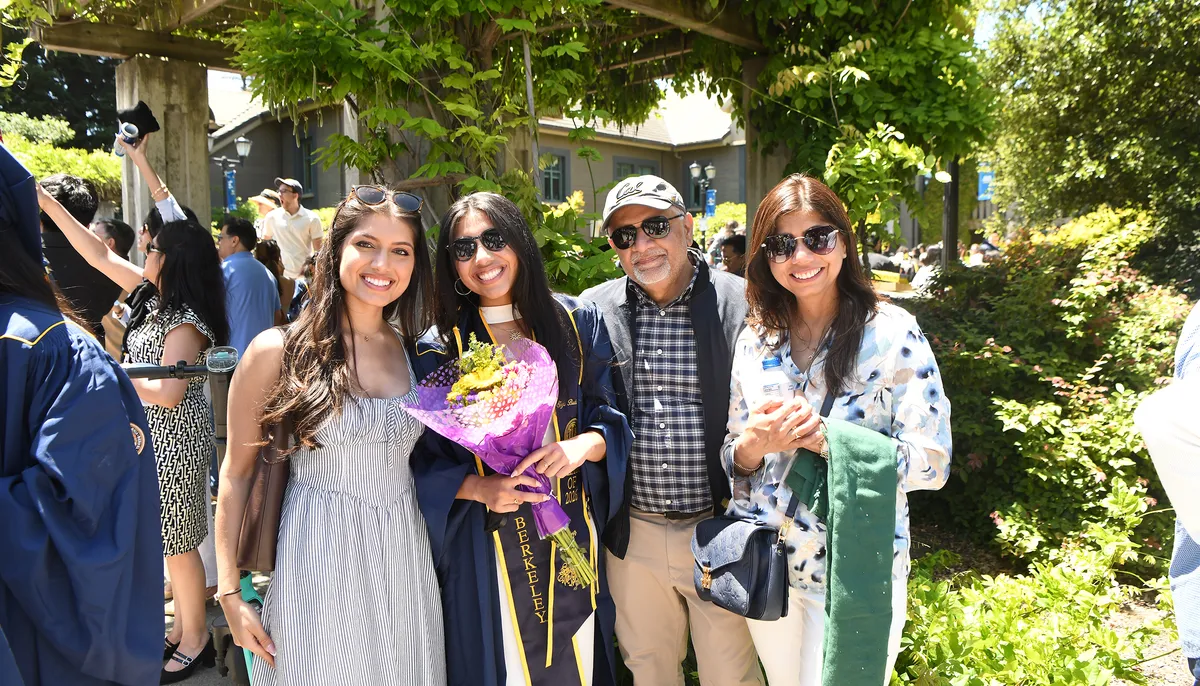
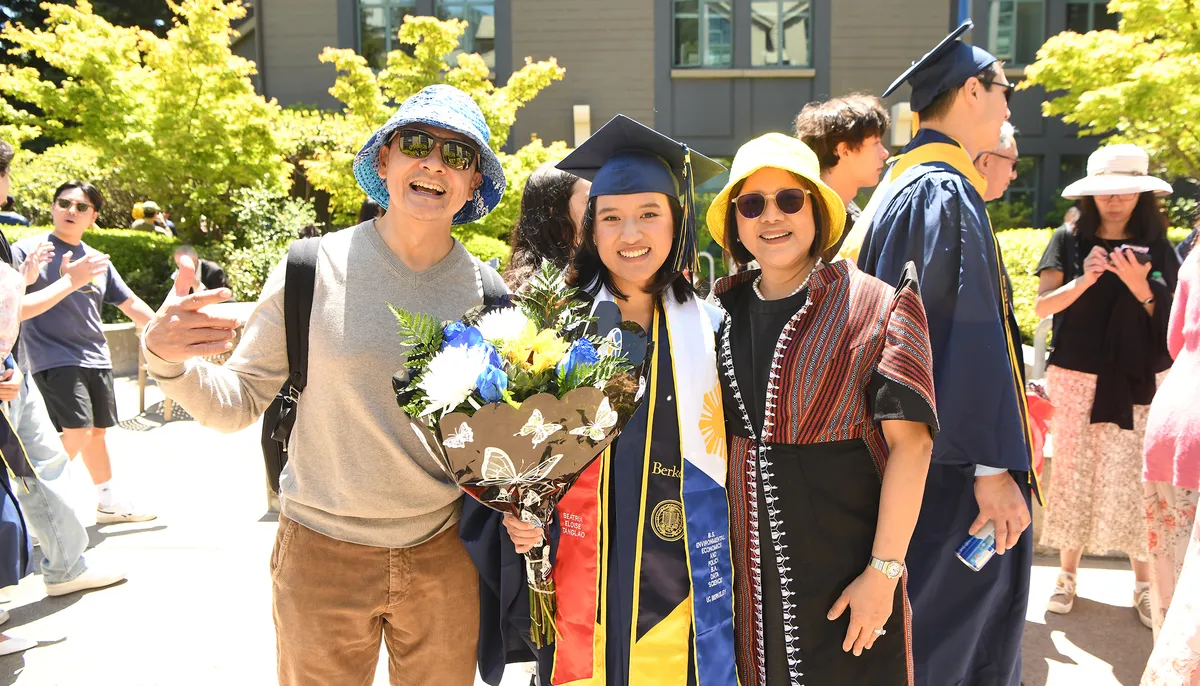
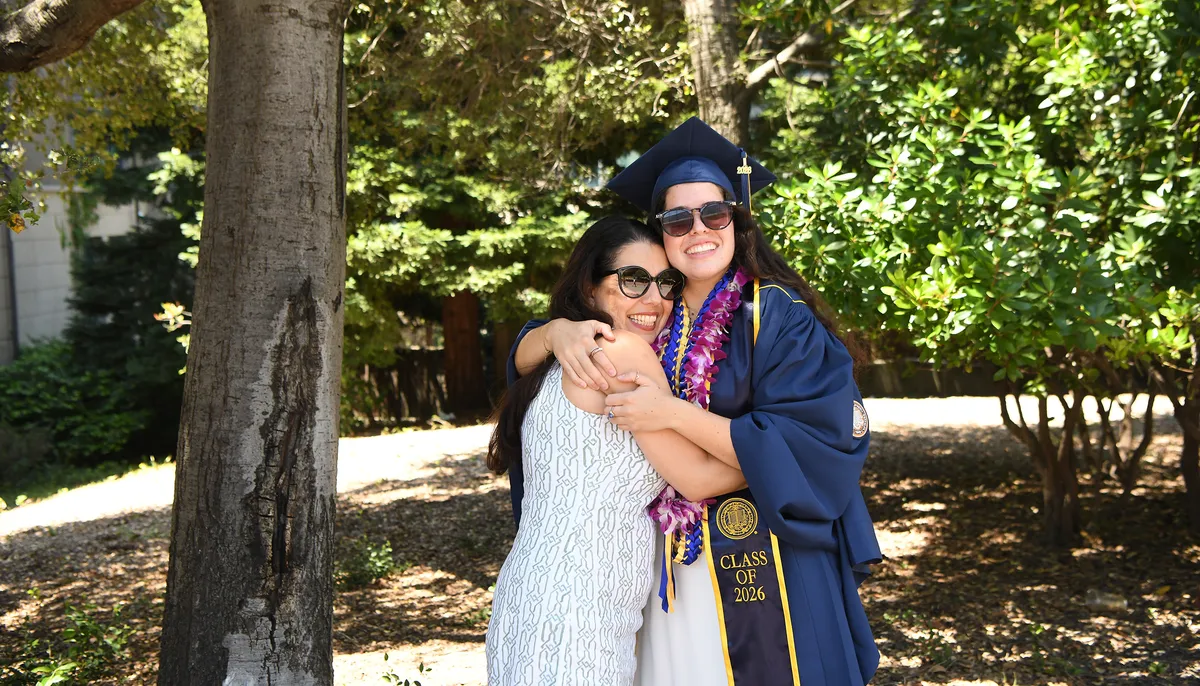
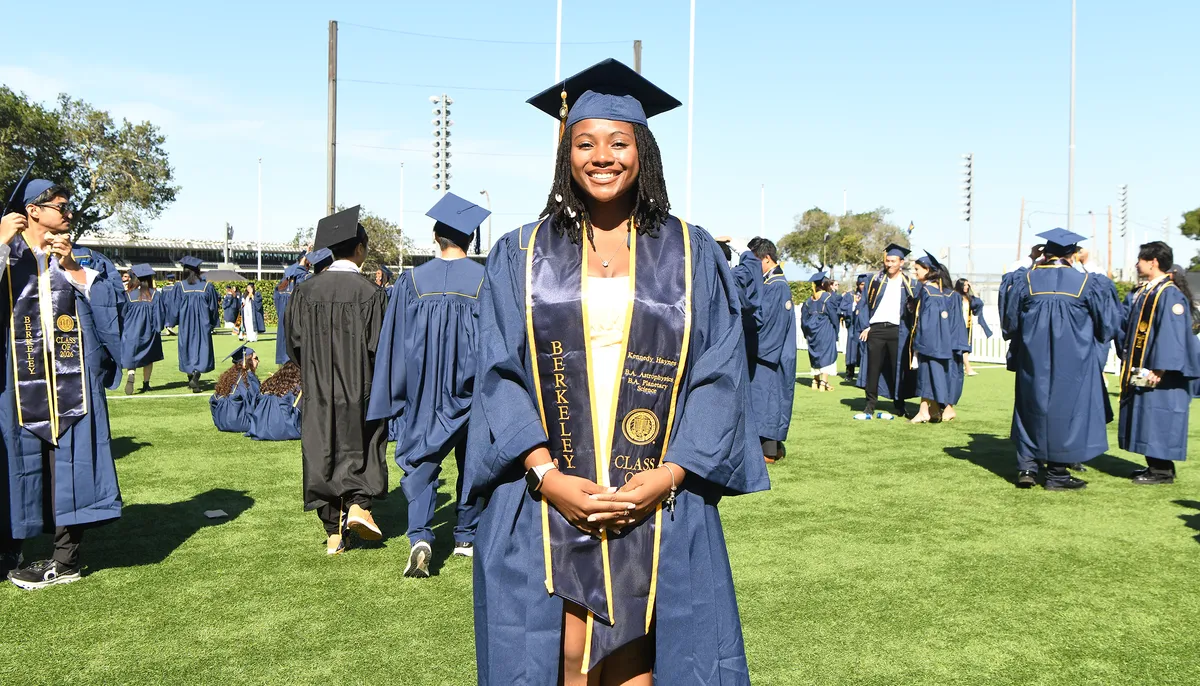

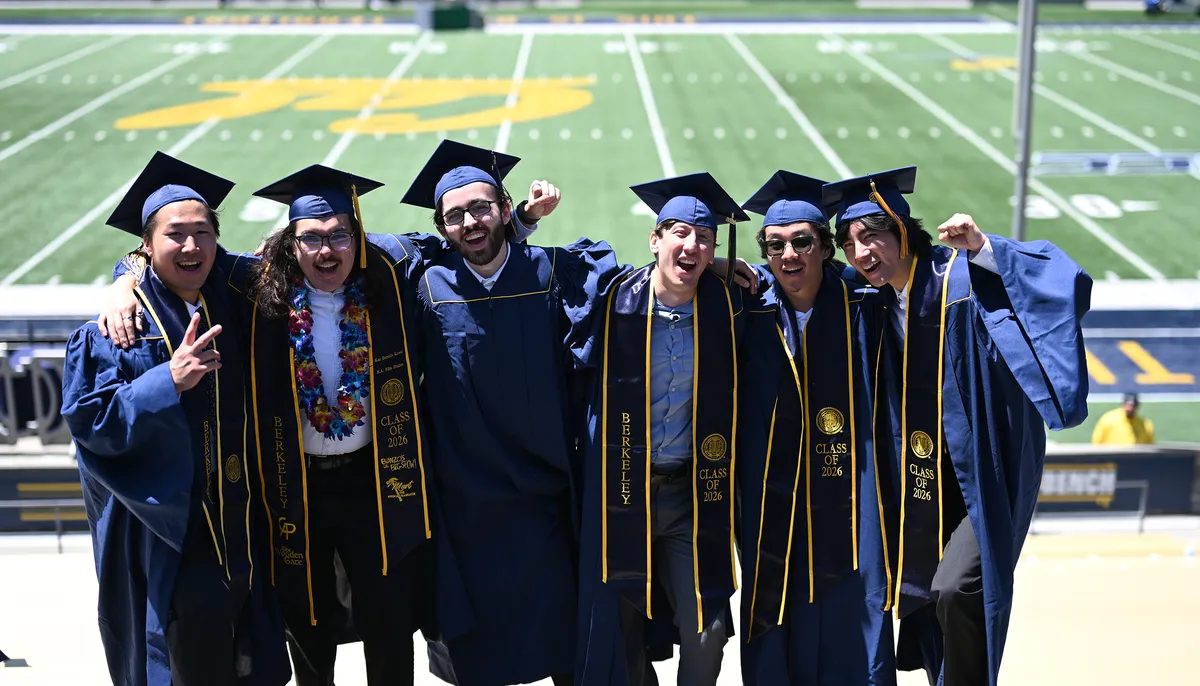
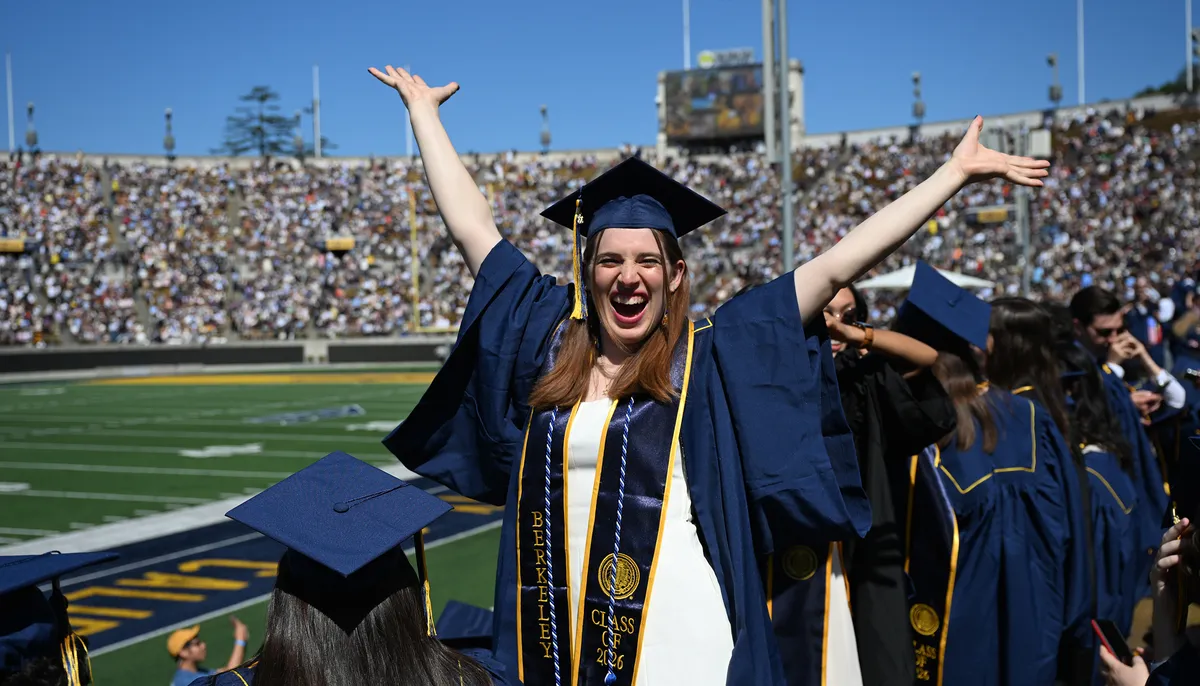
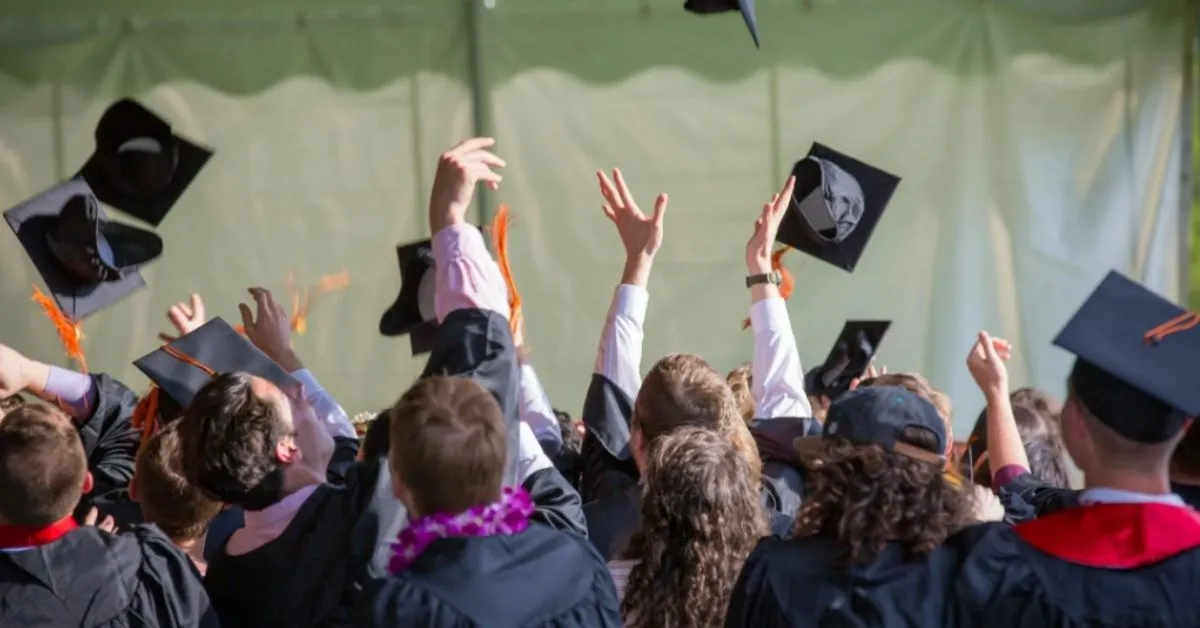
Saturday morning, UC Berkeley held its 2026 campuswide commencement ceremony. Over 7,000 graduating students gathered at California Memorial Stadium. They hugged, laughed, took selfies, and reflected on their academic achievements under a clear blue sky.
Throughout the morning, a key theme emerged: the importance of connection and community. This foundation will help graduates go out and change the world.
We're a new kind of news feed.
Regular news is designed to drain you. We're a non-profit built to restore you. Every story we publish is scored for impact, progress, and hope.
Start Your News DetoxBuilding Bridges and Making Change
Chancellor Richard K. Lyons spoke to the graduates. He urged them to use what they learned at Berkeley to build bridges. He called this a "period of profound societal division."
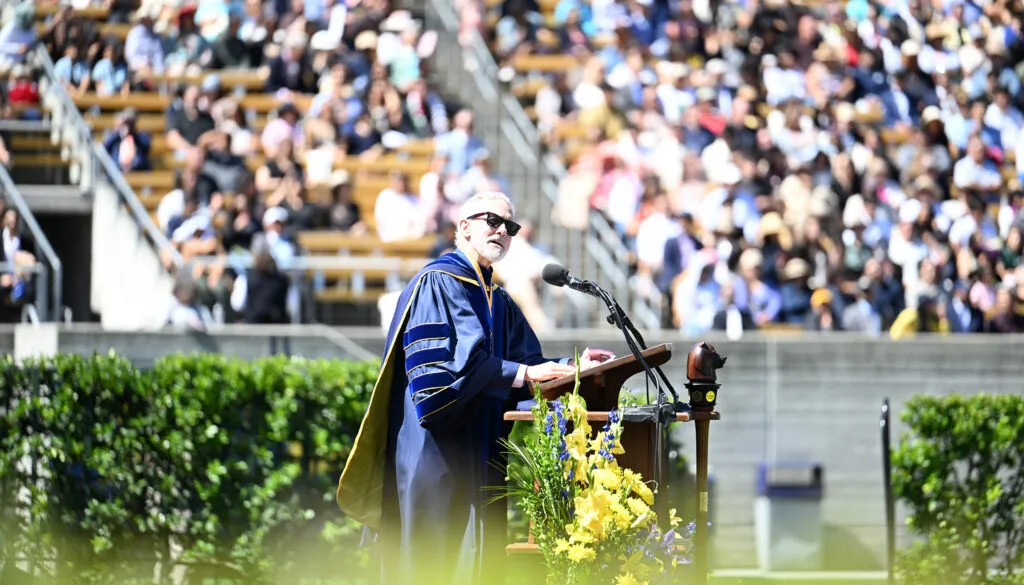
Lyons said students are "uniquely suited" to apply their knowledge to a high purpose. This purpose is to build bridges across divides that threaten to separate people. He told students to have empathy for others. He also encouraged them to always seek connection over division.
Robert Reich, this year's commencement speaker, echoed these ideas. He highlighted the power Berkeley grads have to make positive change. This is true even with big challenges ahead.
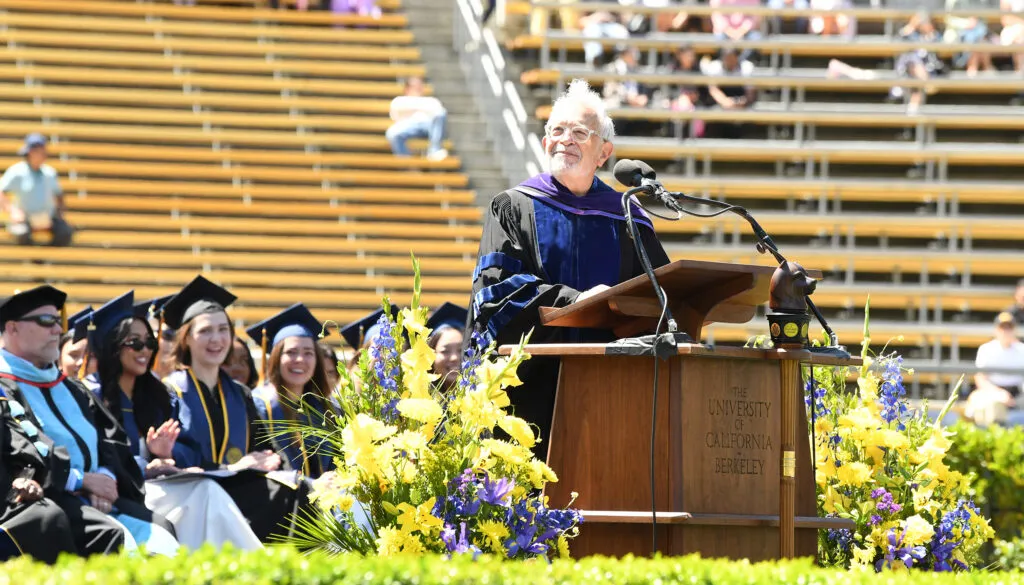
Reich is a professor emeritus at the Goldman School of Public Policy. He was also Secretary of Labor under President Bill Clinton. He acknowledged challenges like authoritarianism, climate change, and a turbulent world. But he believes graduates will use their learning to teach others. They will learn how to protect the powerless and hold the powerful accountable.
Reich ended by telling students to be their best, most authentic selves. He said, "You are the teachers and the leaders the world needs." The stadium filled with cheers and applause.
Embracing Identity and Community
Charles Long Jr., this year's University Medalist, praised the "organic intellectuals" in the class. These students came to college to learn how to serve their communities, not escape them.
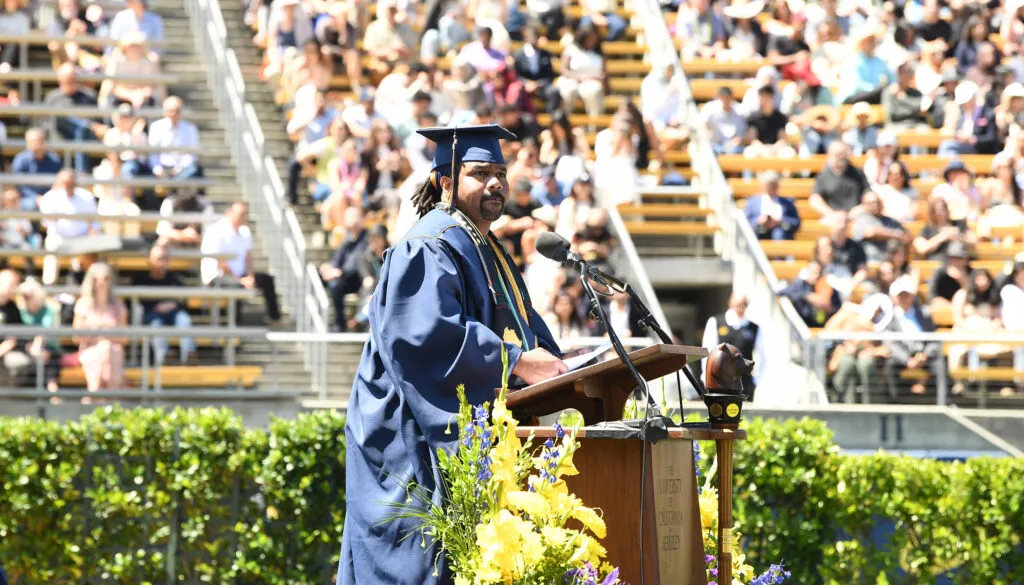
Long is a sociology and social welfare double-major. He overcame incarceration, homelessness, and a difficult childhood. He became this year's top senior. He stressed the importance of embracing differences to live an authentic life.
Long said, "The world does not need us all to agree on everything. It does need us to remember that we belong to one another." He added that people share a responsibility to leave others more free, safe, seen, and loved. He also advised building your own doors if others close, and holding them open for others.
Graduating students reflected on their Berkeley journeys. Ato Aliping, a sociology major, wants to practice law. He spoke about his parents' sacrifices. They immigrated from the Philippines so he could attend Berkeley. He might be the first person in his family's tribe to graduate. He wore its colors to honor this achievement.
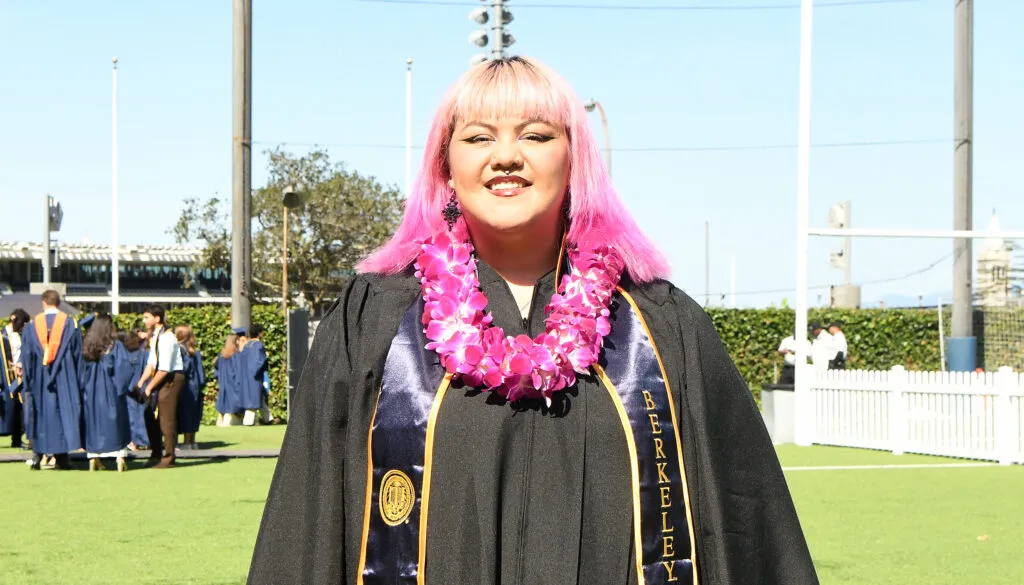
Aliping said his graduation meant "Everything" to his family. His dad served 30 years in the U.S. Navy. Aliping attended Berkeley with his dad's military benefits. He feels he owes a lot to his family and wants to represent his community.
Alicia Valenciana, a sociology major, shared her challenges. She struggled when she first arrived at Berkeley as a neurobiology major at age 17. Mental and emotional issues at home led to academic problems. She had to leave school for a while.
She was later readmitted as a sociology major. Now, she plans to be a school counselor. Valenciana believes school psychologists are greatly needed. They can help students who lack support systems at home.
Jared Kazhe found family in club Frisbee. The people he met, including Kyle Kim and Kainoa Huttendorf, became like family. He called it his "strongest community by far."
Kazhe is Mescalero Apache. He wore regalia to honor his Native identity. His uncle beaded his mortarboard. His grandmother made him a beaded medallion with his tribal seal. He also wore an eagle feather, symbolizing strength and power. He said it is worn during times of great accomplishment.
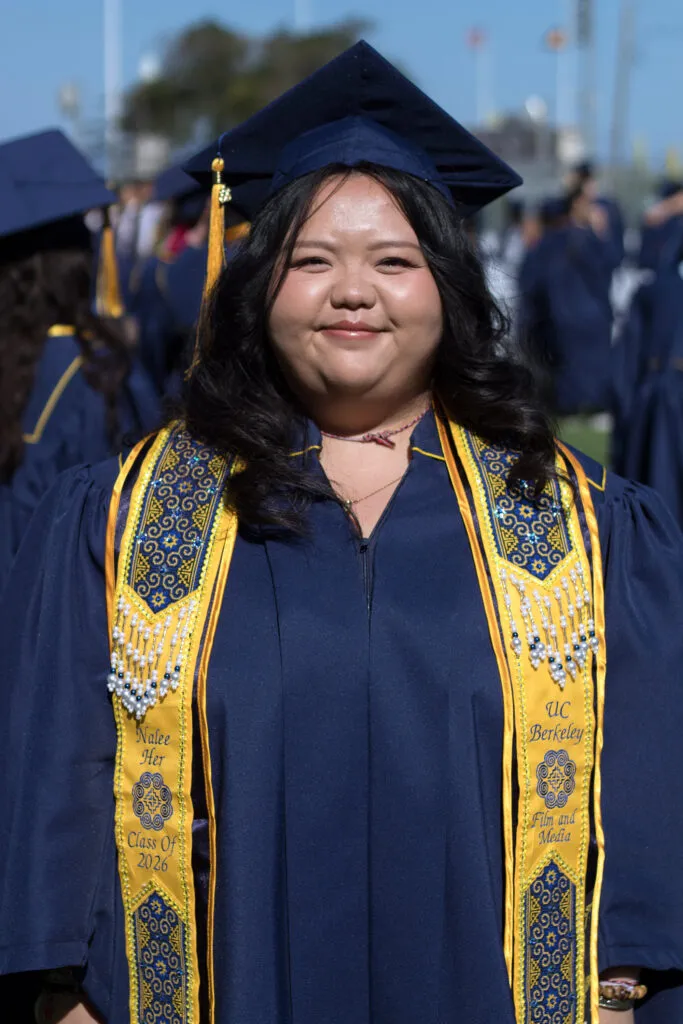
Na Lee Her, a film and media studies major, valued the support and belonging she found at Berkeley. She said meeting new people and learning about herself were the best parts.
Her is Hmong. She wore a stole with intricate blue and white embroidery called Paj Ntaub. She noted that few Hmong students attend Berkeley. The stole was a way to celebrate her roots.
After graduation, Her plans to stay on campus for film production experience. She hopes to go to New York someday. She enjoys being on set and involved in movie making.
Her advice to new students is to not give up. Even if things are challenging, she said, "One bad thing is not going to ruin your entire day." She encouraged them to feel it, let it pass, and do their best.
As the ceremony ended, students moved their tassels from right to left. Cheers and applause filled the stadium. Berkeley's newest alumni left with encouragement to make a difference. They seemed ready.