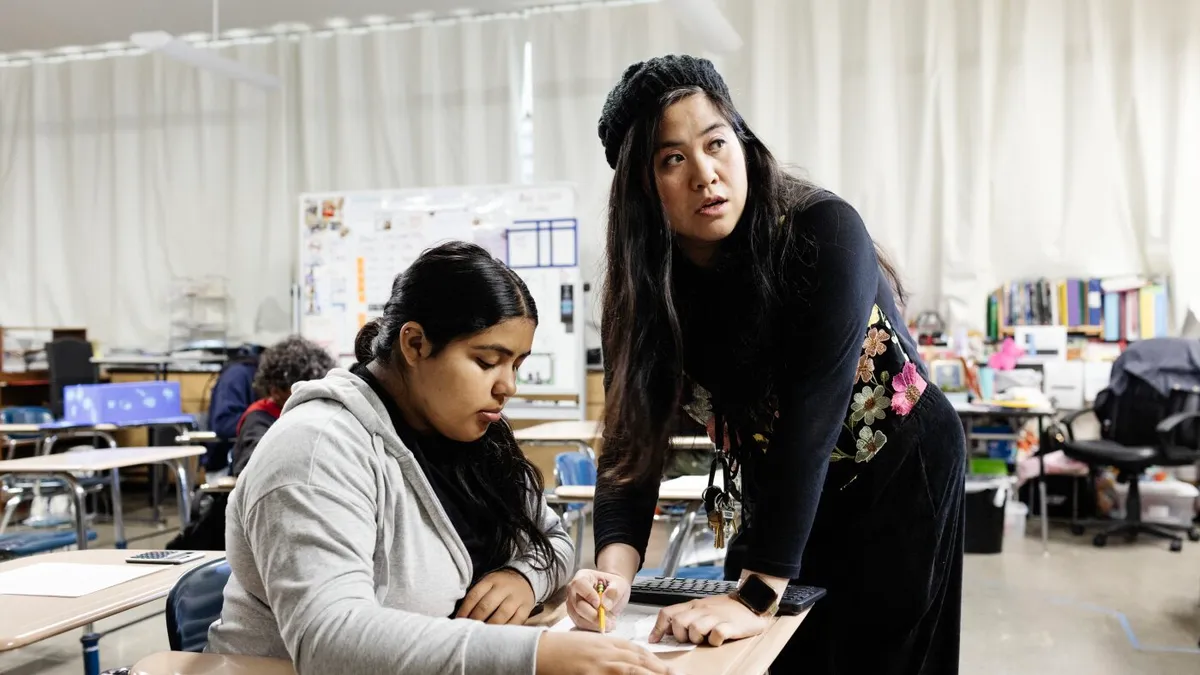
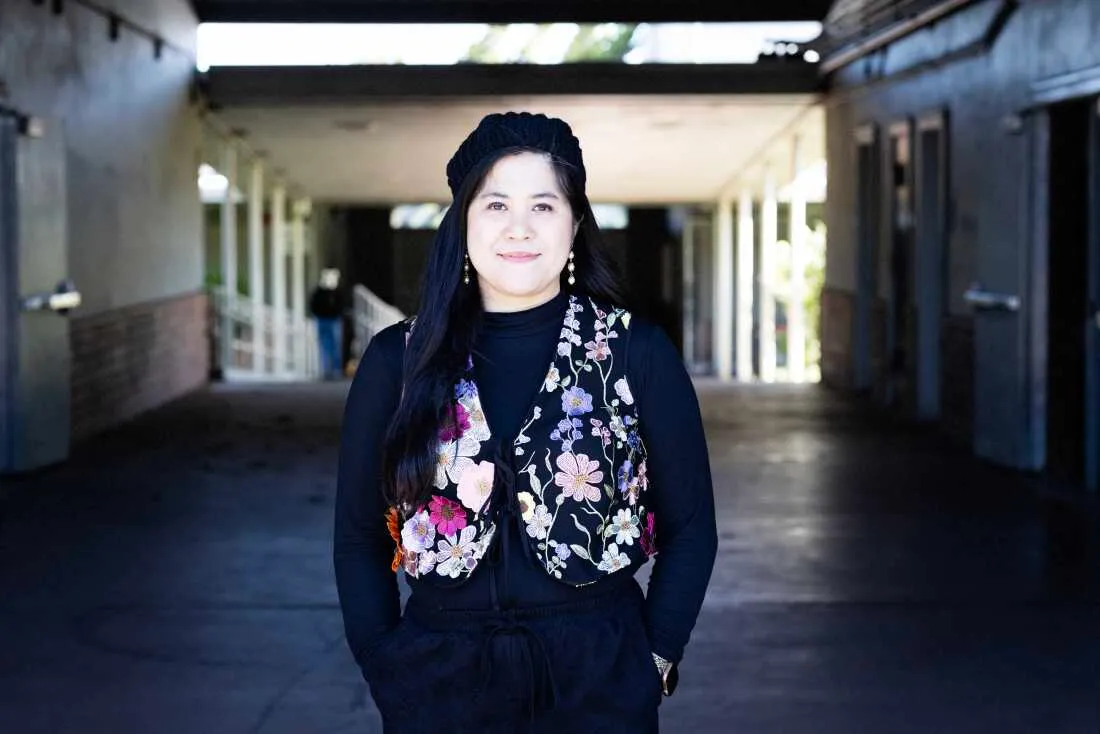
Mary Acebu, a special education teacher at Riverview Middle School in Bay Point, California, used to start her days before sunrise. She would arrive at school by 6:30 AM and often leave after dark, sometimes with more paperwork to do at home.
This demanding schedule was common for Acebu during her ten years of teaching. Many special education teachers nationwide face similar challenges.
Now, Acebu says her routine has changed. For the past two years, she has been using artificial intelligence (AI) to complete paperwork faster. This frees up time for her to interact more with her students. She can build stronger relationships instead of spending hours in front of her computer.
We're a new kind of news feed.
Regular news is designed to drain you. We're a non-profit built to restore you. Every story we publish is scored for impact, progress, and hope.
Start Your News DetoxAI Helps Teachers Manage Workload
Schools across the country have struggled to hire and keep special education teachers. In the 2024-25 school year, 45 states reported shortages. Turnover is especially high in schools serving low-income students, like Riverview.
Special educators often feel overwhelmed by the legal paperwork required in addition to their teaching duties. Individualized Education Programs (IEPs) are a major part of this. These detailed documents outline a student's goals and the services they need at school.
Acebu is one of a growing number of teachers using AI to help with this paperwork. A recent survey by the Center for Democracy and Technology (CDT) found that 57% of special education teachers used AI to help develop IEPs in the 2024-25 school year. This is up from 39% the year before.
The CDT report also warned about privacy, legal, and ethical risks with AI use. However, research from the University of Virginia (UVA) and the University of Central Florida (UCF) suggests that AI can help teachers create IEPs of equal or better quality when used correctly.
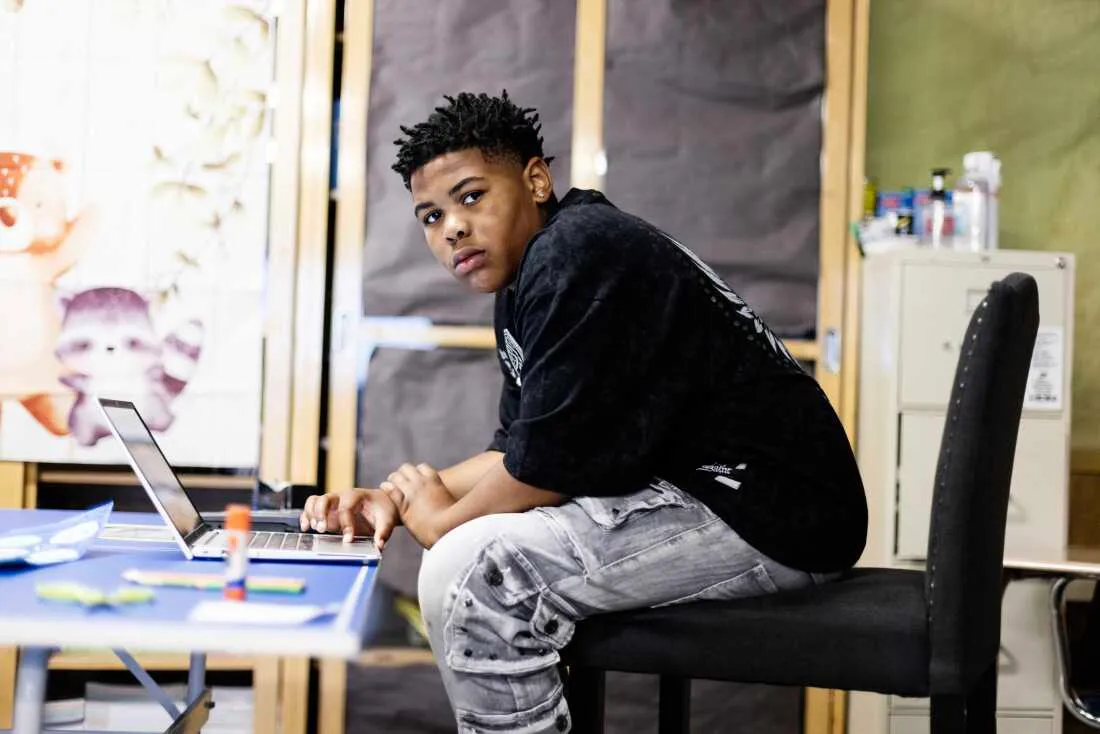
Olivia Coleman, a researcher and professor at UCF, studies AI in special education. She says that more face time with a teacher often leads to better outcomes for students with disabilities. Acebu has seen this in her own classroom. She notes that King, an eighth grader, was a non-reader at the start of seventh grade but is now reading. Acebu believes this is possible because AI gives her more time for hands-on work with students.
Understanding IEPs and Their Importance
Every student in Mary Acebu's seventh and eighth-grade classes learns differently. Some work alone, others in pairs, and some use headphones or speech-to-text technology. These individual needs are detailed in each child's IEP. Federal law requires these documents for over 8 million students with disabilities in the U.S.
Danielle Waterfield, Coleman's research partner at UVA, explains that IEPs include annual goals based on a student's current needs and where they should be in the next year. Both researchers agree that while IEPs can be time-consuming, they are essential for students with disabilities to receive a quality education.
Acebu emphasizes that teachers must deeply understand each student's learning style to develop these goals. The process involves many meetings and knowledge of complex education laws. It used to take Acebu about 45 minutes to create three or four IEP goals per student, often requiring her to flip through a thick binder of California's education standards.
AI with a "Human Touch"
A few years ago, Acebu started learning how to use AI safely. Her district, Mt. Diablo Unified, partnered with education-focused AI companies like MagicSchool AI and Google. These companies promise to protect sensitive student data, which is a key concern when using AI in schools.
More districts are adopting these tools, though only a few states have official AI education policies. Acebu has customized chatbots for her school, training them on state standards and special education data. She now uses these "little assistants" for tasks like creating personalized worksheets and developing IEP goals.
She stresses the importance of a "human touch" in the process. Teachers must double-check everything the AI produces.
Coleman and Waterfield's research shows that special education teachers use AI for many tasks. These include writing IEP goals, tracking student progress, summarizing data, and creating different learning materials.
Acebu, who has a doctorate in instructional technology, is also on her district's AI task force. This group is developing an official AI policy.
Paul Stone, a special educator at Riverview for 22 years, was initially skeptical of AI. However, when his student caseload increased, he felt overwhelmed. After Acebu showed him how to use her chatbot, he tried it. He found it to be an "amazing time-saver" for tasks like summarizing complex data for parent meetings. He still checks the AI's work but believes it can help teachers avoid burnout.
Ariana Aboulafia, lead author of the CDT report, views AI tools as a "Band-Aid" for overworked special education teachers.
Guardrails for AI in Special Education
Despite concerns, more teachers are using AI. Student privacy is a top concern, especially in highly regulated special education. Acebu advises against putting identifying student information into AI tools. Aboulafia notes that even with vetted vendors, data breaches remain a risk.
Not all teachers use district-approved tools. Research by Coleman, Waterfield, and CDT found that educators use both formal and informal AI tools. These range from free platforms like ChatGPT to approved tools like MagicSchool AI and Google Gemini.
To help teachers, Waterfield and Coleman created a "decision tree" for ethical AI use.
Aboulafia also points out that AI models can have biases, including against people with disabilities. She worries that AI models based on pattern recognition might conflict with the legal requirement for individualized education. She is most concerned about the 15% of teachers who rely entirely on AI for IEP development, stressing the need for a "human in the loop."
Acebu, who was named her district's teacher of the year, now arrives at school 30 minutes before students and leaves right after the last bell. This has improved her work-life balance and teaching quality. King, the eighth grader, now attends math class without extra support. Acebu calls this the "dream of every special educator" and says AI tools give her more time for the hard work needed to achieve it.
Deep Dive & References
- Teacher Shortages in Subjects Across States Factsheet - Learning Policy Institute
- CDT AI IEP Brief - Center for Democracy and Technology, 2025
- Navigating AI in IEP Development: A Framework for Ethical Practice - CIDDL
- The Journal of Special Education - SAGE Journals