

Indonesia's environmental crisis isn't abstract—it's personal. For most Indonesians, it arrives in the air they breathe.
Some remember childhoods under yellowed skies, peat-fire smoke seeping through school windows, that sweet-acrid smell clinging to clothes long after the fires fade. Others know rising seas by the way ground squelches underfoot in places where it didn't used to. Or the metallic taste of Jakarta's air on mornings when pollution monitors glow red.
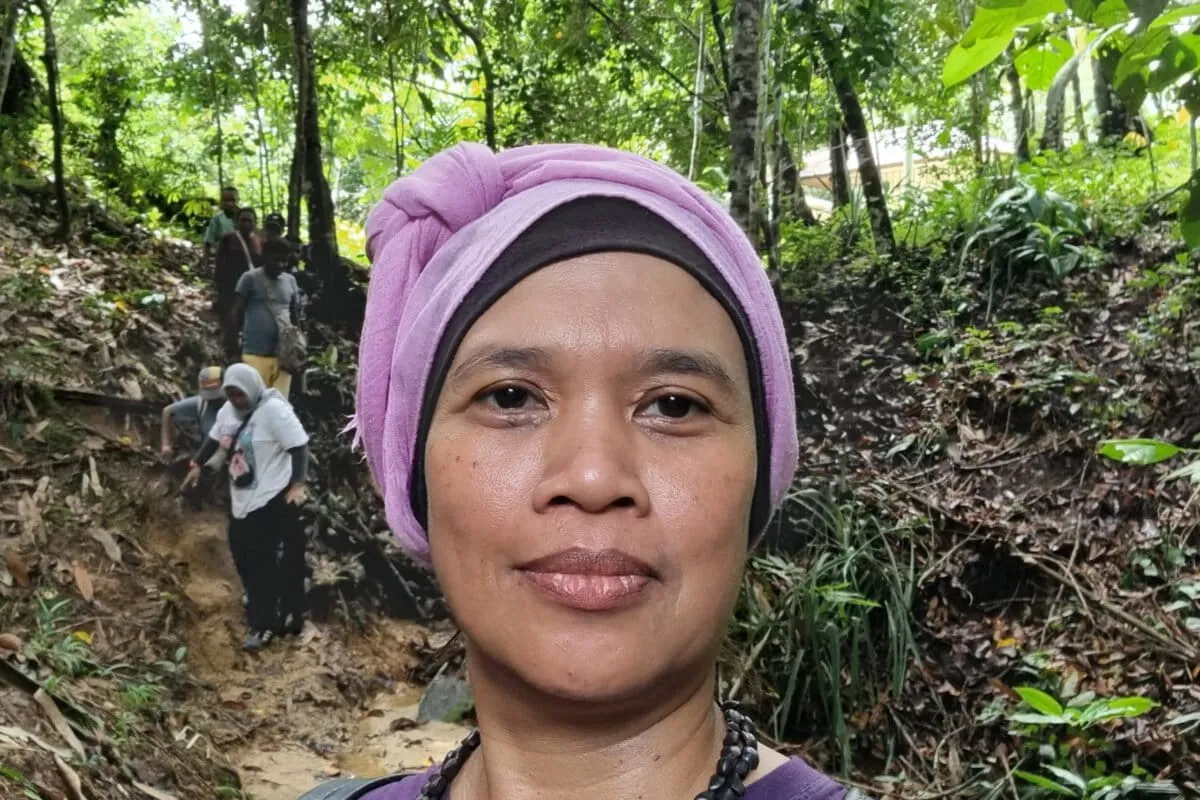
For Sapariah "Arie" Saturi, these scenes aren't data points. They're a biography.
We're a new kind of news feed.
Regular news is designed to drain you. We're a non-profit built to restore you. Every story we publish is scored for impact, progress, and hope.
Start Your News DetoxA childhood shaped by fire and forest
Arie grew up along the Kapuas River in West Kalimantan, a region caught between forest, peatland, and the machinery of extraction—logging firms, palm-oil operations, mining companies all competing for the same land. Each dry season in the 1990s, fires arrived. With them came the haze: skies so darkened that eyes burned after minutes outdoors, a muffled stillness thick enough to dull both sound and color. Masks were rare then. Children simply endured.
West Kalimantan sits at the edge of some of Indonesia's most biodiverse forest. It's also one of the nation's commodity frontiers—a place where the pressure to convert land into profit has been relentless. The fires Arie witnessed weren't natural. They were clearing fires, set to make way for plantations and development. Year after year, the same rhythm: dry season, smoke, invisible damage to lungs and forests alike.
Today Arie lives in Jakarta, where the problems wear different faces but cut just as deep. The capital sinks a little each year as aquifers deplete. Traffic clogs the streets. Air quality swings between bad and dangerous. But her childhood in Kalimantan left her with something: a refusal to treat these crises as someone else's problem.
Indonesia contains the world's third-largest tropical rainforest and sits across more than 17,000 islands. It's also one of the fastest-changing landscapes on Earth. The story of that transformation isn't told in policy papers or commodity prices. It's told in the lungs of people like Arie, who grew up breathing the cost of development and decided to bear witness to it.
What happens next depends on whether that witness becomes action—whether the personal becomes political, and whether Indonesia's environmental challenges remain a biography written in smoke and sinking soil, or become a story that can still be rewritten.





