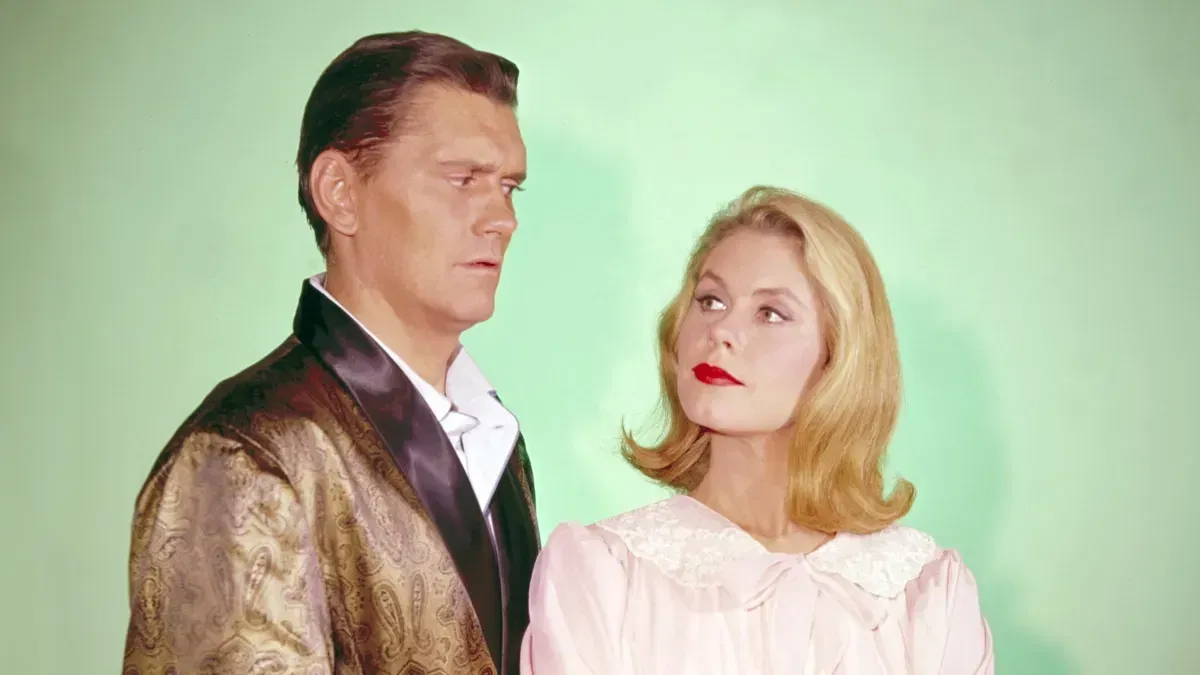
On January 13, 1966, television audiences watched Darrin and Samantha Stevens become parents. Their daughter Tabitha arrived in the season 2 episode "And Then There Were Three," and with her came a quiet shift in the show's DNA — suddenly the magical family had stakes beyond the weekly spell-gone-wrong.
It's been six decades since that hospital scene aired, and Erin Murphy, who played Tabitha as a child actor, recently shared a throwback photo from the set. At 61 now, she's standing in the same playpen where she worked as a young girl, and the resemblance is striking enough that fans struggled to process the math. "Tabitha you definitely are not 60 today. Maybe 45 at max," one viewer commented, as if the passage of time itself might be negotiable.
The birth episode resonated differently than most sitcom plot points. Fans still recall specific moments — the emotional hospital scene between Darrin and Endora, the comedic timing of Eve Arden as Nurse Kelton sparring with Samantha's mother and aunt. For many viewers, it wasn't just a show moment; it was something their own families gathered around. One fan wrote about watching with her mother, remembering her excitement when Tabitha was born, unable to reconcile that memory with six decades of actual time passing.
We're a new kind of news feed.
Regular news is designed to drain you. We're a non-profit built to restore you. Every story we publish is scored for impact, progress, and hope.
Start Your News DetoxA show that grew with its audience
The timing mattered. Bewitched itself was shifting. Elizabeth Montgomery, the actress behind Samantha, was pregnant in real life during season 6, and the show wove that into the narrative by adding Adam, the Stevens' son. The family expanded on screen as it did off, collapsing the distance between performance and life in a way that early 1960s television rarely attempted.
What made Tabitha's arrival land so deeply was that it gave the show's central tension — the clash between Samantha's magical heritage and Darrin's desperate desire for a normal life — actual consequences. A baby changed the stakes. Spells weren't just about keeping up appearances anymore; they were about protecting someone vulnerable.
Murphy has spent the decades since sharing those Bewitched memories with her own grandchildren, passing the show forward across generations. The episode that aired when most of today's grandparents were young enough to watch it together has become the kind of cultural artifact that doesn't fade — it just accumulates meaning, gathering new viewers who discover it on streaming services and wonder why a 1966 sitcom about a witch and her mortal husband still feels oddly relevant.
Six decades later, Tabitha's birth remains one of television's more durable moments — not because it was flashy, but because it was real in a way that mattered.