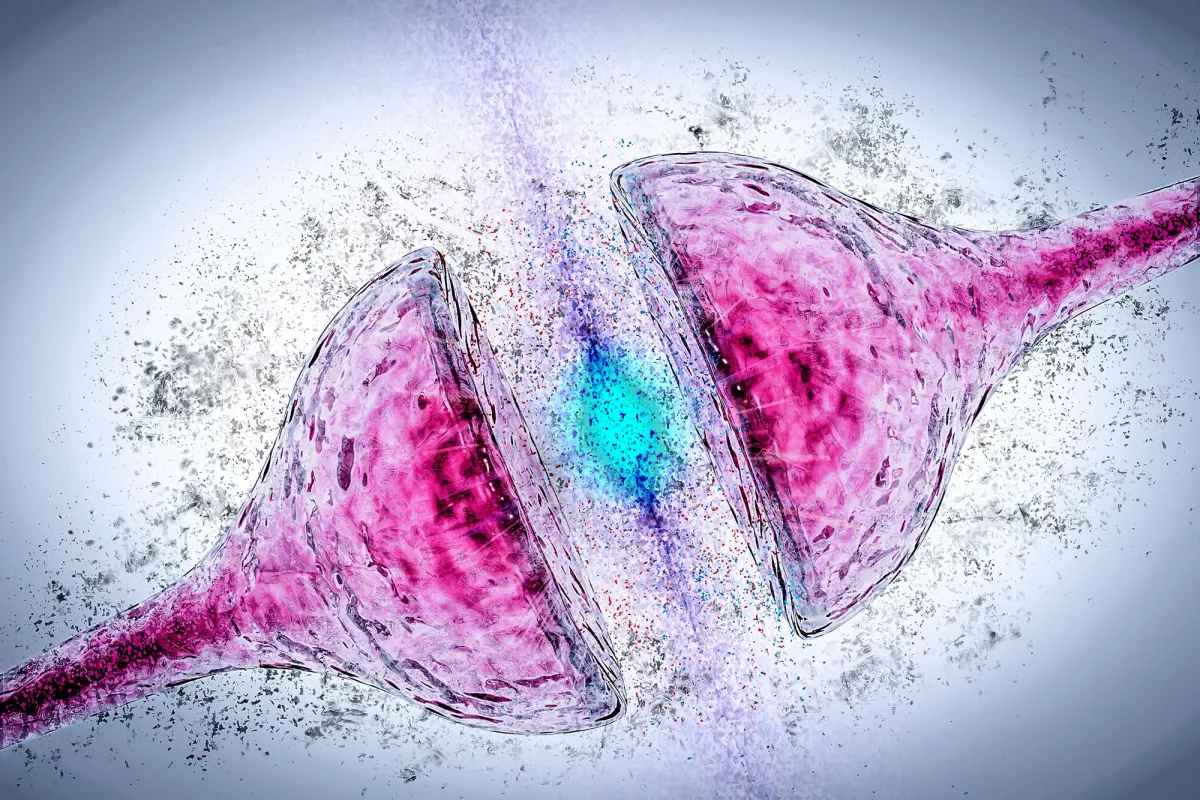
Researchers at Brown University have found a pattern in brain electrical signals that can predict Alzheimer's disease up to two and a half years before diagnosis. The discovery opens a window into catching the disease early, when intervention might matter most.
The study tracked 85 people with mild cognitive impairment over several years, recording their brain activity using magnetoencephalography (MEG) — a noninvasive method that picks up electrical signals while patients rest quietly with their eyes closed. The researchers weren't looking at brain structure or spinal fluid markers. They were watching the brain at work.
A New Way to Read Brain Signals
Traditional approaches to analyzing MEG data average signals together, which can smooth over crucial details about how individual neurons actually behave. Stephanie Jones and her team at Brown's Carney Institute developed a new computational tool called the Spectral Events Toolbox that does something different: it breaks brain activity into distinct events, capturing when signals fire, how often, how long they last, and how strong they are. The tool has already been cited in over 300 academic studies.
We're a new kind of news feed.
Regular news is designed to drain you. We're a non-profit built to restore you. Every story we publish is scored for impact, progress, and hope.
Start Your News DetoxUsing this method, the researchers focused on the beta frequency band — a pattern of brain activity linked to memory and known to be relevant in Alzheimer's research. When they compared beta activity between people with mild cognitive impairment who later developed Alzheimer's and those whose condition remained stable, a clear difference emerged.
People who went on to develop Alzheimer's within two and a half years showed noticeably weaker beta signals. Their brain was producing fewer beta events, they lasted shorter periods, and they carried less power. "To our knowledge, this is the first time scientists have looked at beta events in relation to Alzheimer's disease," said Danylyna Shpakivska, the study's lead author based in Madrid.
Why This Matters Beyond the Lab
Current biomarkers — found in blood or spinal fluid — can detect the physical hallmarks of Alzheimer's: amyloid plaques and tau tangles. These proteins accumulate in the brain and are believed to drive the disease. But detecting the proteins doesn't tell you how the brain itself is responding to the damage. A biomarker based on actual brain activity offers something more direct: a window into whether neurons are struggling under stress.
This distinction matters for treatment. If researchers can identify people at high risk years before cognitive decline becomes noticeable, there's time to test interventions. Jones sees the Spectral Events Toolbox eventually helping clinicians catch Alzheimer's earlier and measure whether treatments are working.
The team is now moving into the next phase of research, funded by a Zimmerman Innovation Award. The goal is to understand the mechanisms generating these signals — to recreate what's going wrong in the brain computationally. If they can model the problem, they can begin testing therapeutics that might correct it.
The work was supported by the National Institutes of Health, including the BRAIN Initiative, and funding agencies in Spain.