In 1965, Black Americans marched peacefully for voting rights in Alabama. They were beaten by state troopers. Two weeks later, they finished their march with federal protection.
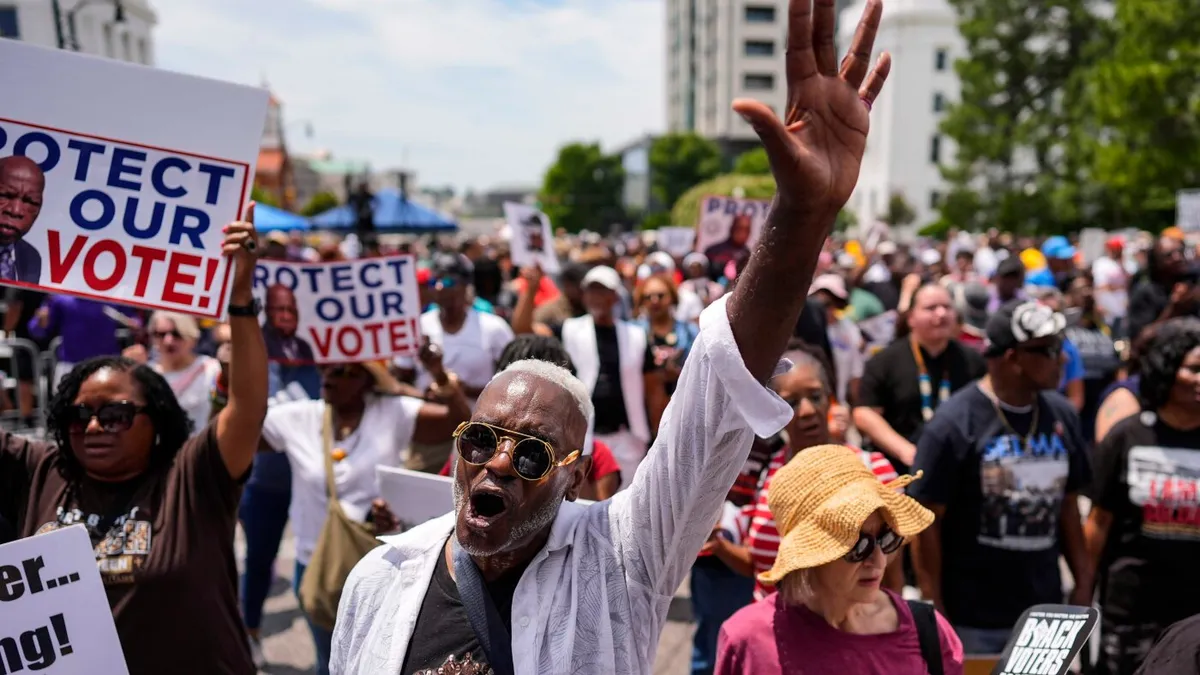
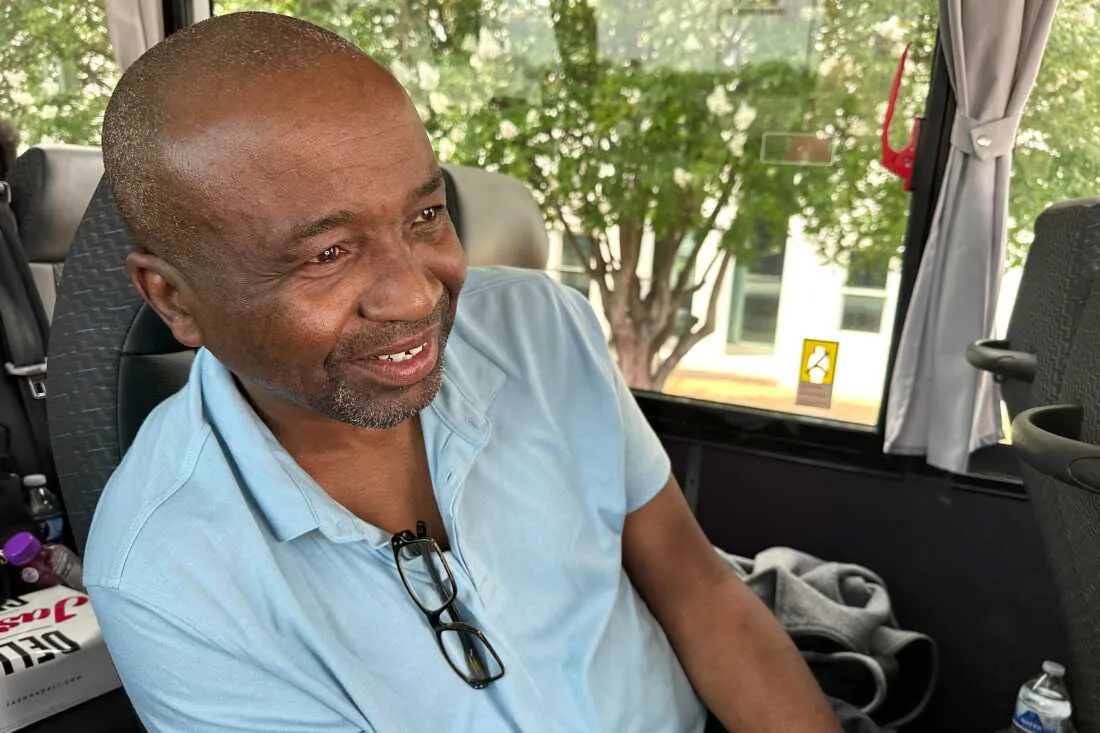
Keith Odom was a toddler then. Now 62, the union worker and grandfather retraced those steps. He traveled from Aiken, South Carolina, to Atlanta. There, he joined dozens of activists on two buses to Montgomery, Alabama.
He stepped off his bus onto Dexter Avenue, where the original march ended. Odom, who is Black, spoke about the history and the feeling of being there.
We're a new kind of news feed.
Regular news is designed to drain you. We're a non-profit built to restore you. Every story we publish is scored for impact, progress, and hope.
Start Your News DetoxOdom saw the Alabama Capitol and a stage where Rev. Martin Luther King Jr. ended the first march. He noted that he and other bus riders were not just remembering that day. They came to restart the fight.
The 1965 march helped pass the Voting Rights Act. This law expanded political power for Black and other nonwhite voters for over 50 years.
Renewing the Fight for Voting Rights
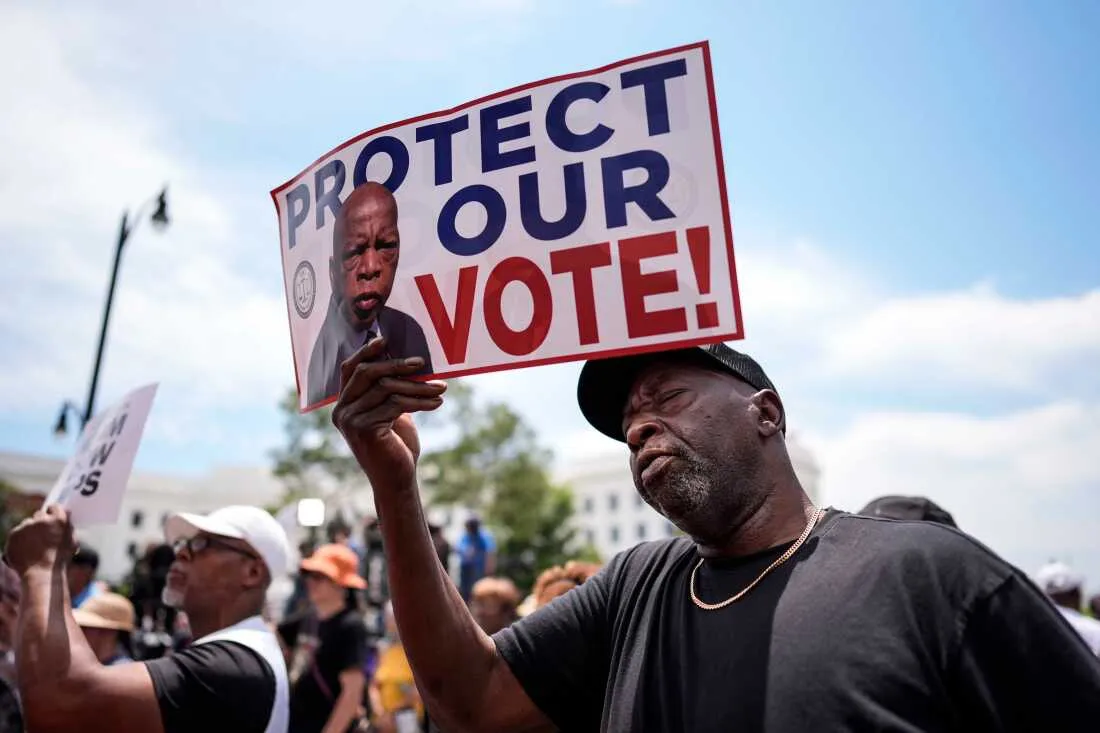
Saturday's "All Roads Lead to the South" rally was a response to a U.S. Supreme Court ruling. This ruling weakened the Voting Rights Act. The justices decided that considering race when drawing political lines is discriminatory. This ruling was 6-3 and struck down a majority-Black congressional district in Louisiana.
This decision led states like Alabama to redraw U.S. House districts. These new lines make it harder for Black voters to elect their chosen lawmakers.
Odom said he does not want to go backward. He wants his grandchildren to move forward.
The people on the buses and the scene in Montgomery echoed the past. Justice Washington, a Kennesaw State University student, spoke to her grandmother. Her grandmother was excited and told her it was her turn to do her part.
No one on the Atlanta buses was old enough to vote when the Voting Rights Act became law. The youngest attendee was born when Barack Obama became president in 2008.
Kobe Chernushin, 18, just finished high school. He is an organizer with the Georgia Youth Justice Coalition. He filmed Khayla Doby, 29, an executive for the group, for social media. Chernushin believes in the power of showing up.
The buses started from the district once represented by John Lewis. Lewis was injured on the Edmund Pettus Bridge in Selma in 1965. Lewis died in 2020. Some on the buses celebrated a proposed federal election overhaul named after him. This bill would strengthen the Voting Rights Act and stop gerrymandering.
Darrin Owens, 27, said he is there because of the same reasons that motivated John Lewis. Owens has worked for Kamala Harris and now trains Democratic candidates. He attended the rally as a citizen. He believes political activism is personal. As a Black person in the South, he wants to stop what he sees as un-American. He fears being represented by someone who does not understand his community.
When Owens arrived, he saw no federal authorities. In 1965, federal protection was present. This time, many Alabama troopers and local officers were Black.
Fair Fight Action organized the buses and lunches. This group is part of the network built by Stacey Abrams. She ran for governor of Georgia in 2018 and 2022.
Different Generations, Shared Stories
Montgomery is known as both the cradle of the Confederacy and the cradle of the modern Civil Rights Movement.
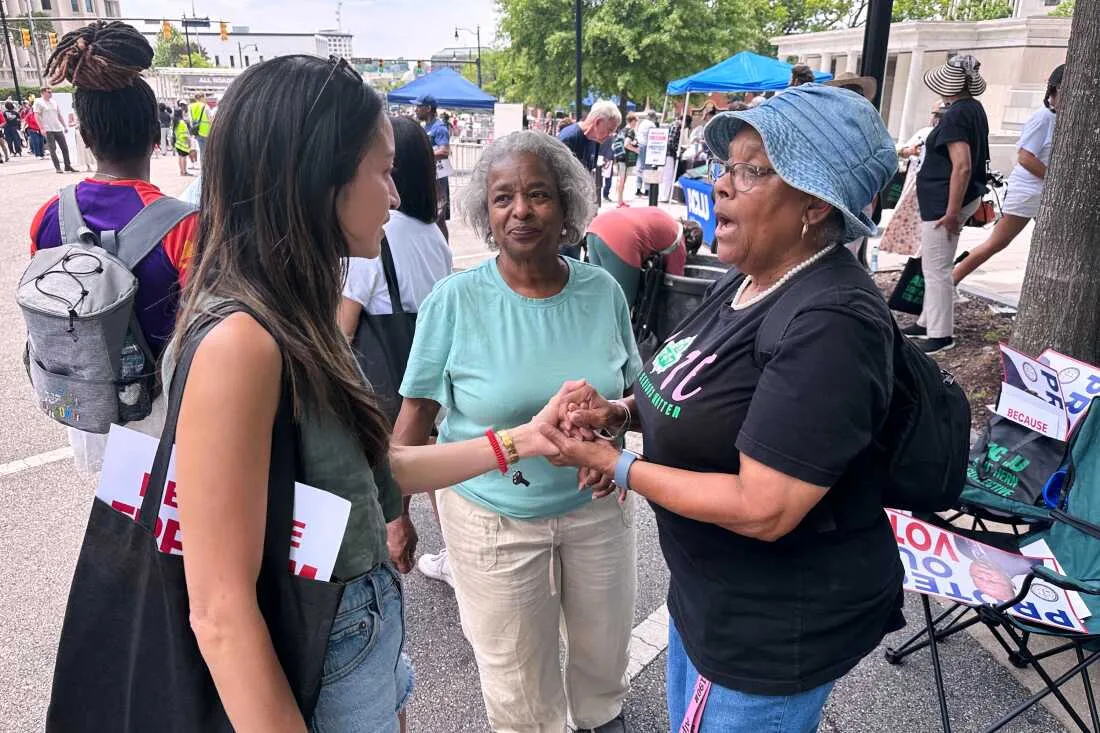
Phi Nguyen, 41, is a civil rights lawyer in Atlanta. She said the country seems stuck in a pattern of progress, then backlash, then fighting the same battles again. She stood near the church where Martin Luther King Jr. led the Montgomery Bus Boycott in 1955. She was also near where Jefferson Davis became the Confederate president in 1861.
Nguyen and her sister Bee, 44, met Carole Burton and Tondalaire Ashford. Burton and Ashford are 72-year-old Montgomery residents. They have been friends since segregated junior high school and then newly desegregated Sidney Lanier High School.
Ashford said it was never real integration. She noted that they could not just blend in. Burton described them as being in the "second wave" of Black students. She said it was not easy, and they had to support each other.
They remembered their parents could not vote due to poll taxes and literacy tests. These were later outlawed by the Voting Rights Act. They shared family histories with the Nguyens.
Burton said immigrants, descendants of enslaved people, and Native Americans have different but overlapping paths. She said they just want to be treated equally, with the same rights and opportunities promised by the country. She believes the country has not fully lived up to its promises.
Conflicting Legacies
Keith Odom believes the current Supreme Court reinforced history. He thinks they failed to see race-conscious election policy as a way to ensure fair representation.
He remembers decades of being represented by Strom Thurmond, a segregationist governor and senator. Odom fears his state losing U.S. Rep. Jim Clyburn through redistricting. Clyburn is a senior member of the Congressional Black Caucus. Odom asked why they want to take away that legacy when they are still living with Thurmond's.
Odom also worries that the young people at the rally are outliers, not a new wave of activists. He spoke to a 20-year-old co-worker about the trip. She supported him but did not want to work for anyone running for office. She wondered what any of them would do for her.
Despite this, Odom said he would tell her what he saw and heard on his way home.