

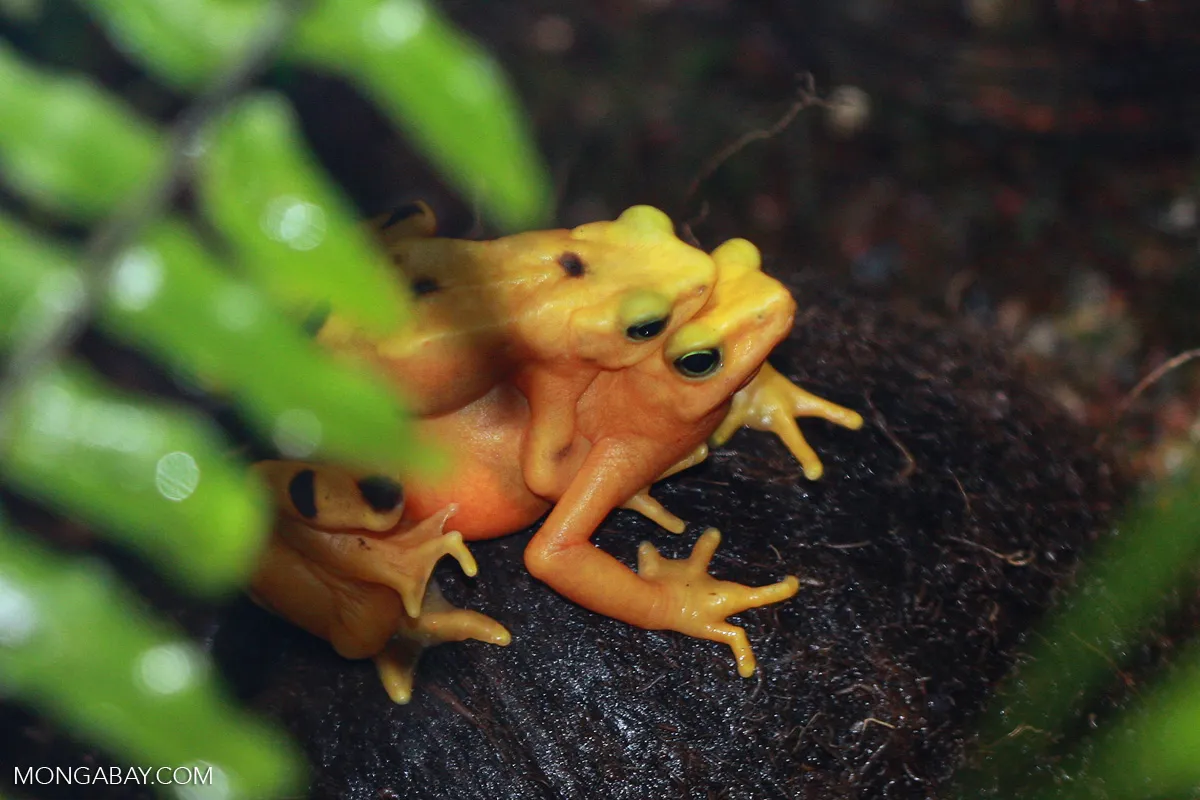
Get this: the Panamanian golden frog, a creature so bright yellow it looks like a cartoon, just made a comeback. For 15 years, these frogs hadn't been seen in the wild at all. They totally vanished after a nasty fungal disease swept through Panama.
But now, thanks to some seriously clever scientists, 100 of these golden beauties are back in their natural habitat. This isn't just a feel-good story; it's a huge step toward bringing a whole species back from the brink.

The Great Escape (and Return)
Back in 2009, researchers at the Smithsonian saw the fungal disease coming. It was called chytridiomycosis, and it basically attacks a frog's skin, which is fatal. They knew it was heading for El Valle de Anton, the last stronghold for these frogs.
We're a new kind of news feed.
Regular news is designed to drain you. We're a non-profit built to restore you. Every story we publish is scored for impact, progress, and hope.
Start Your News DetoxSo, they quickly formed the Panama Amphibian Rescue and Conservation Project (PARC). Their mission? Save the golden frogs and other amphibians before it was too late. They've been breeding these frogs in captivity ever since.
Roberto Ibañez, who leads PARC, said they're now studying how to get these frogs from human care back into the wild. It's a tricky business because the fungus is still out there.

For this first trial, they released 100 frogs into special "soft-release" pens called mesocosms. Think of them like temporary, safe outdoor homes. The frogs hung out there for 12 weeks, giving scientists a chance to watch how they adapted. This helps them figure out the best way to reintroduce more frogs, safely, into their native streams in the mountains of central Panama.
This might not sound like much, but it's a huge deal. It means we're learning how to fight back against diseases that wipe out entire species. And it brings a little bit of sunshine yellow back to the Panamanian forests.





