China's latest five-year plan, rolled out in March 2026, aims for the country to be the undisputed heavyweight champ in artificial intelligence by 2030. Their strategy, dubbed "AI+," plans to inject AI into every single major economic sector. And judging by the recent "lobster fever," they're certainly making a splash.
This whole craze kicked off with OpenClaw, an open-source AI agent cooked up by Austrian coder Peter Steinberger in November 2025. Think of it as a super-smart virtual assistant that plugs into big-name language models like ChatGPT and Claude. It can handle your emails, juggle your calendar, book your hotel, and even run your social media. Want it to control your smart home? Just add a "skill" from ClawHub. Because apparently, that's where we are now.
Then, in February 2026, Steinberger made the move to an open-source foundation and joined OpenAI. That's when China's cloud giants smelled opportunity — and immediately started churning out their own versions of "claw."
We're a new kind of news feed.
Regular news is designed to drain you. We're a non-profit built to restore you. Every story we publish is scored for impact, progress, and hope.
Start Your News Detox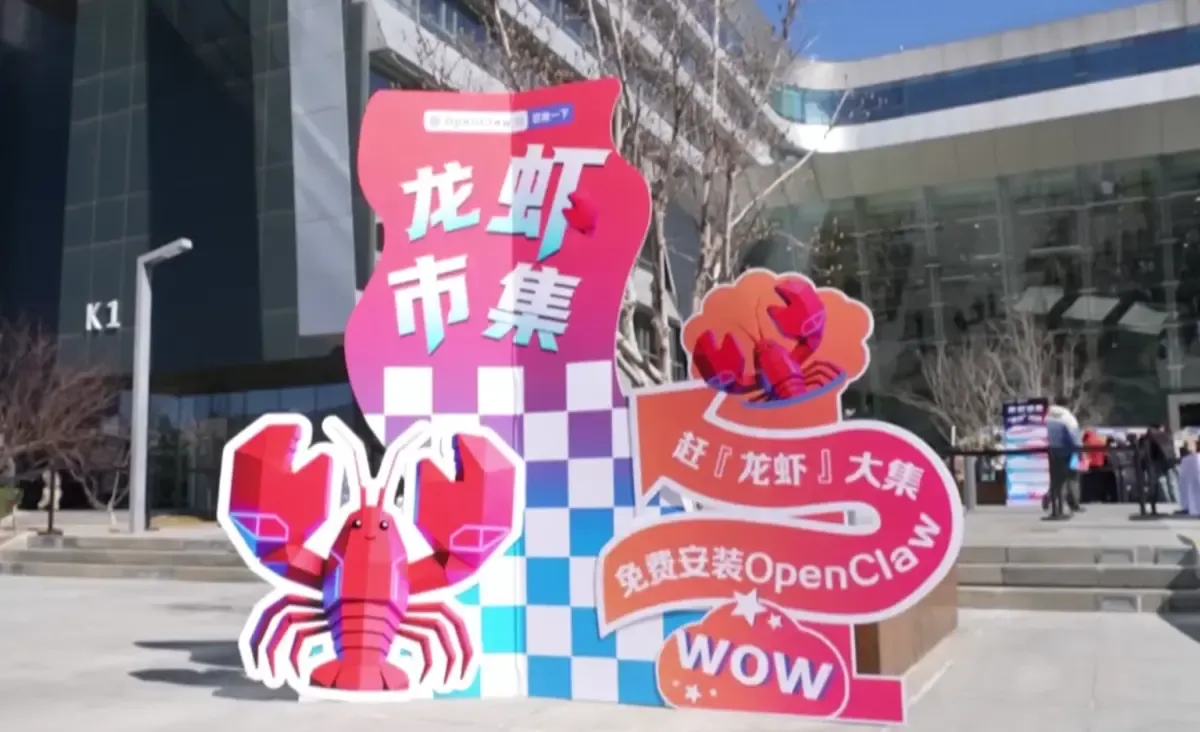
The Shell Game of "Lobster Fever"
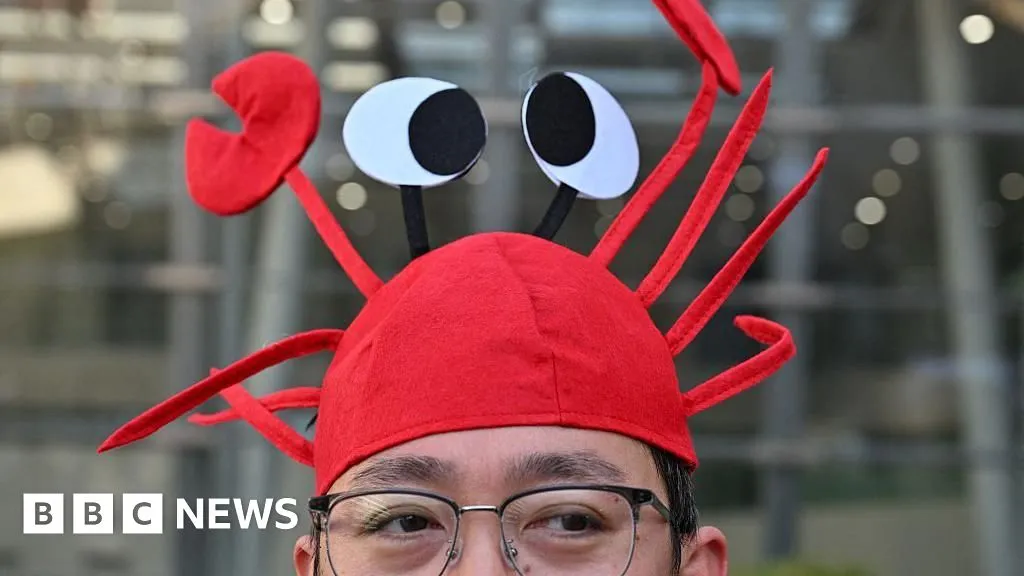
Around February 2025, Chinese social media absolutely exploded with promises that OpenClaw would fundamentally transform daily life. People genuinely believed they could conjure up AI agents to manage their entire workload and scale their businesses with a snap. Inspired by OpenClaw's rather charming lobster logo, users started a viral trend: "raising a lobster" (養龍蝦) became the shorthand for promoting this new AI agent. It caught on like wildfire.
But, as is often the case with viral trends, reality eventually showed up. Within a month, many discovered that creating a local AI agent was, for the non-technical among us, often too time-consuming, too difficult, and frankly, too expensive. The "lobster fever" began to cool faster than a forgotten takeout order.
That didn't stop China's tech titans. Tencent quickly rolled out Clawbot on WeChat for email, calendar, and file management. They also launched "Work Buddy" (a desktop OpenClaw) and "QClaw" for mobile. Alibaba introduced "Wukong," a platform designed to link various AI agents for business tasks. Baidu and JD.com, not to be outdone, also launched their own versions.

To fuel the fire, these companies held meetups in early March, helping students and corporate enthusiasts get their OpenClaw setups running. Images of massive crowds outside Tencent and Baidu headquarters flooded news and social media, creating the illusion that "lobster fever" was still raging.
Cities like Shenzhen and Wuxi even threw money at the problem, offering subsidies of CNY 2 to 10 million (about USD 290,000 to 1.4 million). The goal? To lure startups and developers working on open-source projects. Because nothing says innovation like a hefty cash incentive.
Social media was still alight with OpenClaw fans praising their "lobsters" as hyper-efficient assistants. They claimed these AI sidekicks could handle video editing, customer service, grading assignments, and even 24/7 stock trading with just a few simple instructions. Some influencers, in a move that probably made IT departments everywhere sigh, even declared that AI agents would replace all computer applications and urged everyone to jump on the trend immediately.

This led to a surge in hardware upgrades. Advanced chips, like those found in the Mac Mini, temporarily vanished from shelves in some cities. Tens of thousands of OpenClaw textbooks flew off the virtual shelves in a single month. Tech-savvy individuals found a lucrative side hustle helping new users install and train their shiny new AI agents.
The High Cost of "Raising a Lobster"
Then came the bill. As more people actually tried the tool, they started to grasp the true, rather significant, costs of "raising a lobster." Tech-blogger Yuan Guoxing perfectly captured the user frustration on Weibo:
"Do you think installing ‘Lobster’ is like hiring an employee who works for you 24/7? In reality, you’ll have to spend a ton of time training that useless lobster. Most importantly, you’ll have to work like a dog to raise it. The whole thing could be the biggest irony of 2026."
"Many people think running ‘Lobster’ is free. This is too naive. First, you need to set up a home for the lobster: it crashes on an average machine like your PC; you need to spend at least CNY 4,300 (USD 675) on a Mac Mini, which is sold out everywhere. If hosting it on a cloud server, you need to spend CNY 50–200 (USD 7–29) per month — and that’s just the lobster’s housing rent."
"The real money-eater is the lobster’s food — that is, tokens. AI doesn’t eat food — it eats tokens. Using a cheap domestic large language model costs CNY 30–80 (USD 4.3–11.6) a month, barely enough to keep it alive; if you want to do some real work, it costs tens or even hundreds of yuan a day; using top-tier models like ChatGPT costs hundreds of yuan a day — possibly tens of thousands a month. […] If you install a lobster, you worry you can’t afford raising it; if you don’t, you’re afraid of being left out [of the market]. What’s an ordinary person supposed to do?"
Let that satisfying number sink in. A "token" is the smallest piece of data an AI model chews through, and you pay for every single bite. Since March, Chinese LLMs have actually consumed more tokens than U.S. models, all thanks to "lobster fever." And if you're hosting your AI agent on a cloud server, that's another monthly fee. Turns out, "raising lobsters" is a direct financial pipeline to Chinese LLMs and AI platforms.
Beyond the sheer cost, users also needed actual skills to effectively communicate with these AI agents. A poorly worded prompt could lead your AI to delete important emails, wipe files, or even — in a slightly terrifying twist — leak personal and business secrets. Some new users reportedly paid extra just to have the AI agent removed from their devices. The irony is palpable.
Even state-funded media outlets started to tap the brakes on "lobster fever," trying to temper the enthusiasm. The aggressive marketing had created widespread anxiety that ordinary people would lose their jobs and be left behind if they didn't immediately master AI agents. Chinese authorities also raised flags about security risks, warning of malicious skill plugins and prompt-injection attacks from dodgy websites that could trick AI agents into performing unauthorized tasks. This, perhaps predictably, pushed many users toward Chinese "lobster" versions and platform services.
So, while many see "lobster fever" as a sign of China's success in creating a profitable AI model, it's still an open question whether this "tokenomics" can truly boost domestic consumption. For the everyday person, popular Weibo user Fan Deng's advice seems perfectly apt: "Instead of raising a lobster, take care of yourself first."