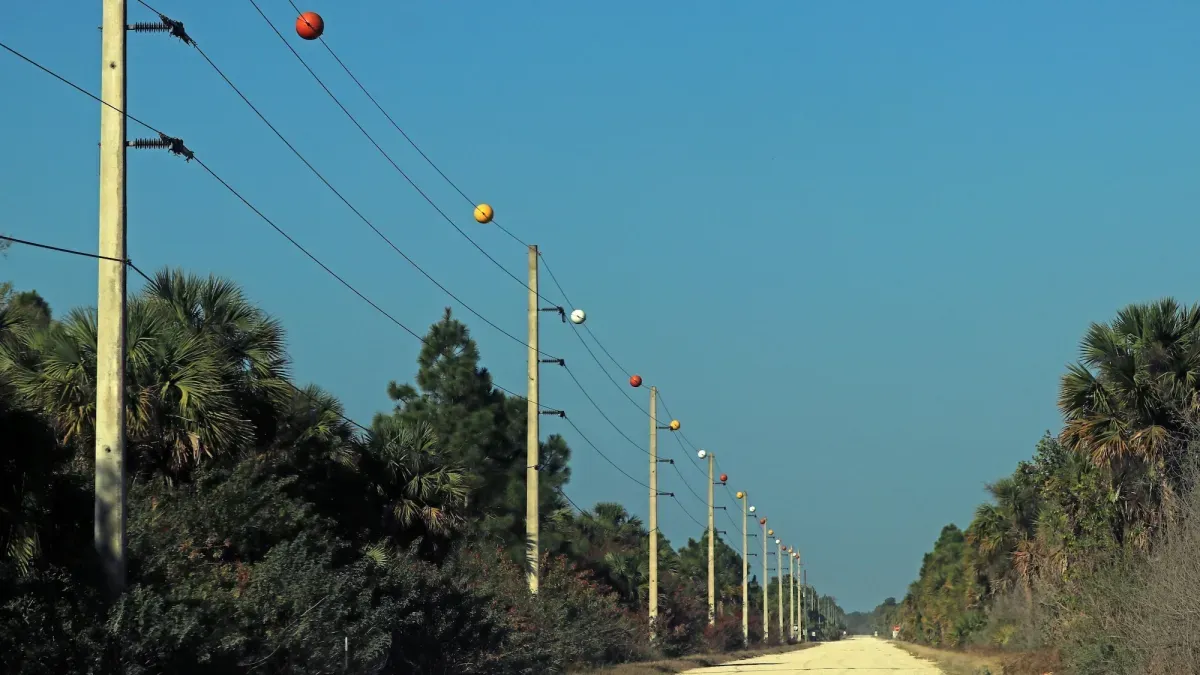
Ever been driving, squinting at the horizon, and noticed giant orange orbs dangling from power lines? You might think they're some kind of whimsical, high-voltage Christmas ornament. Or maybe a highly specialized bird feeder. Turns out, they're far more important than that. And a lot less festive.
These aren't for show. They're called aviation marker balls, and their job is dead serious: keeping planes and helicopters from smacking into power lines. Because from a pilot's perspective, those thin metal wires can vanish into the background faster than your last weekend plans. Especially when flying low, which, as it happens, aircraft sometimes need to do.
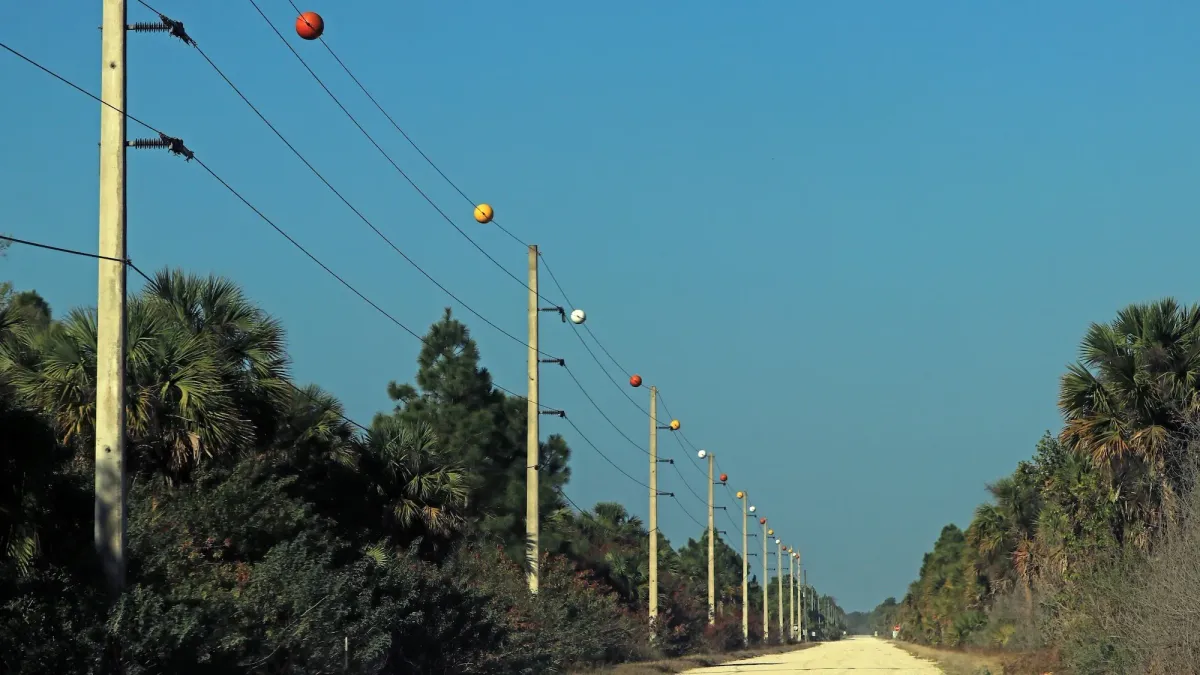
Think of them as the reflective tape of the sky. The wires themselves are practically invisible against a blue sky, a green forest, or a grumpy gray cloud. These bright, often orange, spheres scream, "HEY! OBSTACLE AHEAD!" Which, if you're in a several-ton metal bird traveling at speed, is a pretty handy heads-up. It's a simple, elegant solution that protects everyone: pilots, passengers, and anyone unfortunate enough to be under a power line when a plane hits it.
We're a new kind of news feed.
Regular news is designed to drain you. We're a non-profit built to restore you. Every story we publish is scored for impact, progress, and hope.
Start Your News DetoxNot Just Any Old Ball
While they look like glorified beach balls from the ground, most of these markers are actually a robust 2 to 3 feet across and can weigh up to 25 pounds. They're typically crafted from tough plastic or fiberglass, the kind of stuff built to withstand sun, rain, snow, and the occasional disgruntled bird. And no, despite being clamped onto high-voltage wires, they're not electrified. They're insulators, designed to keep the juice flowing around them, not through them.
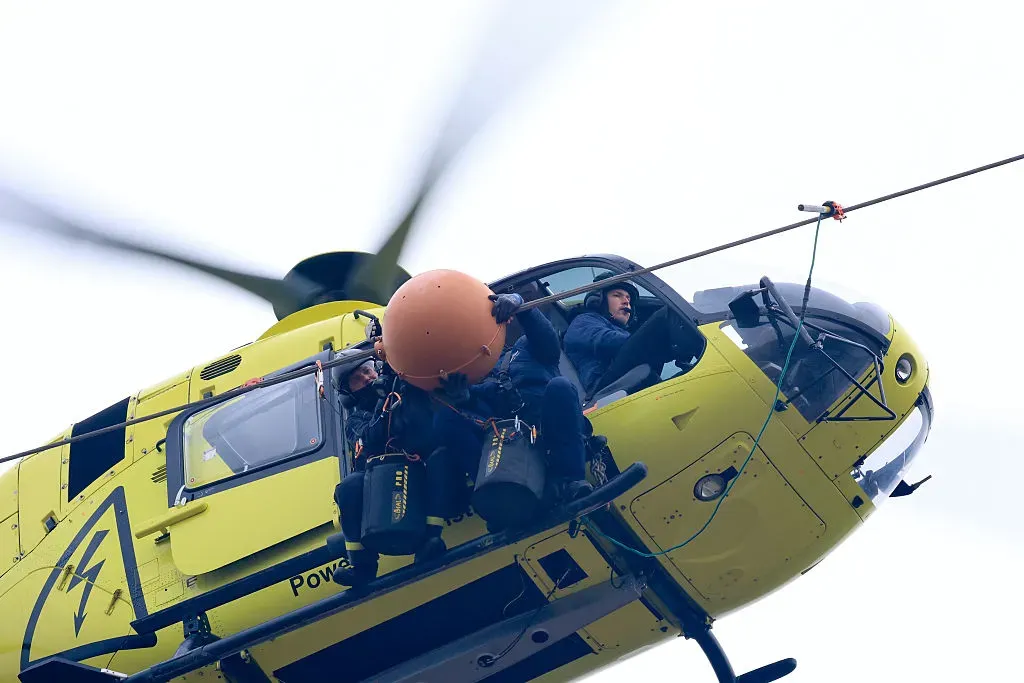
Installation is, as you might imagine, not a DIY project. Specially trained crews, often dangling from helicopters while the power lines are still live (because apparently that's where we are now), clamp these two-halved spheres together around the wires. Once installed, they're good for 10 to 15 years, quietly doing their job, mostly unnoticed by us ground-dwellers.
You won't see them on every neighborhood line. They're strategically placed where low-flying aircraft are most likely to be: near airports, across valleys, over rivers, or along helicopter routes. So, the next time you spot those bright orange dots, give a little nod. They're not just decorations; they're the unsung heroes of aviation safety, silently preventing a very bad day for a lot of people.