Remember when reconfiguring a factory meant shutting the whole thing down, crossing your fingers, and hoping the new layout didn't immediately create a new kind of chaos? PepsiCo does. And they've decided that's a problem for yesterday's snack-slingers.
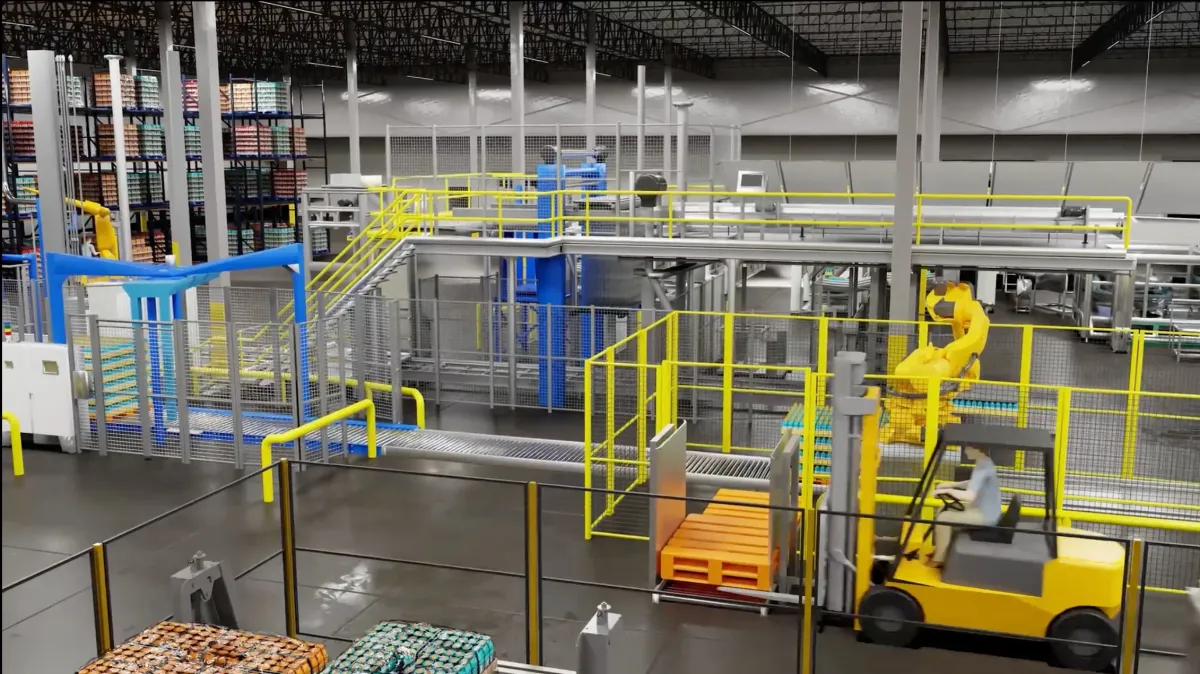
Instead of blueprints and wishful thinking, the company now scans its facilities with lasers. Not for a supervillain lair, but to create a digital copy of every single bolt and beam, accurate down to a millimeter. Then, they take this hyper-realistic 3D model and let it run wild.
The Factory That Never Sleeps (Even During Remodel)
Imagine a perfect digital doppelgänger of a chip factory. PepsiCo uses this "digital twin" to simulate entire manufacturing processes, stress-testing every inch of the operation without ever slowing down the actual chip line. Engineers can spot production bottlenecks before they happen and experiment with new layouts to boost capacity, all from a computer screen. It's like SimCity for soda and snacks, but with real-world stakes.
We're a new kind of news feed.
Regular news is designed to drain you. We're a non-profit built to restore you. Every story we publish is scored for impact, progress, and hope.
Start Your News DetoxAccording to Athina Kanioura, PepsiCo's CEO for Latin America and global chief strategy officer, the goal is total optimization. That includes hardware, software, and even how people move around the factory floor. They feed the digital twin real-time data from the physical building, then run millions of simulations. The result? The perfect setup, designed in the digital realm, ready to be implemented in the physical one.
These living, breathing data copies are powered by AI, allowing PepsiCo to test decisions and redesign systems in advance. Ashin Parikh, senior vice president of strategy for PepsiCo’s global supply chain, puts it simply: it’s about future-proofing. Modern operations need to be agile and flexible to keep up with what we all want to eat and drink.
From German Cars to Global Snacks
PepsiCo didn't invent the digital twin; they just saw its potential beyond the usual suspects. They initially looked at how other industries used AI, particularly the auto sector, where companies like BMW have been using digital twins for years to design hyper-efficient production lines. If it works for luxury cars, why not for Doritos?
PepsiCo started piloting digital twins in their U.S. operations. The results were immediate and impressive. One beverage facility is projecting a 40% jump in production capacity. Other locations saw 15% to 20% gains in throughput. More crucially, they could predict and prevent bottlenecks, rather than just reacting to them like a frantic game of whack-a-mole.
Earlier this year, they upped the ante, partnering with Siemens and Nvidia to scale this digital-first planning strategy globally. Ali Peyrovi, vice president of global warehouse strategy, confirmed they're now using digital twins at a scale that would make your average blueprint blush.
Beyond Just Making More Stuff
But it's not just about cranking out more Cheetos. Digital twins are helping PepsiCo adapt to how we shop now. More online orders, more customized requests, more smaller package sizes. This means a supply chain needs to be nimbler than ever. Parikh notes these capabilities help fulfill promises to consumers: getting them exactly what they want, exactly when and where they want it. Which, if you think about it, is both impressive and slightly terrifying.
As digital capabilities accelerate, the problems of today will be solved differently tomorrow. Being a "student of AI and technology" isn't just a nice-to-have for leaders; it's how they'll lead the charge into whatever wild, laser-scanned future comes next.