You know how computer chips push electricity around with incredible precision? Well, imagine doing that with heat. Because that's essentially what a team from Osaka Metropolitan University just cooked up: a material that can direct and store heat like a programmable microchip.
Traditionally, heat is a bit of a libertarian. It follows the rules of reciprocity, meaning if a material is good at absorbing heat from one direction, it's equally good at radiating it back the same way. This makes independent control a real headache. But what if you could break that rule? What if you could tell heat, "Hey, absorb from here, but send it over there"?
That's the kind of thinking that could lead to some seriously cool tech, from hyper-efficient energy systems to sensors that practically read thermal minds.
We're a new kind of news feed.
Regular news is designed to drain you. We're a non-profit built to restore you. Every story we publish is scored for impact, progress, and hope.
Start Your News DetoxGiving Heat a Memory
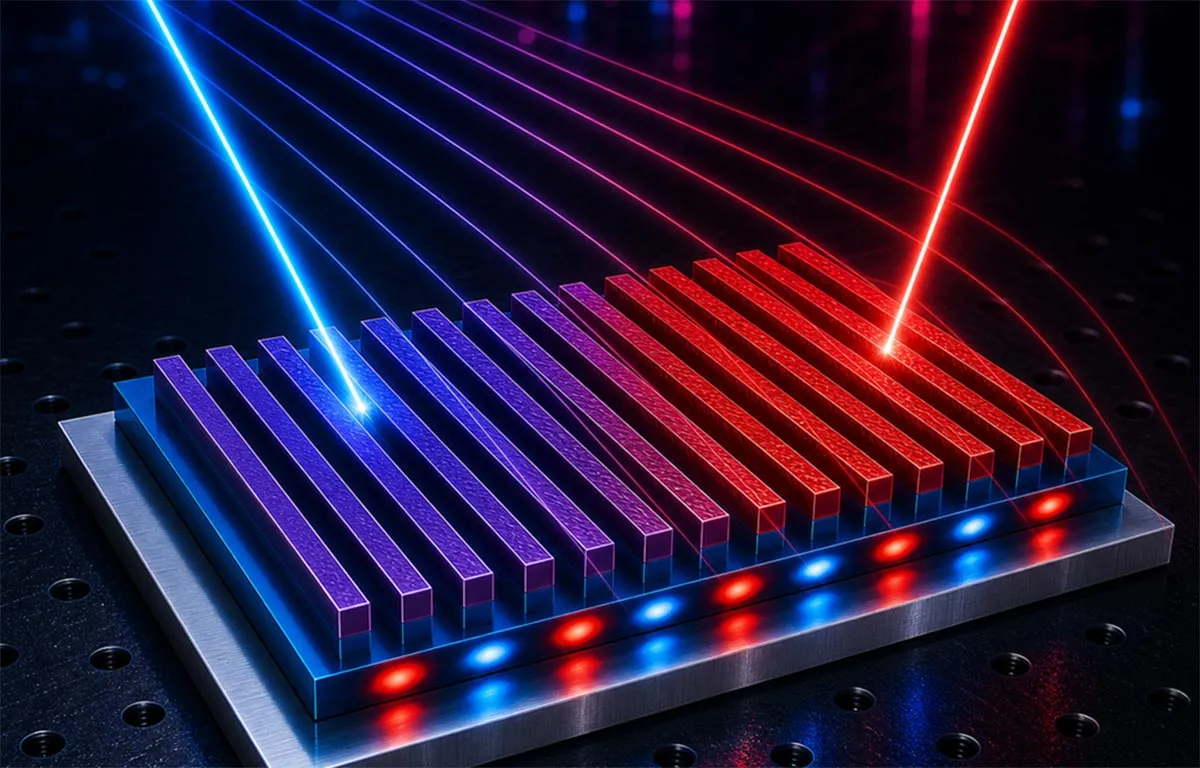
The secret sauce is a blend of magneto-optical materials (which, as the name suggests, react to magnetic fields) and a phase-change material called GST. Together, they form a device that doesn't just steer heat radiation in a specific direction; it can also turn that behavior on or off and, crucially, remember its setting even after the power's gone.
So, you program the heat's behavior, and it sticks. Like data on a microchip, but for warmth. Dr. Shunsuke Murai, one of the lead researchers, put it rather succinctly: they've made heat radiation "smarter." Which, if you think about it, is both impressive and slightly terrifying.
This isn't just a lab curiosity. This working model could pave the way for new infrared emitters, super-efficient thermal-energy devices, and even a whole new class of photonic memory that stores information using light and heat.
Even better, this new device fixes some of the clunkiness of older designs. Previous attempts only worked at extreme angles, where heat absorption and emission were about as efficient as a screen door on a submarine. Plus, they'd forget their programming the second the power flickered. This new system is more robust, more reliable, and actually remembers its settings without needing a constant electrical babysitter.
Professor Koichi Okamoto, another team lead, envisions tiny devices that actively control heat radiation with the same finesse that electronic circuits manage electricity. Think improved infrared sensors, energy systems that squeeze every last drop of efficiency, and entirely new ways to store information. Because apparently, controlling electricity was just the warm-up act.