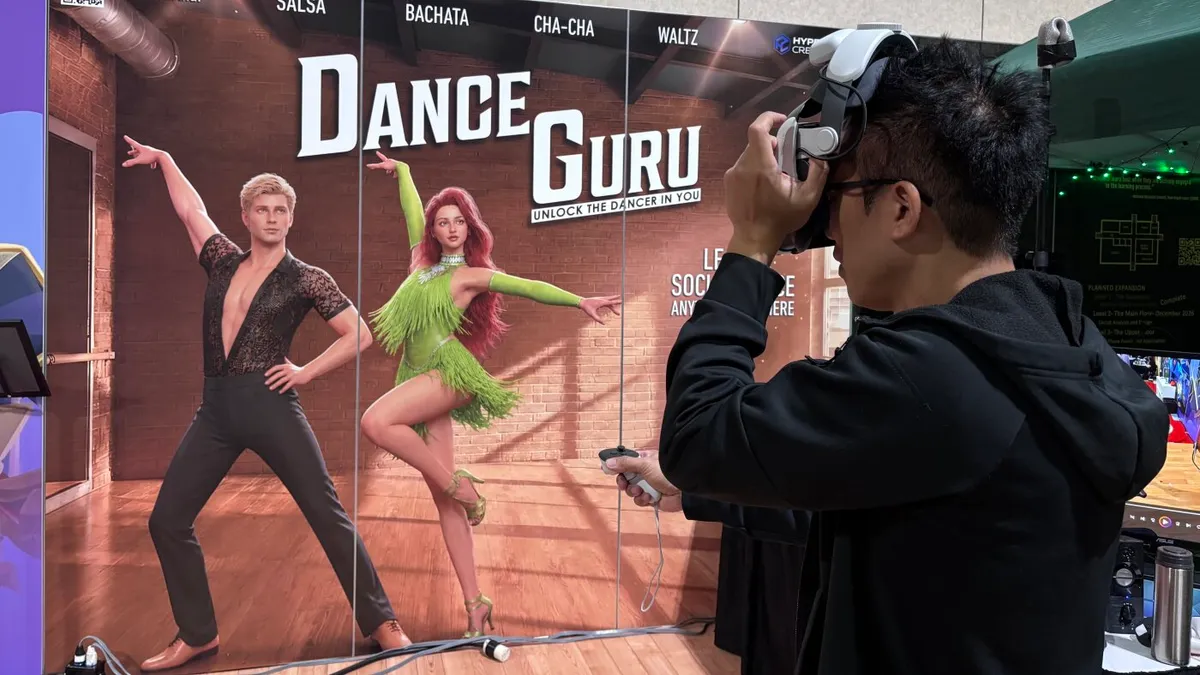
Wedding season. The horror. For some, the mere mention of a dance floor sends shivers down their spine. But what if your phone had legs, and a digital dance partner who never judged your two left feet? Enter Dance Guru, a new virtual reality app that’s basically a digital Fred Astaire in your living room.
Your New, Very Patient Dance Partner
Slip on a VR headset, and suddenly you’re in a digital studio with a computer-generated coach — complete with a rather posh English accent. He’ll show you the waltz's basic box step, then patiently tell you to hold his virtual hand. Electric pings track your foot placement, and if you mess up (which, let's be honest, you will), he just calmly says, "Do not worry, foundations take time. Let's try that again." Because apparently, even AI understands that learning to dance isn't always instant.
This whole idea sprung from David Huang’s own dance floor frustrations. He wanted to learn, kept quitting, and realized private lessons are pricey, steps are forgettable, and finding a partner can be a whole thing. So, he built a solution. Dance Guru now offers salsa, bachata, waltz, and cha-cha, letting you choose to lead or follow. To make sure your digital coach wasn't just flailing, Huang even motion-captured real dance teachers’ moves. Because authenticity, even in VR, matters.
We're a new kind of news feed.
Regular news is designed to drain you. We're a non-profit built to restore you. Every story we publish is scored for impact, progress, and hope.
Start Your News DetoxDance Guru isn't alone in this digital dance revolution. Apps like Trip the Light offer salsa lessons and even a freestyle option where you can just… dance with a partner, no specific steps required. Which, if you think about it, is both impressive and slightly terrifying. One tester, Victor Chen, noted that a virtual avatar correcting your mistakes beats endlessly pausing and rewinding YouTube videos. He's not wrong.
Of course, there are a few snags. Contemporary dancer Ariana Katana points out that learning styles vary, and dancing with a giant headset strapped to your face isn't exactly ideal. And no, you can't feel your virtual partner's hand. Yet. Patrick Ascolese, creator of Trip the Light, envisions haptic suits and wearables adding that tactile sensation in the future. Because apparently, that's where we are now.
Despite the current tech quirks, Ascolese sees huge potential. These immersive tools offer a judgment-free zone to practice. And practice, he says, helps overcome social hurdles. The more you waltz with your digital dude, the easier it gets to eventually hit the real-world dance floor with real people. Which, for anyone who’s ever dreaded a wedding reception, sounds like a pretty sweet deal.