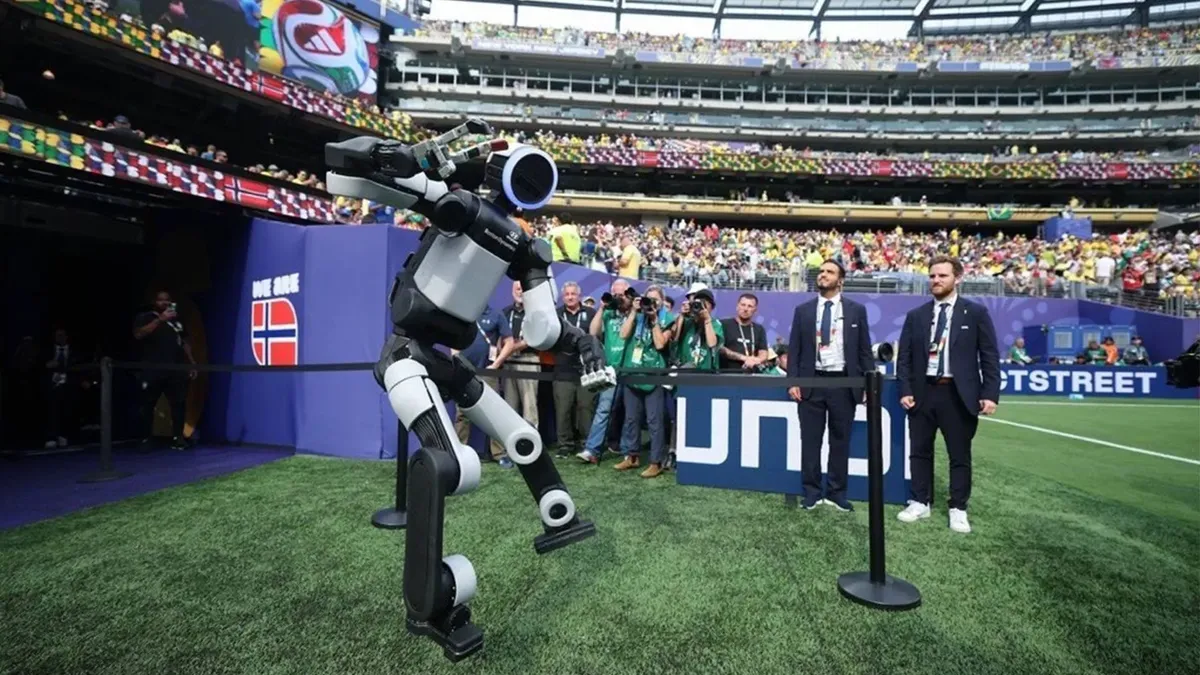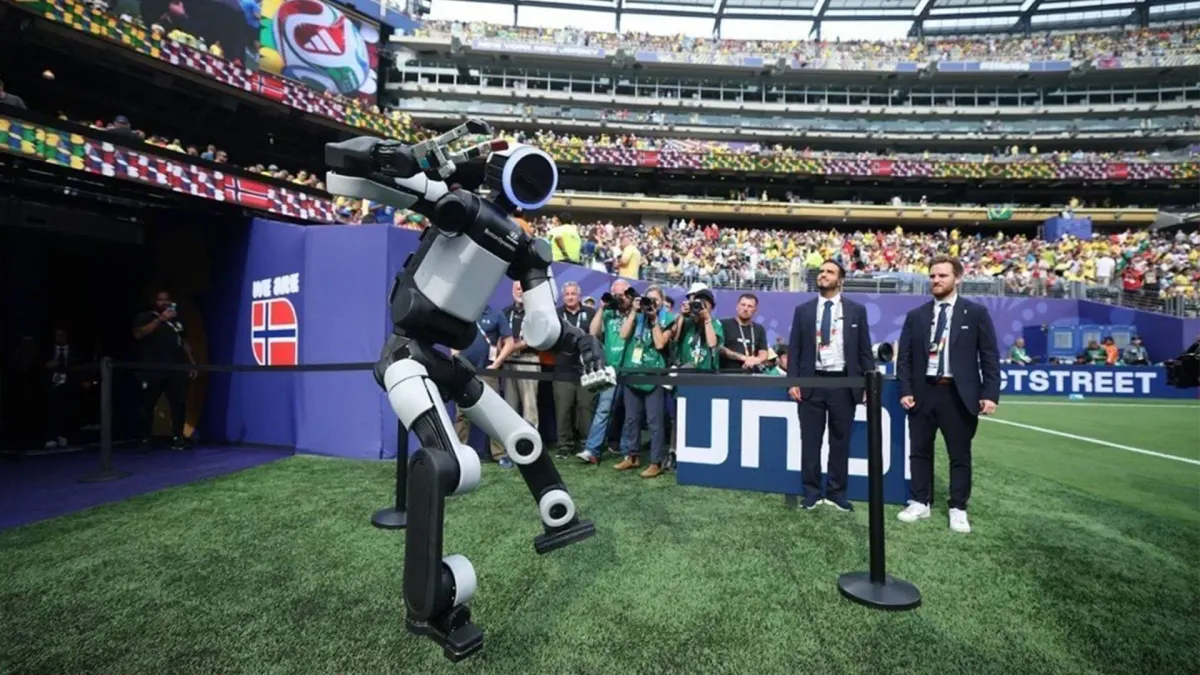
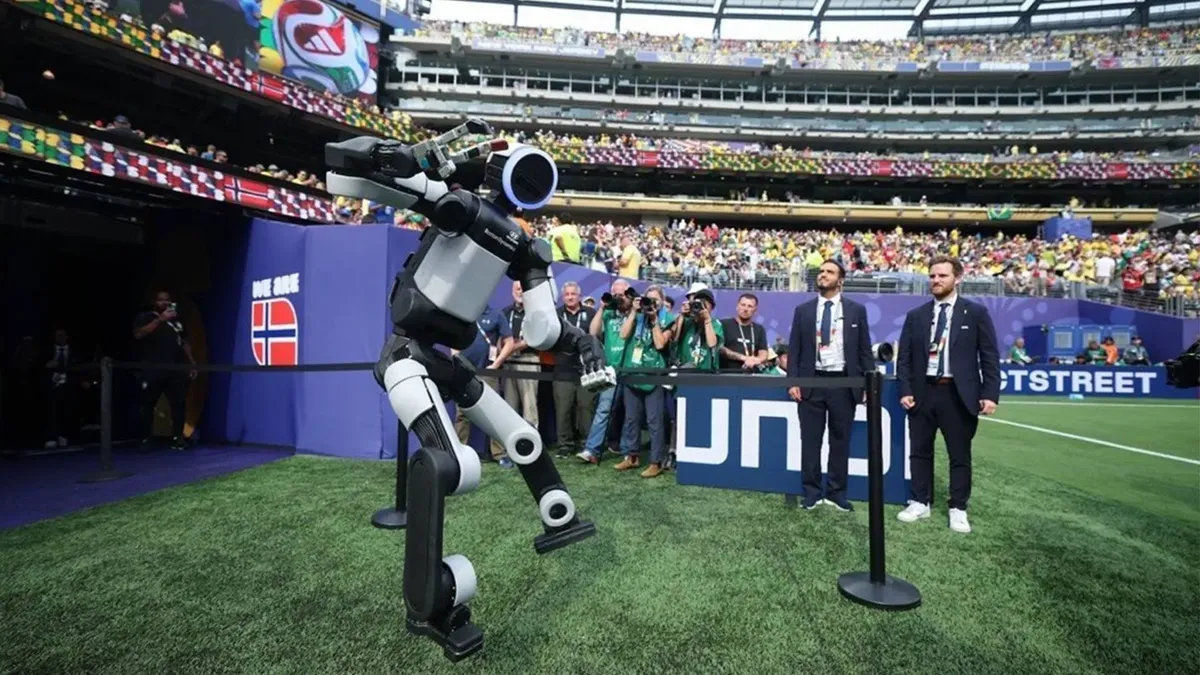
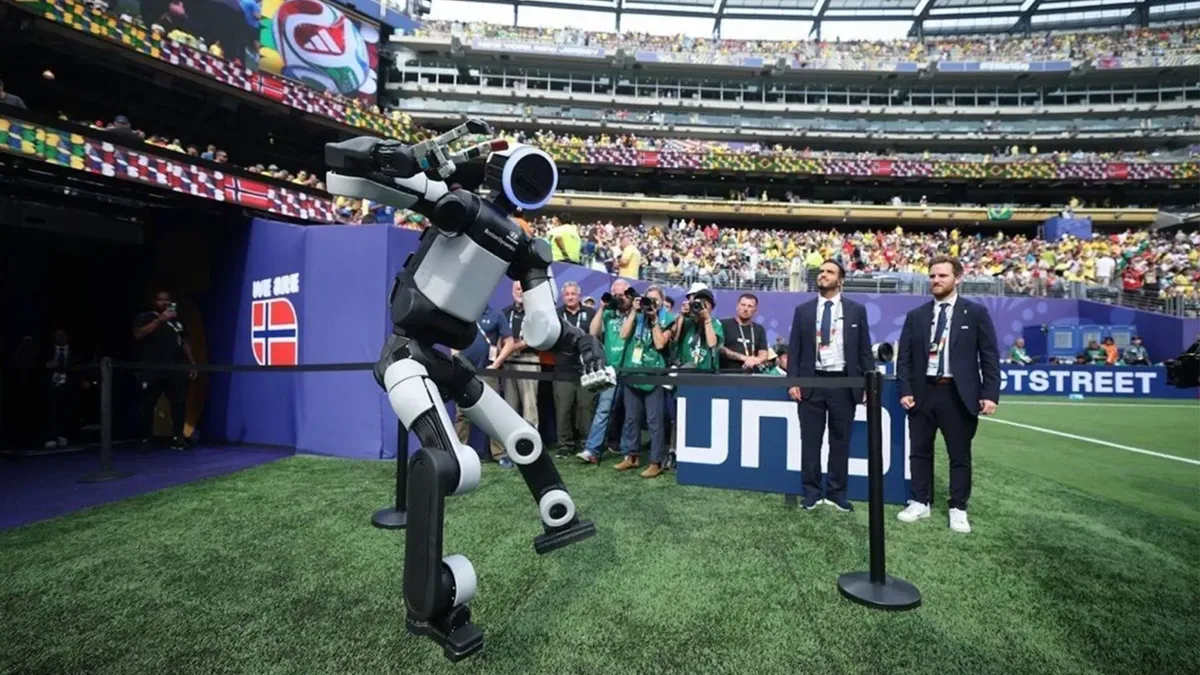
Picture this: It’s the FIFA World Cup, Round of 16. Norway vs. Brazil. Halftime hits, and out of the player tunnel doesn't come a pop star or a mascot, but a humanoid robot named Atlas. It then proceeds to bust out iconic goal celebrations, including Erling Haaland's signature moves, in front of a packed stadium and a global TV audience. Because apparently, that's where we are now.
This wasn't just some glorified Roomba doing a victory lap. This was Boston Dynamics' Atlas, making its biggest public splash since its production version debuted at CES 2026. It's a walking, dancing, surprisingly agile testament to how seamlessly advanced robots are integrating into the highest-profile global events.
Atlas Takes the Pitch
Atlas's grand entrance was no accident. Hyundai Motor, which owns Boston Dynamics, had already launched its "School of Football" campaign, essentially a montage of robots using AI to learn fancy footwork. So, when Atlas strode onto the pitch at the New York/New Jersey Stadium, it wasn't just performing; it was proving a point.
We're a new kind of news feed.
Regular news is designed to drain you. We're a non-profit built to restore you. Every story we publish is scored for impact, progress, and hope.
Start Your News DetoxIt was the first humanoid robot to ever perform at a FIFA World Cup match, recreating the moves of legends like Harry Kane, Son Heung-min, and, of course, Haaland. The routine was a masterclass in balance, agility, and precision, showing off what happens when a robot decides to get its groove on. After its performance, Atlas even picked up the ceremonial match ball and delivered it to the referee, like a very polite, very metallic ball boy.
Hyundai was quick to point out that this live demo proved the production version of Atlas could handle a chaotic, crowded environment while pulling off complex, coordinated movements with unwavering stability. Which, if you think about it, is both impressive and slightly terrifying.
How Atlas Masters Motion
So, how does a robot learn to celebrate a goal with more flair than some actual players? Boston Dynamics credits a trifecta of AI and robotics tech: retargeting, reinforcement learning, and whole-body control.
Retargeting allowed Atlas to translate human movements into something its robotic limbs could actually pull off. Whole-body control kept it from face-planting mid-celebration. The real magic, though, happened in simulation. Atlas spent millions of hours in virtual training, powered by GPUs, learning to adapt to every conceivable variable — different weights, grip strengths, floor frictions. It even uses a built-in sense of body position, proprioception, to make real-time adjustments. Once it nailed the moves in the digital world, they transferred it to the physical robot.
Alberto Rodriguez, Director of Robotics Behavior at Boston Dynamics, put it best: "The way we trained Atlas to perform these fun movements at the match is similar to how we teach the robot to take on real-world industrial applications." In other words, the next time you see a robot doing something incredibly mundane in a factory, remember it might secretly be dreaming of a World Cup hat-trick. And probably practicing in its off-hours.