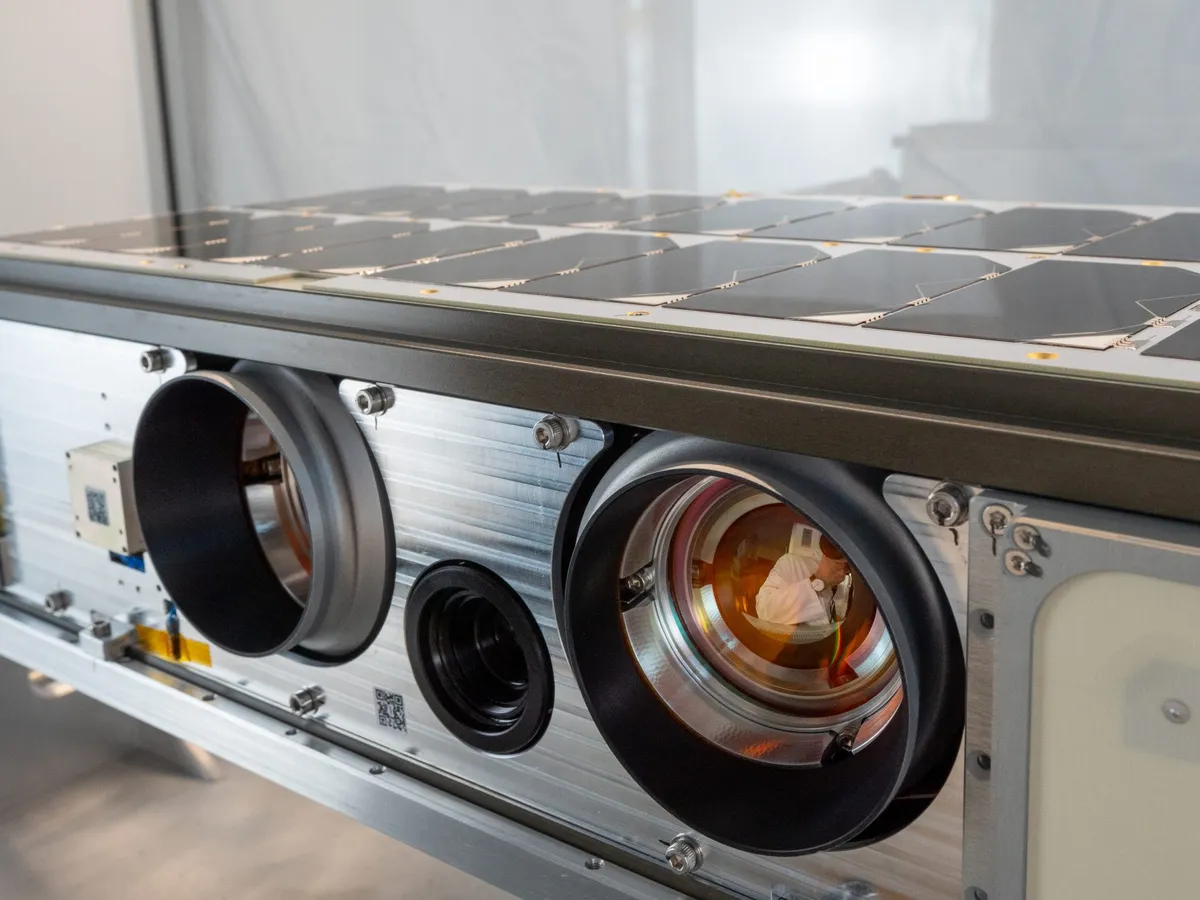
A new robot can swim, dive, and fly using just one set of wings. Researchers at MIT and EPFL built this machine. It does not need propellers, legs, or folding parts to change how it moves.
Nature already has this ability. About 100 bird species can move easily between water and air. They dive for food and then fly right back up. This robot weighs 250 grams (8.8 ounces). The team says it is the first bird-sized machine to complete this full cycle. It swims, dives, launches, and flies using only flapping motions.
This is harder than it sounds. Water is about 800 times thicker than air. Few designs can handle this change in resistance without switching hardware.
We're a new kind of news feed.
Regular news is designed to drain you. We're a non-profit built to restore you. Every story we publish is scored for impact, progress, and hope.
Start Your News DetoxHow the Robot Works
The robot uses two main design ideas. It has flexible wings and carefully controlled flapping speeds. This helps it handle the sudden change in density. Underwater, the wings bend up to 90%. This reduces the load on the motor. It also shortens how far each flap reaches. In the air, the wings can flap up to 11 times per second. Underwater, this speed drops to between 0.1 and 6 times per second.
The robot is also neutrally buoyant. This means it does not float or sink on its own. This is important because fighting buoyancy would quickly drain its battery.
Swimming and flying are one challenge. But the biggest hurdle is the moment in between. The robot must push itself out of the water using only its wings. If this transition fails, the whole idea falls apart.
The robot manages this in less than a second. It uses 8 to 10 wingbeats. However, it needs specific conditions. The wings must be somewhat stiff, not too rigid or too floppy. The tail needs to be short and close to the body. The exit angle must be about 70 degrees. If it's too flat, the tail drags it down. If it's too vertical, the robot tips over and falls back in.
Future Possibilities
This robot is more than an engineering feat. It also helps scientists study real diving birds. The team thinks birds might shrink their wingspan underwater to gain speed, not just save energy. This is hard to test on live animals. But it is easier to explore with a controlled robot.
Heavier diving birds likely use their legs to launch. This robot does not use legs at all. Both real birds and the robot work within a similar range of aerodynamic efficiency. This is measured by something called the Strouhal number, which is between 0.2 and 0.4 for both.
The team's data shows that flying uses less energy than swimming for trips longer than about 15.5 meters (51 feet). So, for longer distances, this robot would fly over instead of swimming. This is like how a person chooses to walk instead of wading through deep water.
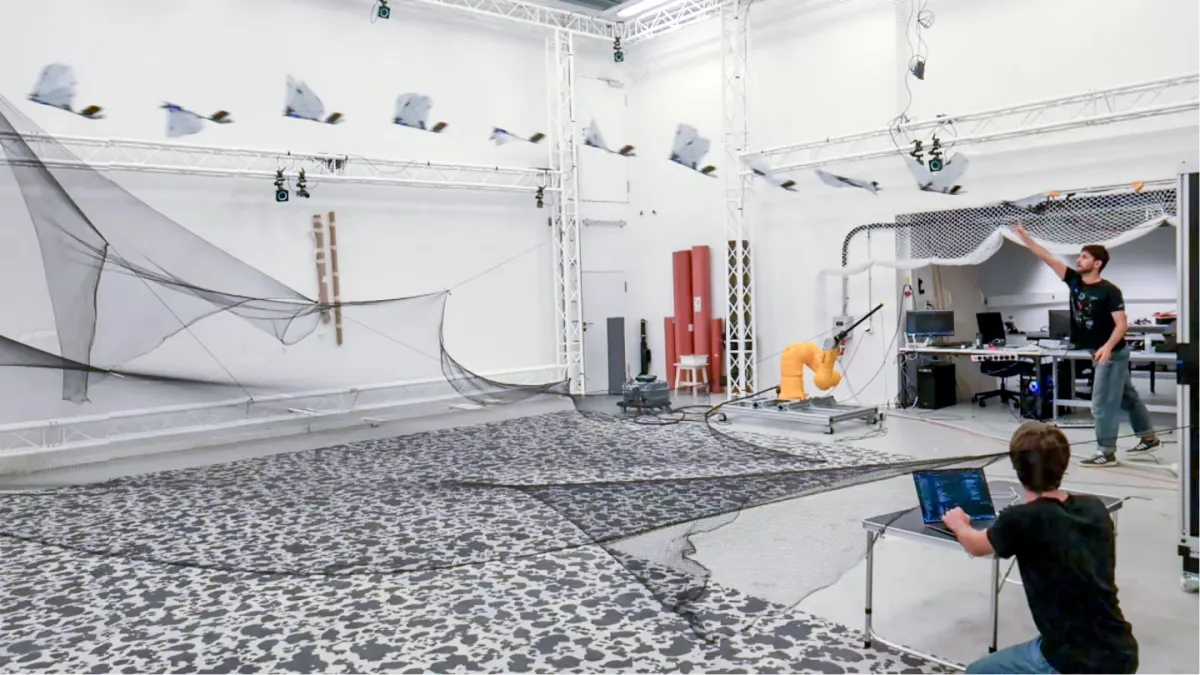 The MIT team testing the robot’s flight in the lab
The robot is not yet autonomous. Current tests involve manual launches and simple timers. The next steps are autonomous navigation, better performance in salt water, and longer range. If these improvements happen, the robot could monitor the environment. It could sample lakes, rivers, coastlines, and marine ecosystems. It would be like an amphibious drone.
The robot costs about $300 in materials. Anyone can buy the parts. The team has shared open CAD files. This means anyone with a 3D printer can build one.
Raphael Zufferey, an assistant professor at MIT, shared his vision. He hopes oceanographers and marine biologists can launch this robot from a boat or shore. It would fly to areas of interest, like icebergs or whale pods. Then it would dive to take measurements or collect samples. It would fly back to deliver data at a much lower cost than current methods.
Deep Dive & References
A flapping robot that swims and flies like a diving bird - Science