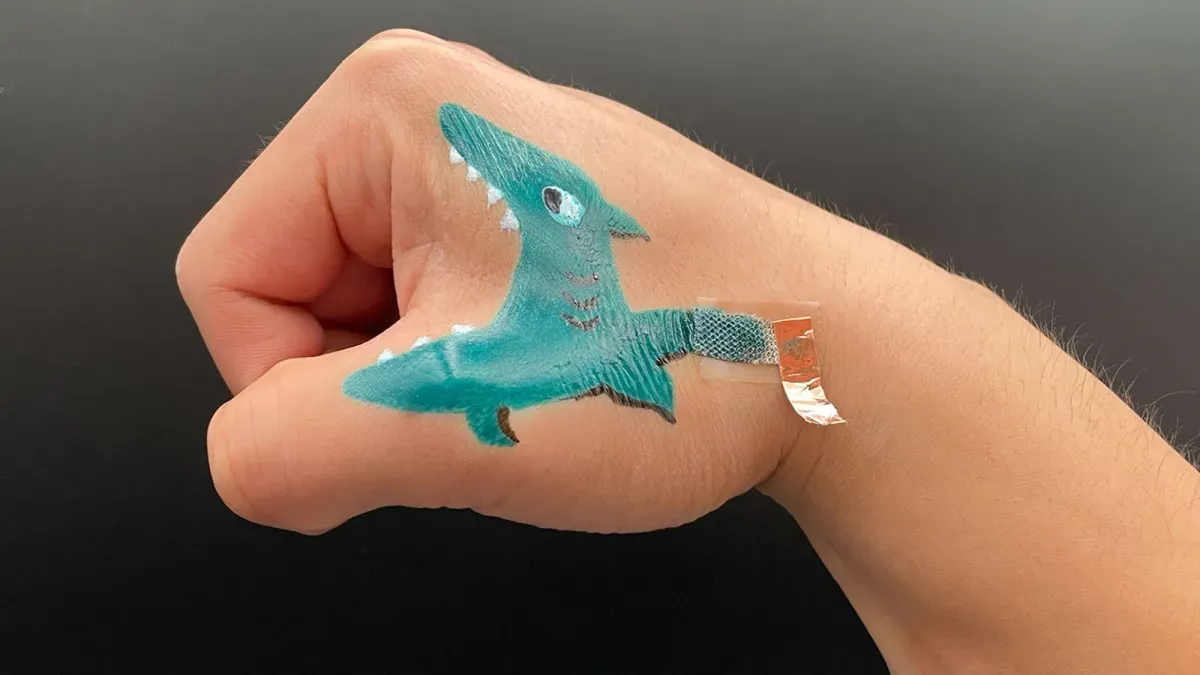
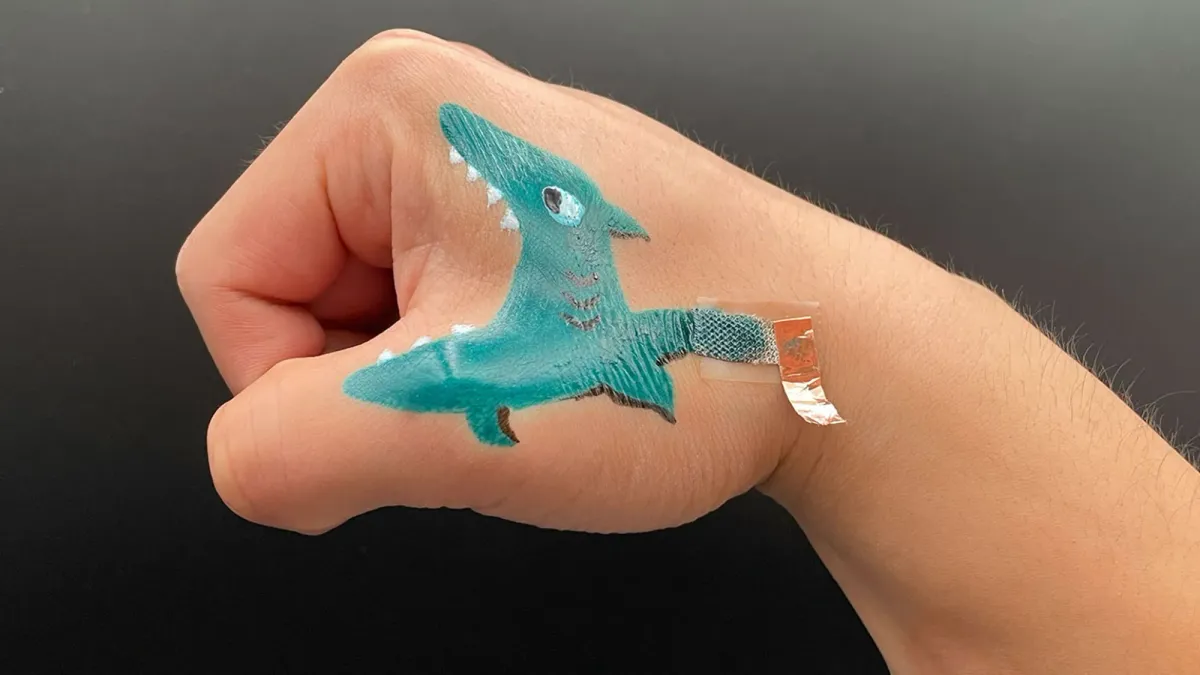
Imagine a colorful tiger, shark, or rainbow painted on your skin. This isn't just face paint. It's a new health sensor that can read brain waves, power robotic arms, and even detect heart attacks early.
Engineers at Penn State University have created these customizable, paint-on wearables. They use special materials that stick better to skin. This makes them more sensitive, durable, and accurate. The team published their findings in the journal Proceedings of the National Academy of Sciences.
How Wearable Sensors Work
All wearable health tech uses electrodes. These small contacts attach to the body. They read electrical signals from your heart, muscles, or brain.
We're a new kind of news feed.
Regular news is designed to drain you. We're a non-profit built to restore you. Every story we publish is scored for impact, progress, and hope.
Start Your News DetoxFor example, brain signals become EEG readings, showing neuron activity. Heart activity becomes ECG signals, measuring heart rate and electrical patterns. Muscle activity becomes EMG signals, tracking muscle contractions.
Most electrodes are rigid and metal-based. They are stable but can fall off when you move. Some experimental designs use soft, jelly-like hydrogels. These stretch with your body but can dry out, losing their stickiness and flexibility.
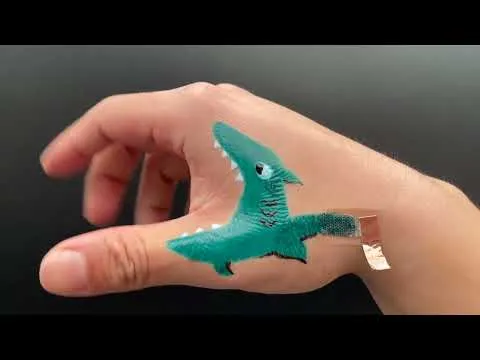
Wanqing Zhang, a PhD student and co-author, explained that electrodes peeling off isn't the only problem. How sensors are applied also affects their accuracy. Many commercial sensors struggle on hairy or sweaty skin.
Zhang noted that most commercial electrodes are made in a lab and then placed on the skin. This leaves an air gap, which hurts performance. The Penn State team developed a conductive ink that paints directly onto the skin. Once dry, it works as an electrode.
More Than Just Fun Colors
The team made the ink by mixing different plastics and acidic additives in water. The wet ink feels like glue but dries on skin in under 10 minutes. A hair dryer can speed up the process.
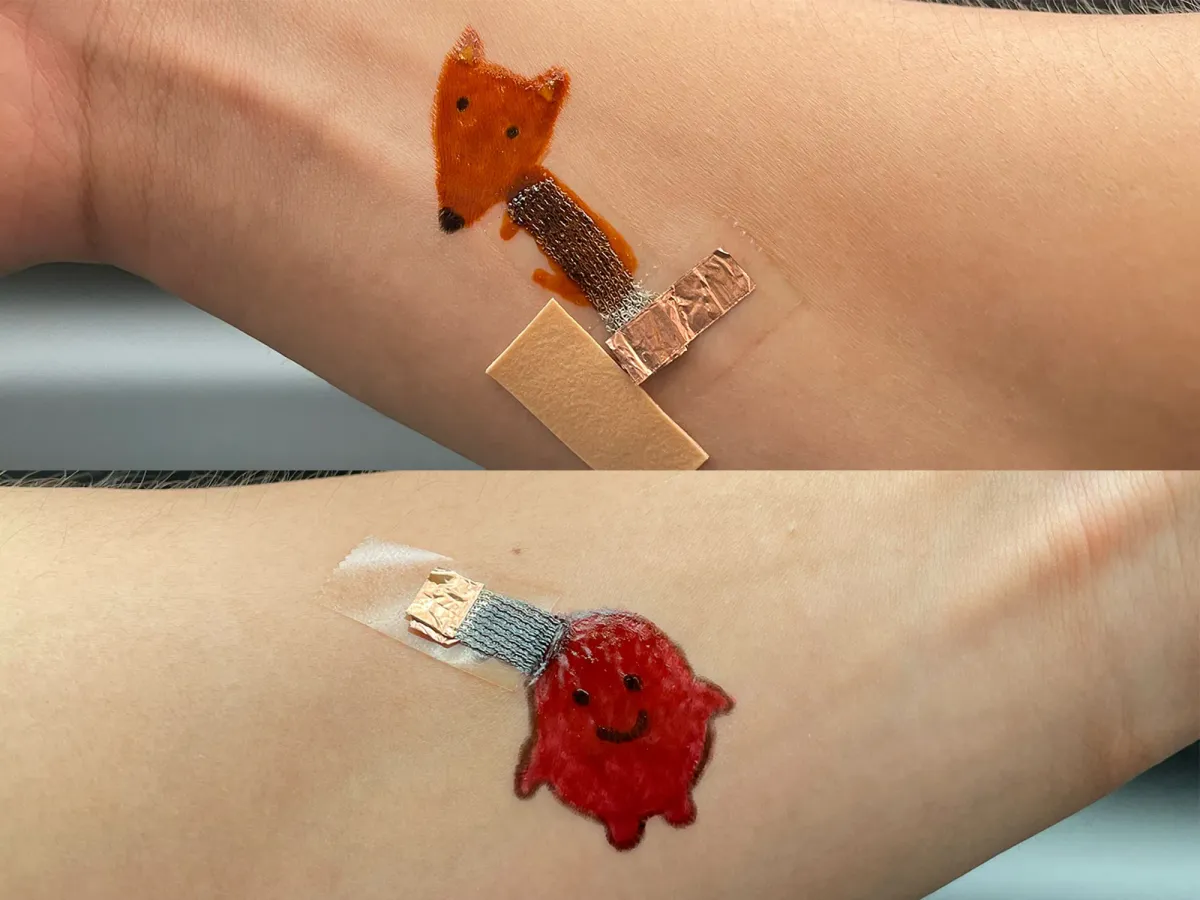
Larry Cheng, another co-author, said the ink acts like face paint. It starts clear, but food dye can add any color. This lets people personalize their sensors with cartoons or other designs.
The sensors are very responsive. Zhang explained that painting the material directly onto the skin helps it fit the skin's texture better, improving measurements.
To connect the electrodes to the sensors, a special part of the electrode is painted onto a porous silver fabric placed on the skin. The wet ink flows into the fabric, then hardens and sticks to the skin. This part then clips into a port on a larger electric module. This module is taped under clothing and sends signals wirelessly to a computer via Bluetooth.
The fabric's porous structure allows the electrodes to stretch over 150% without breaking. It also helps them stick evenly to the skin and record signals better.
Cheng added that other materials can cause sweat and moisture to build up, leading to irritation or disconnection. The porous structure lets moisture and hair pass through, making the electrodes more conductive, adhesive, and comfortable.
Getting Inked for Health
In one test, the painted electrodes tracked ECG readings for 12 hours during daily activities. In another, a subject tracked readings while exercising. The electrodes stayed stuck and accurate. The team also tracked EMG signals from a subject's forearm. These signals controlled a robotic prosthetic hand without touch.
Cheng said the electrodes can be washed off and reapplied easily. The idea is to have a reusable sensing module, while the electrodes themselves are disposable. One bottle of ink could provide enough material for many electrodes over several days or a week.
The team plans to develop the electrodes further to sense more advanced biomarkers, like cortisol or glucose. The fun colors and designs could also be very helpful for children visiting the doctor, making the experience less scary.