Back in 1985, an MIT professor named William Freeman had an idea for a zipper so revolutionary, the world just wasn't ready for it. He envisioned a three-sided fastener that could transform floppy materials into stiff, self-supporting structures in an instant. A bit like magic, but with teeth.
His prototype? A triangular zipper with three flexible strips and wooden 'teeth' that could pull together into a rigid tube. He imagined tents that popped up, chairs that folded flat then locked solid, and bags that held their shape. The world, however, said 'nah.' His idea was rejected, but Freeman, clearly a man of vision (and patience), patented it and kept the prototype, just in case.
The Unzipping of a 40-Year Mystery
Fast forward nearly four decades. Researchers at MIT's Computer Science and Artificial Intelligence Laboratory (CSAIL) were grappling with a problem: how to create objects with 'tunable stiffness' that could easily switch from soft to rigid and back again. Most existing methods were clunky, irreversible, or required far too much manual fiddling.
We're a new kind of news feed.
Regular news is designed to drain you. We're a non-profit built to restore you. Every story we publish is scored for impact, progress, and hope.
Start Your News DetoxThen, someone remembered Freeman's dusty old patent. Eureka! What if they could finally build his dream zipper? And build it they did. They developed the "Y-zipper," a three-sided marvel that essentially brings Freeman's 1985 vision into the 21st century.
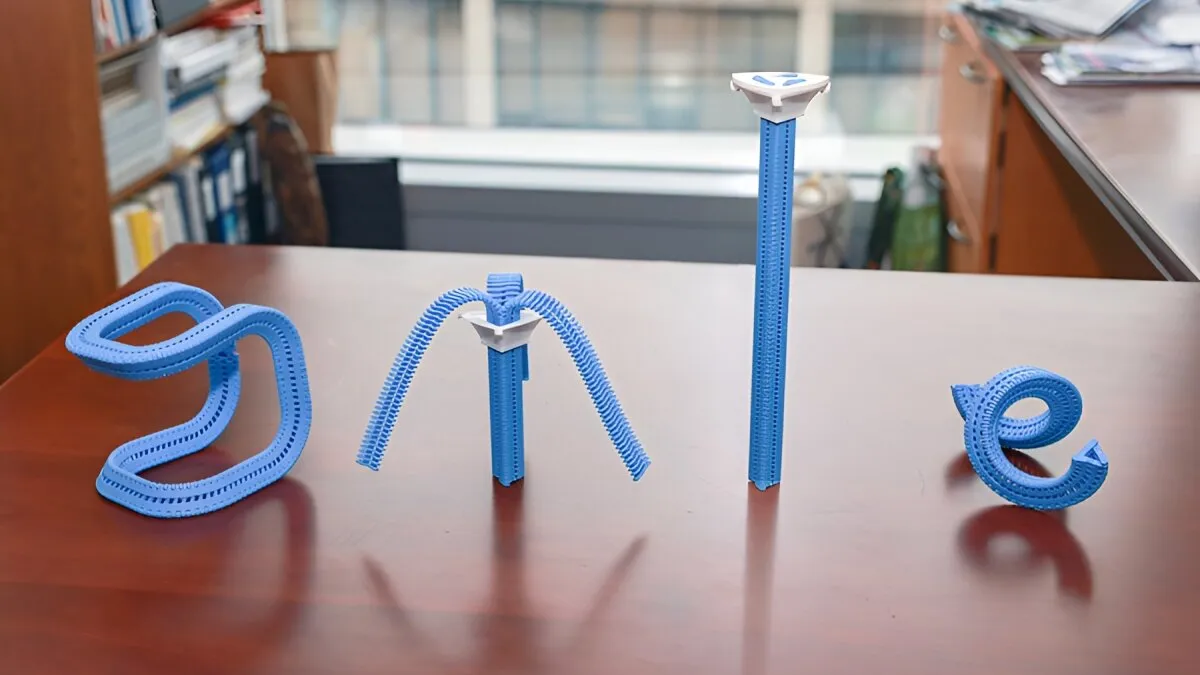
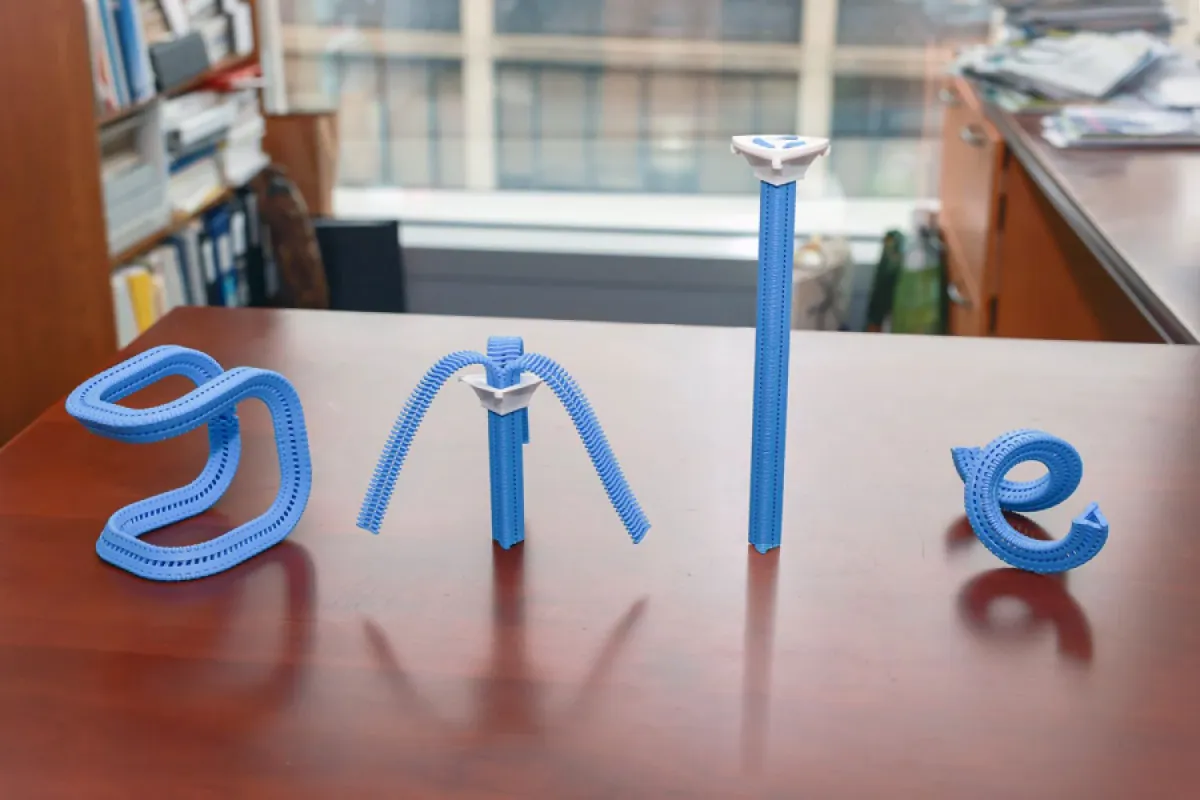
The CSAIL team created an automated design tool that lets users whip up custom Y-zippers, which are then 3D printed from plastics. These aren't just for clothes; they're for things. Think camping gear, medical devices, even robots. Jiaji Li, an MIT postdoc and the project's lead author, explained that while a regular zipper just closes flat objects, Freeman's idea was about dynamic transformation. Now, with modern tech, that dynamic transformation can turn complex items from flexible to rigid with satisfying reliability.
From Floppy Squid to Rigid Rod
The software lets you design the fastener's closed shape, setting strip lengths, bend directions, and even choosing from four basic motion patterns: straight, arched, coiled, or twisted. When open, the Y-zipper can splay out like, well, a squid. Zip it shut, and it pulls into a tight, rigid structure, like a rod.
This flexibility has some genuinely compelling applications. Pitching a tent with a Y-zipper? One minute, twenty seconds. Compare that to the usual six. Your back probably just sighed in relief.
It's not just for camping. Imagine an adjustable wrist cast that you can loosen during the day and tighten at night for comfort and injury prevention. Or a robot whose legs can change length on demand, allowing it to navigate tricky terrain by becoming taller or hunkering down.
They even made a motor-driven Y-zipper flower that 'bloomed' when zipped closed, proving that utility and art can sometimes hold hands. Durability-wise, the team found that a Y-zipper could withstand about 18,000 open-and-close cycles before giving up the ghost, thanks to its elastic structure evenly spreading stress.
Li believes a metal version could be even tougher, and the team hopes to scale these up for larger projects. Think rapidly deployable shelters for disaster relief or robotic arms for collecting samples in space. Guanyun Wang, an assistant professor at Zhejiang University, summed it up perfectly: reimagining an everyday zipper for 3D changes is a brilliant way to bridge the gap between soft and rigid states. And after 40 years, it's about time.