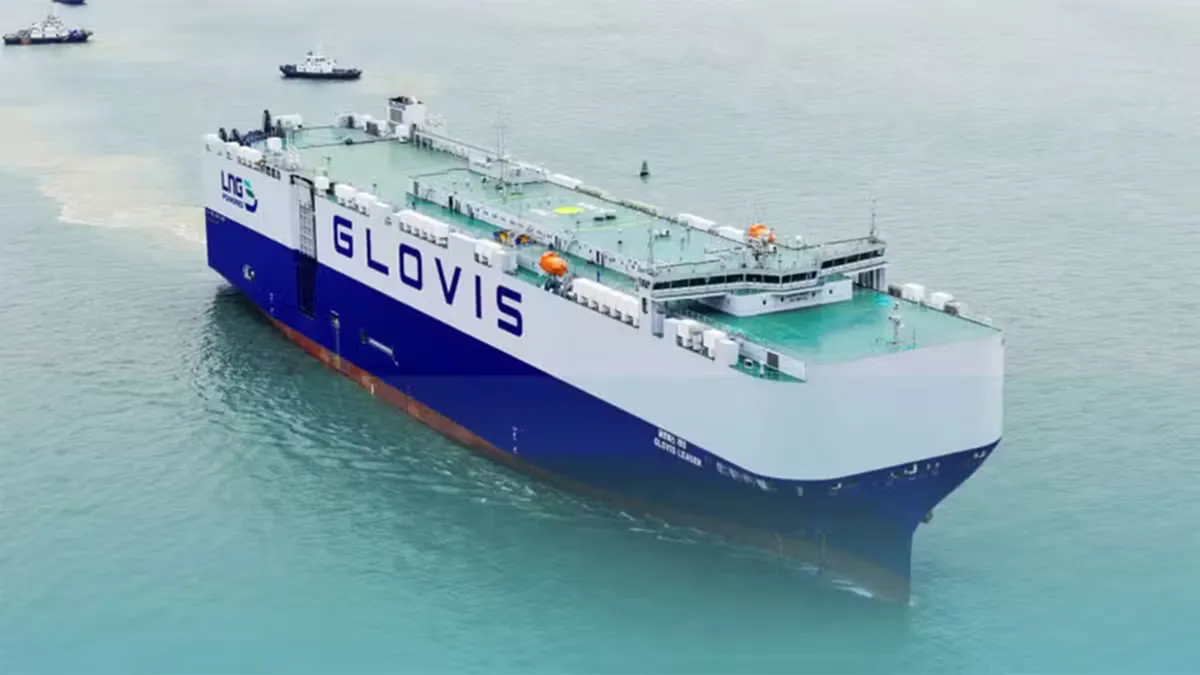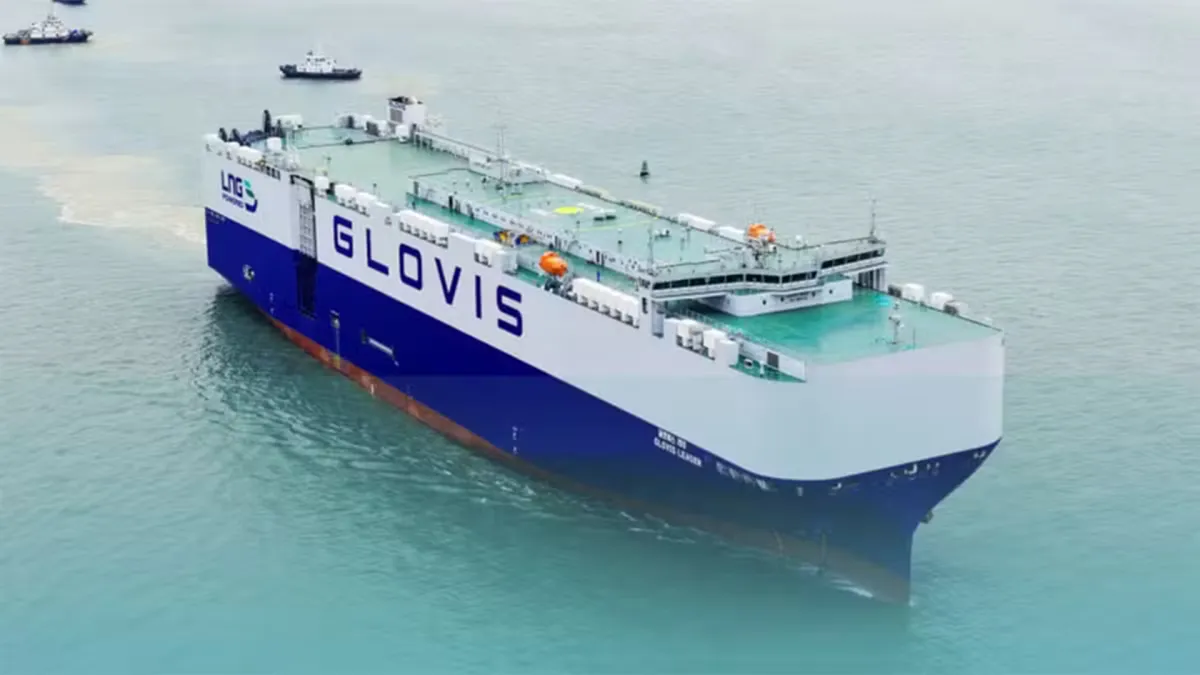
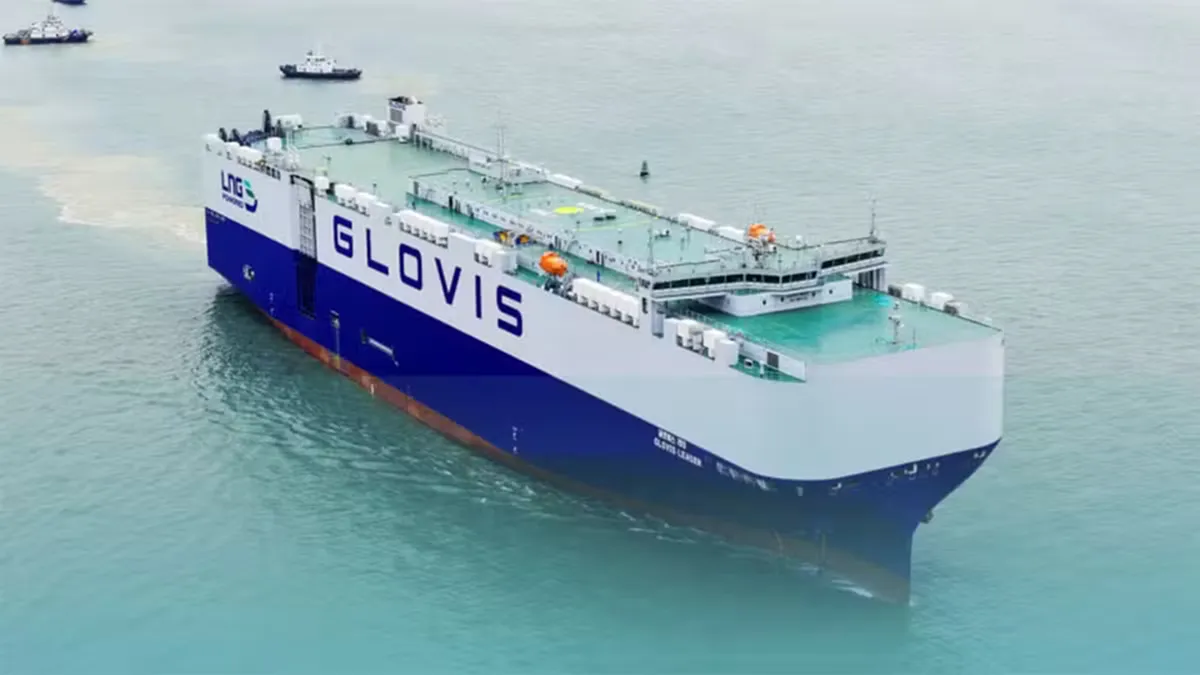
Imagine a parking lot so vast, it stretches 31 miles bumper-to-bumper. Now imagine that parking lot floating on the ocean. That's essentially what China just delivered: the world's largest car carrier, a behemoth capable of hauling 10,800 vehicles in one go. Because apparently, that's where we are now.
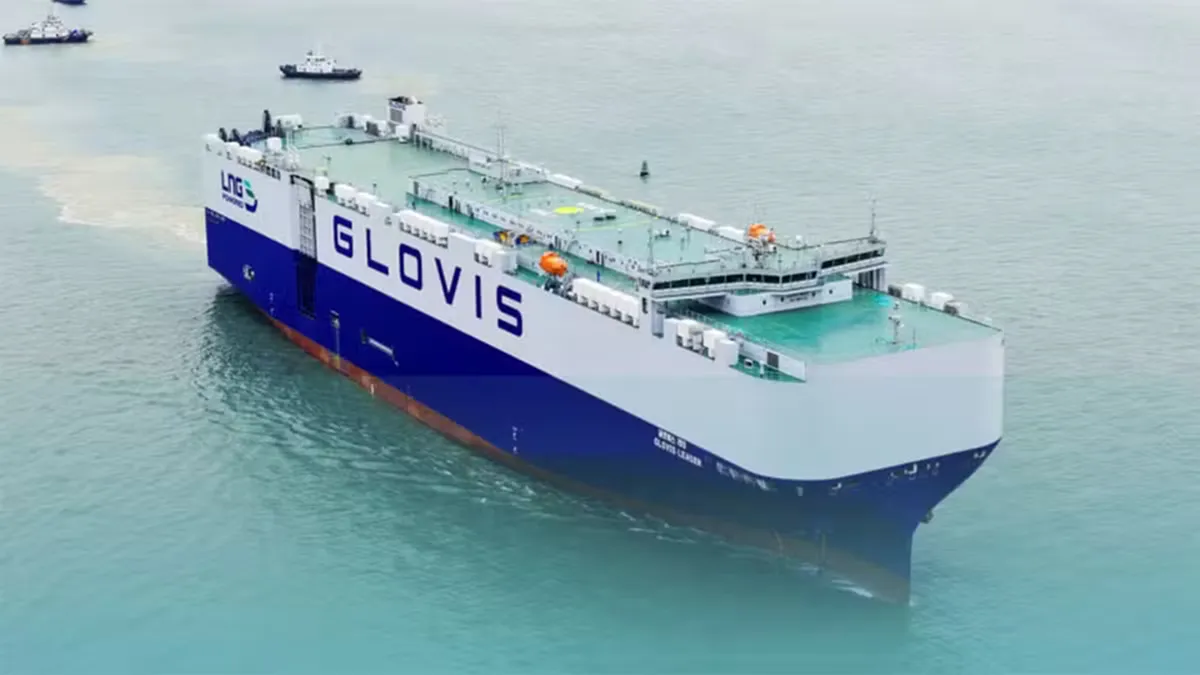
Built by the state-owned Guangzhou Shipyard International (GSI) and handed over to South Korea's HMM, this vessel, charmingly named the Glovis Leader, is now operated by Hyundai Glovis. It’s 754 feet long, 131 feet wide, and basically a 14-deck high-rise for everything from your standard sedan to hydrogen-powered trucks. Which, if you think about it, is both impressive and slightly terrifying.
The Green Giant of the Seas
This isn't just about sheer size; it's about being green while moving all that metal. The Glovis Leader runs on a dual-fuel system, primarily using liquefied natural gas (LNG), with the option to switch to standard marine fuel. Zhang Fuli, a technical manager at GSI, proudly calls it a "green energy ship." It even has a shaft generator system that can power the entire vessel while at sea, making it incredibly energy efficient.
We're a new kind of news feed.
Regular news is designed to drain you. We're a non-profit built to restore you. Every story we publish is scored for impact, progress, and hope.
Start Your News DetoxAnd because planning for the future is always in style, the ship is designed to be easily converted to run on ammonia and methanol. This foresight helps it meet the ever-tightening emissions standards, significantly slashing nitrogen oxide output compared to its older, less eco-conscious cousins. It zips along at a respectable 19 knots, ready for those long international hauls.
Lee Kyoo-bok, CEO of Hyundai Glovis, isn't shy about its impact, suggesting its massive capacity and eco-friendly operations will redefine global car transport. It's a bold claim, but when you're moving enough cars to fill a small city's worth of parking, you've earned the right to brag a little.
China's Shipbuilding Flex
This isn't a one-off. This delivery underscores China's rapidly expanding prowess in shipbuilding, especially in the carbon-conscious era. Chinese shipyards have been on a roll, churning out record-breaking car carriers like they're going out of style (they're not).
Just recently, the BYD Shenzhen, with a mere 9,200-vehicle capacity, began its maiden export voyage in April 2025. BYD also owns two more ships of similar size. Then came the Anji Ansheng, capable of holding 9,500 vehicles, sailing from Shanghai to Europe. Both designed and built in China, naturally.
GSI alone has bagged over 40 orders for car carriers and delivered 26 of them, often ahead of schedule. (Eleven ships in 2025 were delivered an average of 151 days early. Let that satisfying number sink in.) The company's order book is currently bursting with about CNY 100 billion (USD 14.6 billion) worth of business. So, if you're waiting for your new EV, there's a good chance it'll be making its grand entrance on one of these colossal, green giants.