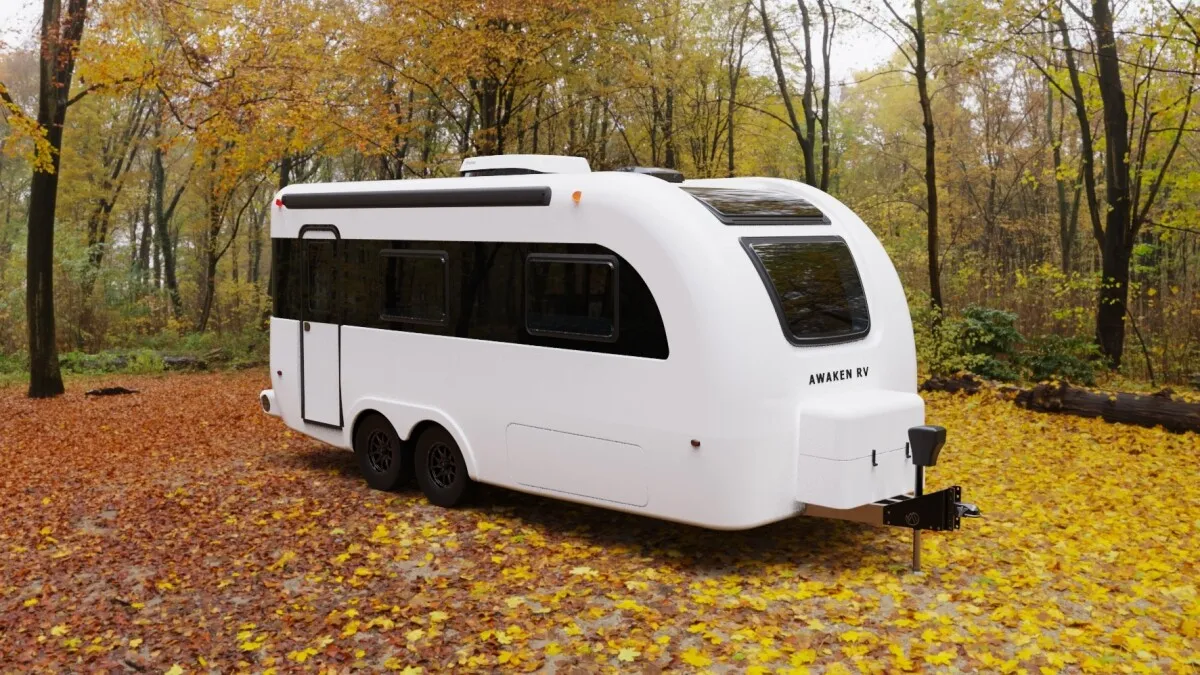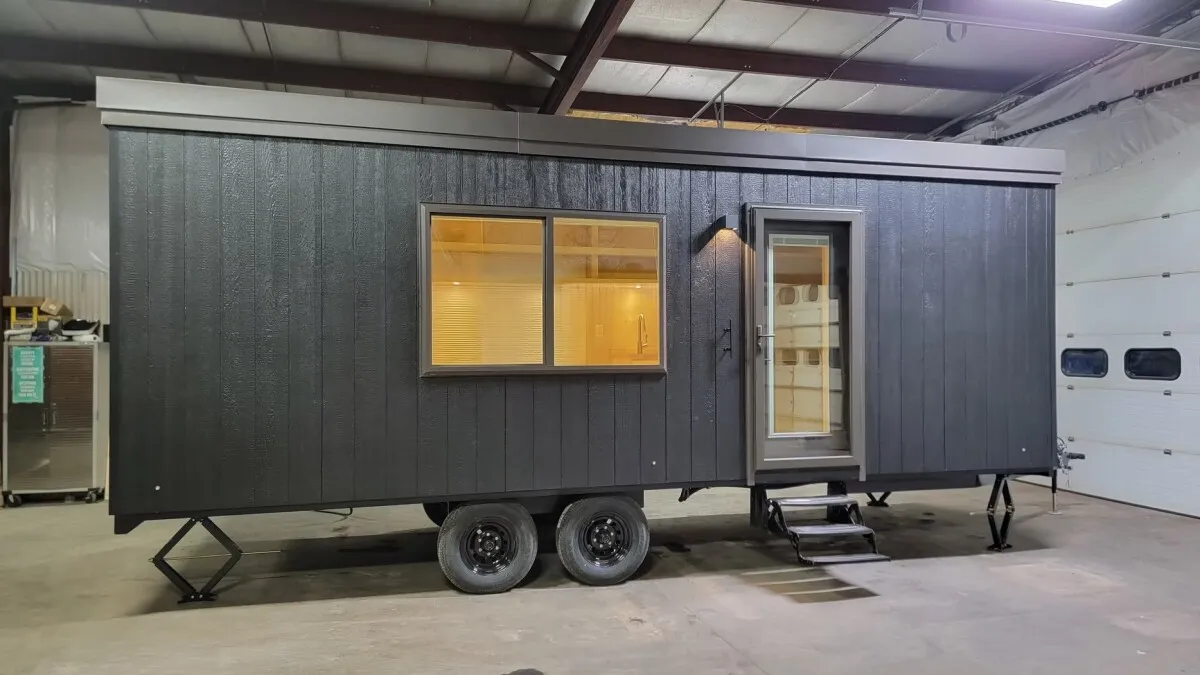
A 23.6-foot trailer home might sound cramped until you step inside the eVista and realize someone has actually thought through every inch.
Escape, a company that's been refining tiny house design for years, built this model to do something counterintuitive: feel spacious while being genuinely small. The trick isn't magic — it's intention. Open floor plans, birch and maple finishes that reflect light, and furniture that does double duty mean you're not constantly bumping into walls or feeling like you're living in a storage unit.
The kitchen has a full-size fridge and freezer, not a dorm-room compact. There's actual counter space. Two large drop-down tables in the center can be a workspace in the morning and a dining table at night. The bedroom at the rear has a raised bed with built-in storage underneath — the kind of detail that separates "tiny house" from "tiny house that works."
We're a new kind of news feed.
Regular news is designed to drain you. We're a non-profit built to restore you. Every story we publish is scored for impact, progress, and hope.
Start Your News DetoxThe bathroom is snug — a walk-in shower, toilet, and sink — but it's complete. You're not showering in a closet or making compromises that feel punitive.
Escape positions the eVista as a vacation home or rental rather than permanent housing, which is honest. Tiny living works best when it's a choice, not a constraint. The model sits on a double-axle trailer, so it can move. That flexibility appeals to people who want a retreat without the commitment of a second property, or who are testing whether downsizing actually suits them before they fully commit.
Right now, a surplus "Plus One" model is available for $51,485. That's not cheap, but it's worth context: you're buying a finished, livable space on wheels, not a DIY project. For comparison, that's less than many used RVs and significantly less than a down payment on a second home in most markets.
The tiny house movement has matured past the novelty phase. What started as Instagram-friendly minimalism has become a practical response to housing costs and a genuine rethinking of how much space we actually need. Models like the eVista show that constraint can breed creativity — and that small doesn't have to mean cramped.