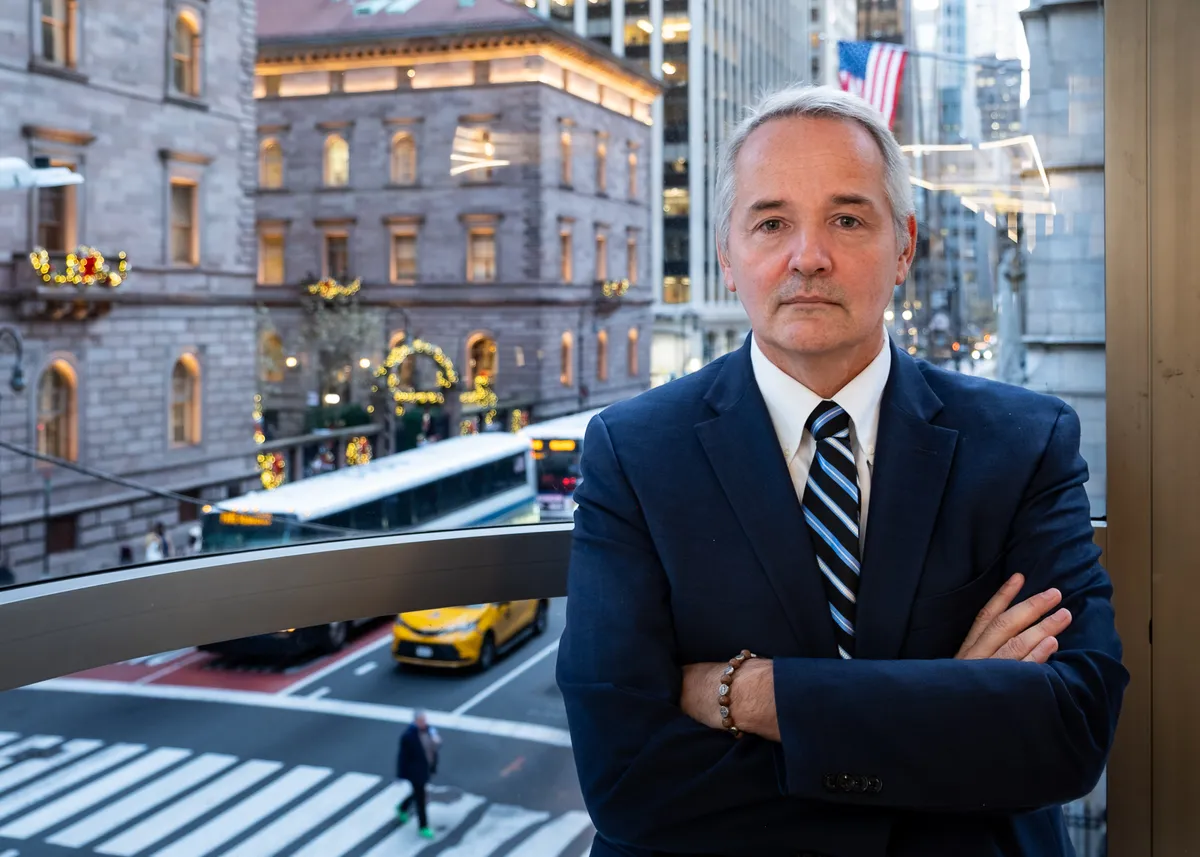
J. Antonio Fernández arrived in the United States to study English. He stayed because people were kind to him. Now, as the first lay person to lead Catholic Charities of the Archdiocese of New York, he's channeling that gratitude into tackling two problems that define poverty in the city: people can't afford food, and they can't afford housing.
"Food insecurity and housing, without a doubt," Fernández said when asked what he sees most among the 400,000 people CCANY serves each year. It's a straightforward assessment from someone who has spent two and a half months observing New York's poorest neighborhoods — and feeling the weight of it himself. "I felt it in my own skin," he said about the cost of living here, having recently moved from San Antonio, Texas, where he led Catholic Charities' response to waves of immigration at the southern border.
The Scale of the Need
CCANY operates a network of social service agencies across New York State that provides food, shelter, clothing, health services, immigration assistance, and workforce development. Through Catholic Homes, a sister agency, it manages roughly 3,000 housing units — more than half acquired through preservation initiatives where CCANY took over and rehabilitated existing buildings. The organization's goal for 2026 is to preserve another 1,120 units.
We're a new kind of news feed.
Regular news is designed to drain you. We're a non-profit built to restore you. Every story we publish is scored for impact, progress, and hope.
Start Your News DetoxYet Fernández is clear-eyed about the gap between what they do and what's needed. In a city where more than half of tenants struggle to pay rent, even a network serving hundreds of thousands feels like "a drop in the ocean." The St. Anselm project in the South Bronx, completed in October, filled immediately. Construction on Broome Street on the Lower East Side began in June. Both are full before they're finished.
From Crisis Response to Long-Term Change
Fernández's previous role in San Antonio exposed him to a different kind of urgency: rapid immigration at the border. Over three years, CCANY San Antonio served 350,000 immigrants, many staying only 72 hours before moving on to New York, Boston, or Chicago. The work there was triage.
New York demands something different. "The conversation is focused on long-term service, greater legal assistance, and more case management," Fernández explained. It's not enough to provide a meal during Thanksgiving or a night in a shelter. The question that drives his thinking now is harder: How do you help someone not just survive this week, but build a path out of poverty?
That's why he's pushing for more food pantries within CCANY's strategic plan — not as charity, but as infrastructure. And why he's asking the government for one thing above all: more funding for housing development. "It takes a long time to build a new building," he said. The need is immediate. The solutions are slow.
A Shift in Leadership
Fernández's appointment marks a change for an organization that has been led by clergy for 117 years. He's not the first to notice the mismatch between CCANY's solid work and the scale of New York's crisis. But as an immigrant himself — someone who arrived not knowing the country, who was helped by strangers, who chose to stay — he brings a particular clarity to what's at stake. "I believe that everyone, all human beings, have a right to housing, food, and clothing," he said.
He's already met with the city's new administration three times, finding common ground in their shared focus on serving the poorest New Yorkers. What comes next depends partly on whether that alignment translates into resources — and partly on whether a nonprofit network, no matter how dedicated, can move fast enough to match a crisis that's already outpacing the solutions.