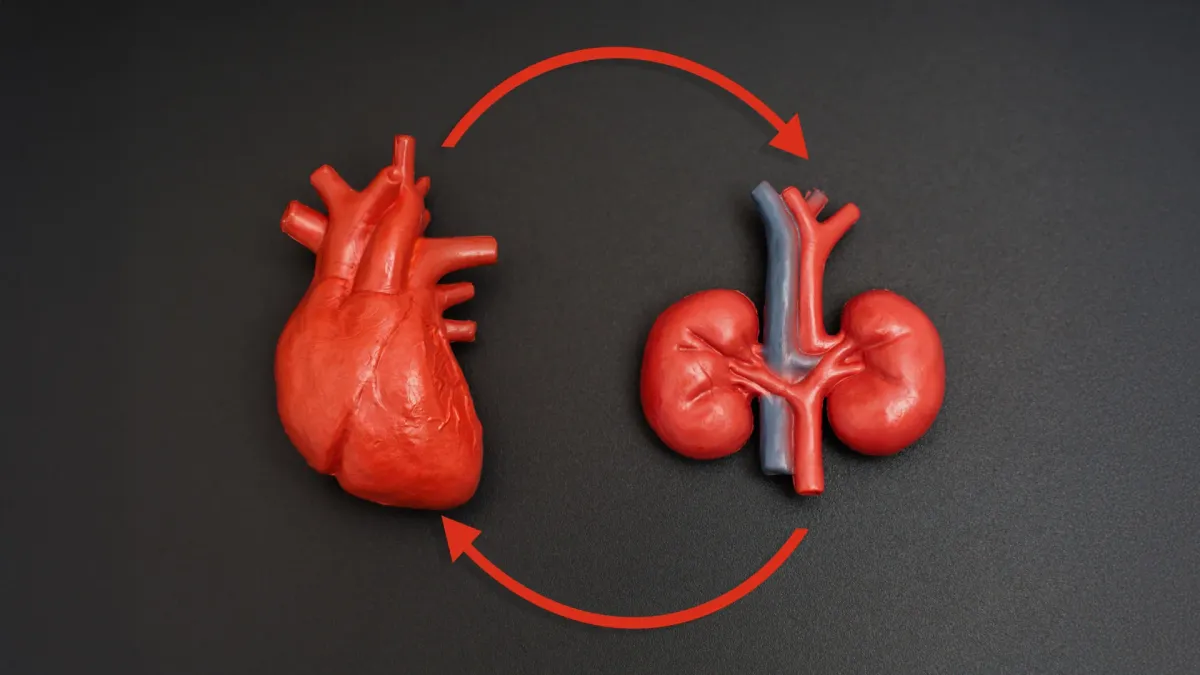
Your heart, kidneys, and metabolism don't work in isolation. They're locked in a conversation—each one affecting the others, day after day. When one system starts to falter, it sends ripples through the rest. Over time, that strain compounds into something doctors now call CKM syndrome: a cluster of conditions that dramatically raises your risk of heart attack, stroke, or heart failure.
The catch is that nearly 9 in 10 American adults already have at least one of the risk factors that feed this cycle: high blood pressure, abnormal cholesterol, elevated blood sugar, excess weight, or reduced kidney function. Alone, each one is manageable. Together, they multiply the danger in ways that a single condition never would.
The Recognition Gap
Here's what's strange: most people don't know this connection exists. Only 12% of U.S. adults have even heard of CKM syndrome, according to a recent survey. Yet 79% said they'd want to learn more if given the chance. Seven in ten were curious about how it's diagnosed and treated.
We're a new kind of news feed.
Regular news is designed to drain you. We're a non-profit built to restore you. Every story we publish is scored for impact, progress, and hope.
Start Your News DetoxThat gap between what people face and what they understand about it matters. Because most people still think of their health as separate compartments—the heart doctor handles the heart, the endocrinologist handles blood sugar, the nephrologist handles the kidneys. Sixty-eight percent of survey respondents believed conditions should be managed one at a time, or weren't sure.
But that's not how the body works. Eduardo Sanchez, the American Heart Association's chief medical officer for prevention, puts it plainly: "The heart, kidney and metabolic systems are connected and, as such, should be treated in a coordinated way." When your healthcare team treats them as separate problems, you're missing the whole picture.
What's Changing
The American Heart Association is now pushing to reframe how we think about these systems. Through its CKM Health Initiative, they're building educational resources and an online hub to explain how heart, kidney, and metabolic health interlock. The goal is practical: help people take early steps to lower their actual risk, not just manage symptoms after they develop.
They're also working with healthcare teams across the country to break down the silos. When a cardiologist, nephrologist, and primary care doctor actually talk to each other about a patient's full picture, outcomes improve. It sounds obvious, but it's still rare enough to be worth calling out as progress.
The work ahead is straightforward, if unglamorous. Regular checks of blood pressure, cholesterol, weight, blood sugar, and kidney function. Not because any single number is dramatic, but because together they tell you whether your three systems are in conversation or conflict. "CKM health is about your overall health," Sanchez says. "It's a full circle."
For the 9 in 10 adults carrying at least one risk factor, that shift—from managing conditions in isolation to understanding them as connected—could be the difference between a heart attack at 55 and a healthy 80.