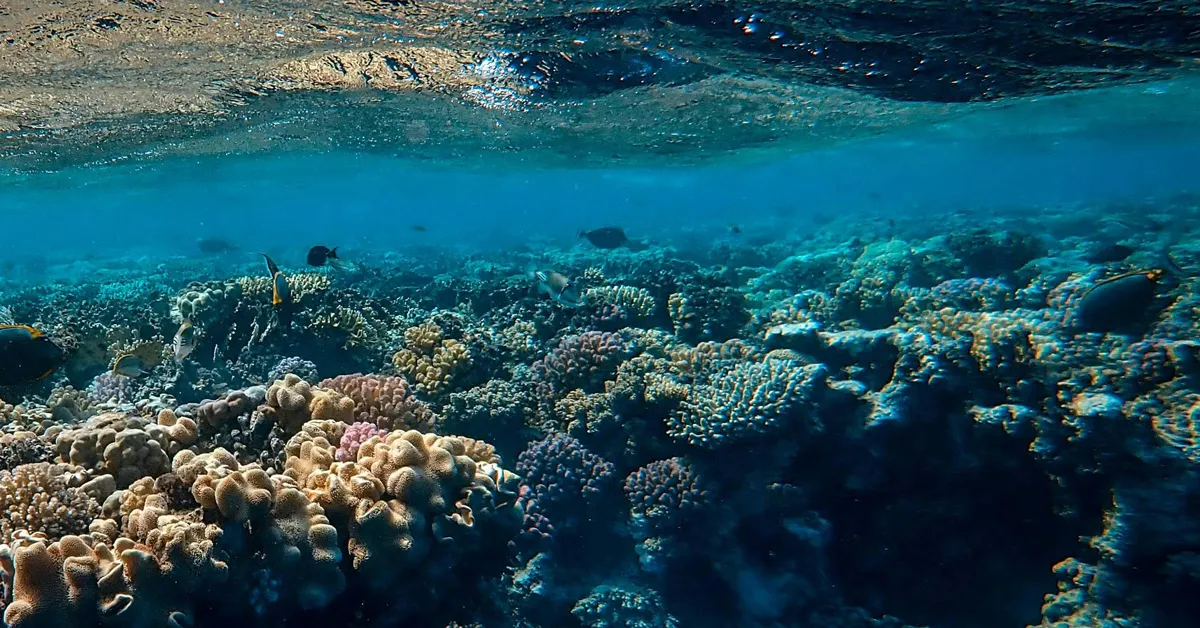
Turns out, the world's coral reefs have a secret, invisible network connecting them. Think of it as an underwater interstate system for baby corals, and scientists just mapped it. The discovery could be the key to saving these vibrant ecosystems from total collapse.
While we’re all watching the Great Barrier Reef, new research points to a lesser-known spot, Lord Howe Island, about 700 kilometers northeast of Sydney, as a crucial hub. Its lush forests and the world's most southerly coral reef aren't just pretty — they're vital for connecting coral regions across the entire Pacific.
The Tiny Travelers Keeping Reefs Alive
Coral reefs are in trouble globally, and it’s not just about individual corals dying. It’s about breaking the natural lifelines that help reefs bounce back from heatwaves and storms. Climate change is making it harder for tiny coral larvae to travel between reefs, which dramatically reduces their chances of survival.
We're a new kind of news feed.
Regular news is designed to drain you. We're a non-profit built to restore you. Every story we publish is scored for impact, progress, and hope.
Start Your News DetoxThese minuscule coral babies can drift for weeks, carried by currents for hundreds or even thousands of kilometers before they finally settle down and grow. This constant movement replenishes reefs, a critical process when sections are damaged. Without it, recovery is a pipe dream. Connectivity isn't just nice; it's non-negotiable.
Researchers got serious about tracking these oceanic nomads. They used advanced ocean models to map coral larvae movement across 850 reefs in the southwestern Pacific between 2011 and 2024. This included major players like the Great Barrier Reef and New Caledonia, alongside our new hero, Lord Howe Island. They tracked two types of coral — the sprinters (fast-growing branching corals) and the marathoners (slower-growing massive corals) — under current conditions and various future warming scenarios. Because apparently that’s where we are now.
They also looked at how larvae moved between different types of reefs: those resistant to heat, those that recover quickly, and those that stay cooler thanks to local currents. Essentially, they figured out who's sending what to whom.
Fragile Hubs and Marine Superhighways
The big reveal? Only a handful of reefs act as "hubs." These aren't just receiving larvae from distant shores; they're also sending out their own little settlers to seed other distant reefs. Lose these stepping stones, and the entire network — the whole fragile system — breaks down.
Reefs in the Coral Sea, for example, are critical bridges, linking the southern Great Barrier Reef with New Caledonia and beyond. Lord Howe Island, however, was a particularly striking discovery. It could be a "refugium," a place where corals might actually survive even as global warming intensifies, likely due to its cooler, southerly location. The irony? Its isolation, which helps it survive, also means it has limited natural connections to other reefs. So, protecting Lord Howe Island isn't just about saving one beautiful spot; it's about safeguarding a regional reef system that might one day depend on it.
Another interesting wrinkle: heat-resistant reefs tended to send larvae to fewer other reefs. But don't despair! Scientists are already looking into "assisted gene flow," where they intentionally move warm-adapted corals or their offspring to spread those heat-tolerant genes faster. Because when nature needs a helping hand, sometimes you just gotta give it one.
This research makes one thing abundantly clear: marine protected areas need to be managed as an interconnected network, not a collection of isolated islands. The larval corridors linking the southern Great Barrier Reef, New Caledonia, and Lord Howe Island cross national borders, which means conservation efforts must do the same. This isn't just an Australian problem; it's a Pacific problem.
To make matters worse, these newly identified "larval transport superhighways" in the Lord Howe Rise and South Tasman Sea are currently threatened by industrial fishing. Longlines used in fishing intersect the surface waters where these precious larvae travel, adding yet another layer of stress to an already struggling ecosystem. Protecting these invisible superhighways, where tiny larvae carry the genetic potential to rebuild what we might lose, is the least — and perhaps the most — we can do.