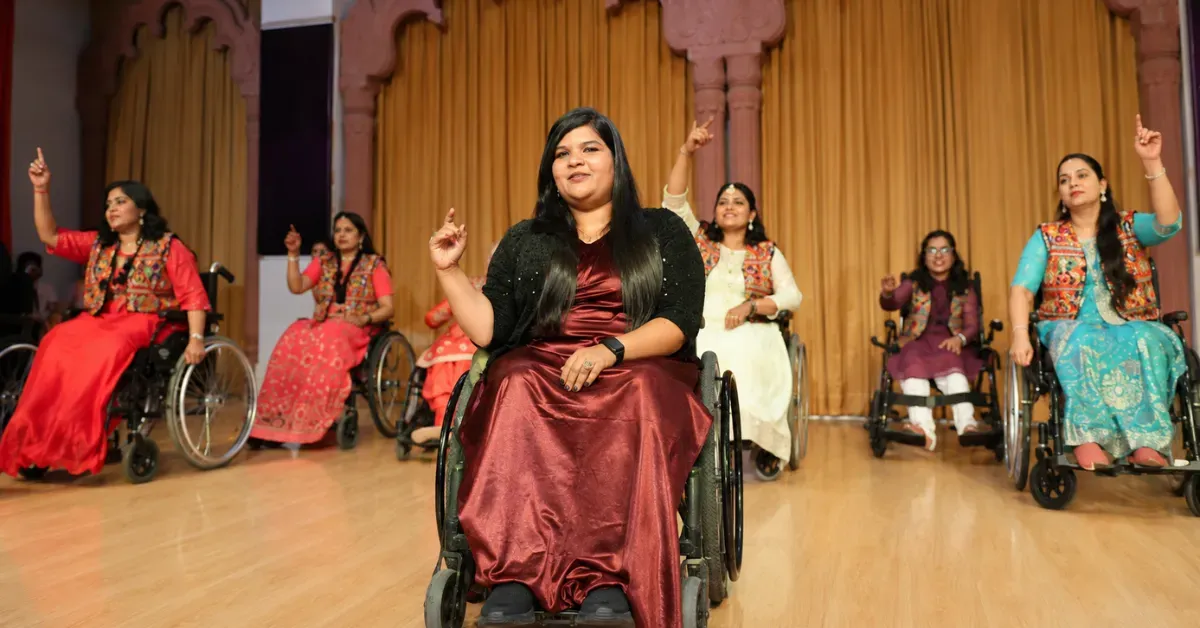
Nine women, all in wheelchairs, waited backstage in Jaipur on a chilly evening. For some, it was their first time traveling alone. For others, their first time in the spotlight without a tightening knot of fear. Then their names were called. They rolled onto the stage, faced an audience of 350, and danced. It was a moment, they say, where they were seen, heard, and celebrated on their own terms.
The event was called Astitva 2025 – meaning “existence” or “identity.” For the women who performed, it perfectly captured the night. And behind it all was Priya Sharma, who made the stage, and the journey to it, possible.
The Unplanned Pivot
Priya’s own journey into this work began with a sudden, devastating shift. From a rural, lower-middle-class family in Chhindwara, Madhya Pradesh, she had earned her MCom and a postgraduate diploma in computer applications. She was building a stable career, aiming for financial independence, when a road accident in September 2018 caused a spinal cord injury. Overnight, she became a paraplegic and a wheelchair user.
We're a new kind of news feed.
Regular news is designed to drain you. We're a non-profit built to restore you. Every story we publish is scored for impact, progress, and hope.
Start Your News Detox“There were days when even small tasks felt impossible,” she recalls. “And harder than that was the question, what does life look like now?” The fear of dependence, the silence, the self-doubt – it all crept in. Her recovery was a series of small, difficult steps, supported by her family. But the bigger question of what came next lingered.
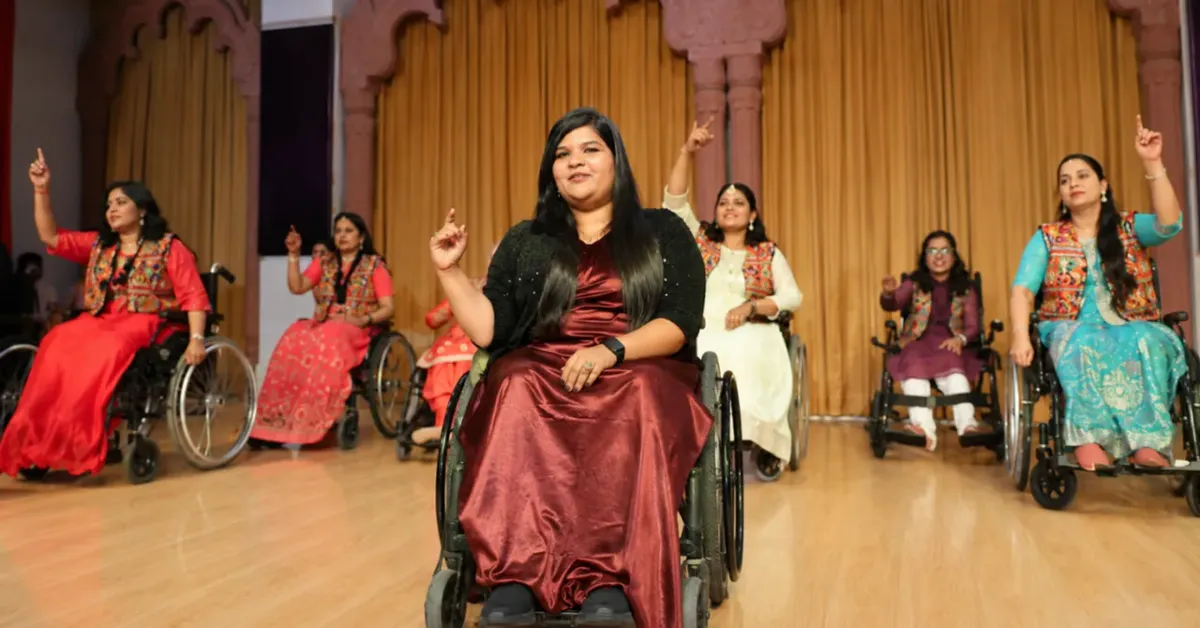
Then came her sister’s wedding. Priya hesitated to participate; social gatherings had become unfamiliar territory. But her siblings insisted. So, she sat in her wheelchair at the sangeet (a pre-wedding musical event) and danced. “It was the first time I felt joy after the accident,” she later told The Better India. That feeling, she realized, was a compass. Dance, she discovered, was a way to recognize herself again.
Priya wasn't a professional dancer before this. “I saw everyone dancing, celebrating, and somewhere inside, I also wanted to be part of that happiness,” she said. “So, sitting in my wheelchair, I danced, not perfectly, but simply with joy.” Later, a close friend and fellow para-athlete, Ekta Bhaiyan, encouraged her to see dance as a tool for change. Priya had already felt its emotional power.
As she connected with other women with disabilities, she saw the stark reality: opportunities and platforms were almost non-existent. So, in 2024, she started “Dance With Wheels” (DWW). “Honestly, without a big plan in the beginning,” she added.
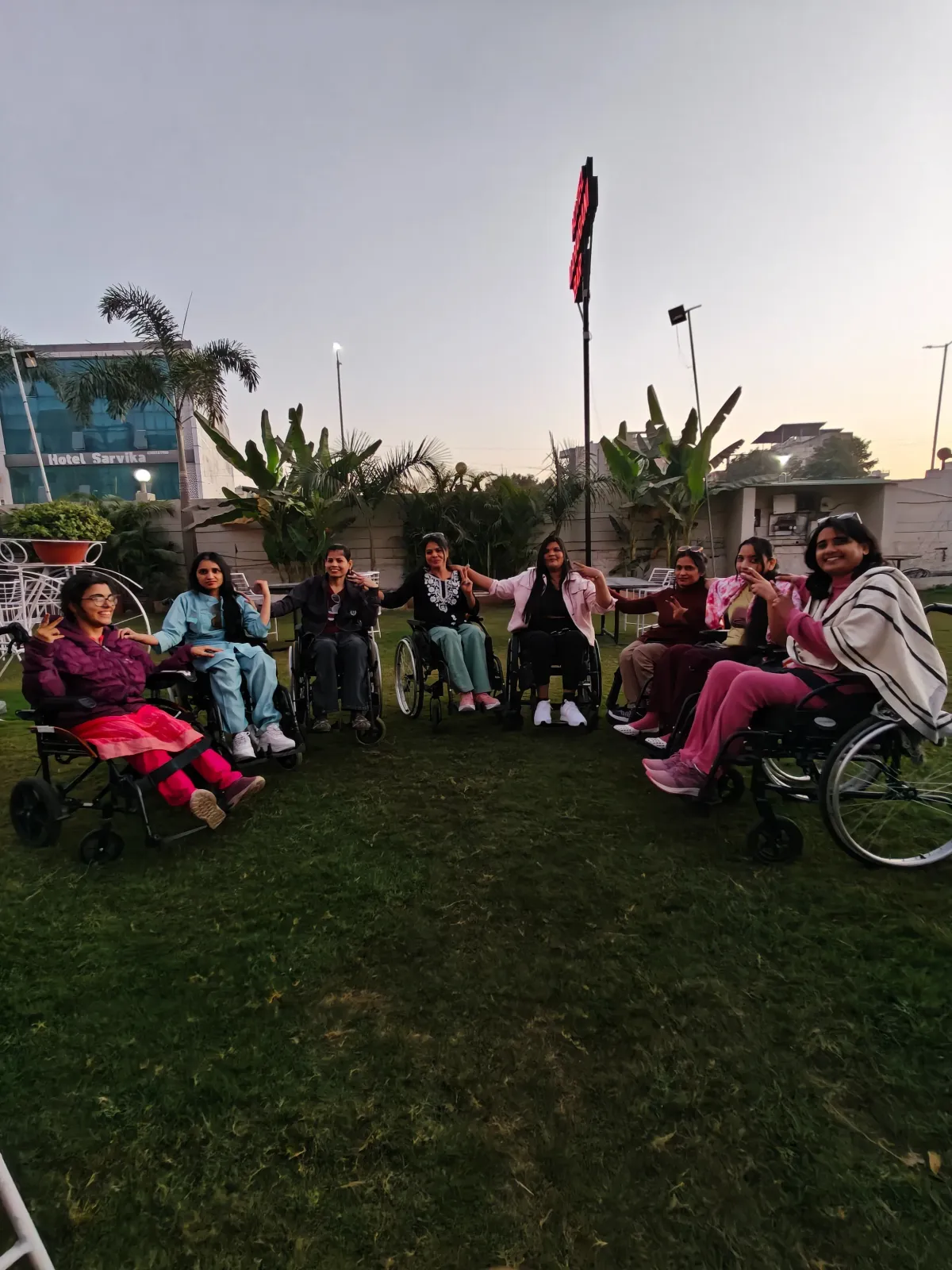
DWW started with three or four women. The early sessions were online, unstructured, and often emotional. “Everyone lived in different states, and traveling is not easy for wheelchair users,” Priya explained. They would meet on video calls, share struggles, laugh, and slowly try basic movements. Sometimes it was just hand movements, expressions, or simply enjoying a song. “Many girls were initially hesitant even to turn their cameras on because of low confidence or fear of judgment,” Priya said.
Slowly, the sessions became more structured. DWW became a safe, judgment-free community. There was no funding, just a WhatsApp group and weekly online sessions. Priya often paid small costs herself. “It didn’t feel like an organization in the beginning,” she said. “It felt like a conversation.” A conversation that began to attract women who had been looking for such a space, even before they knew how to describe it.
Finding Identity, One Step at a Time
Nidhi Gosalia was one of them. She lives with cerebral palsy, which affects her movement. “Walking is difficult for me,” she said. “But I have always been a dancer.” When Priya saw Nidhi’s dance videos online, she reached out. “I was Priya’s first teammate,” Nidhi said. “I just knew I wanted to support what she was building.”
“For me, dance is therapy. It works on my body, but also on my mind,” Nidhi shared. Before DWW, her world had shrunk. “You lose more than mobility,” she observed. “You lose social space. You stop being invited. You stop being asked.” Dance became her way to reclaim that space. “I don’t even do physiotherapy in the usual sense,” she said. “For me, dance is therapy.”
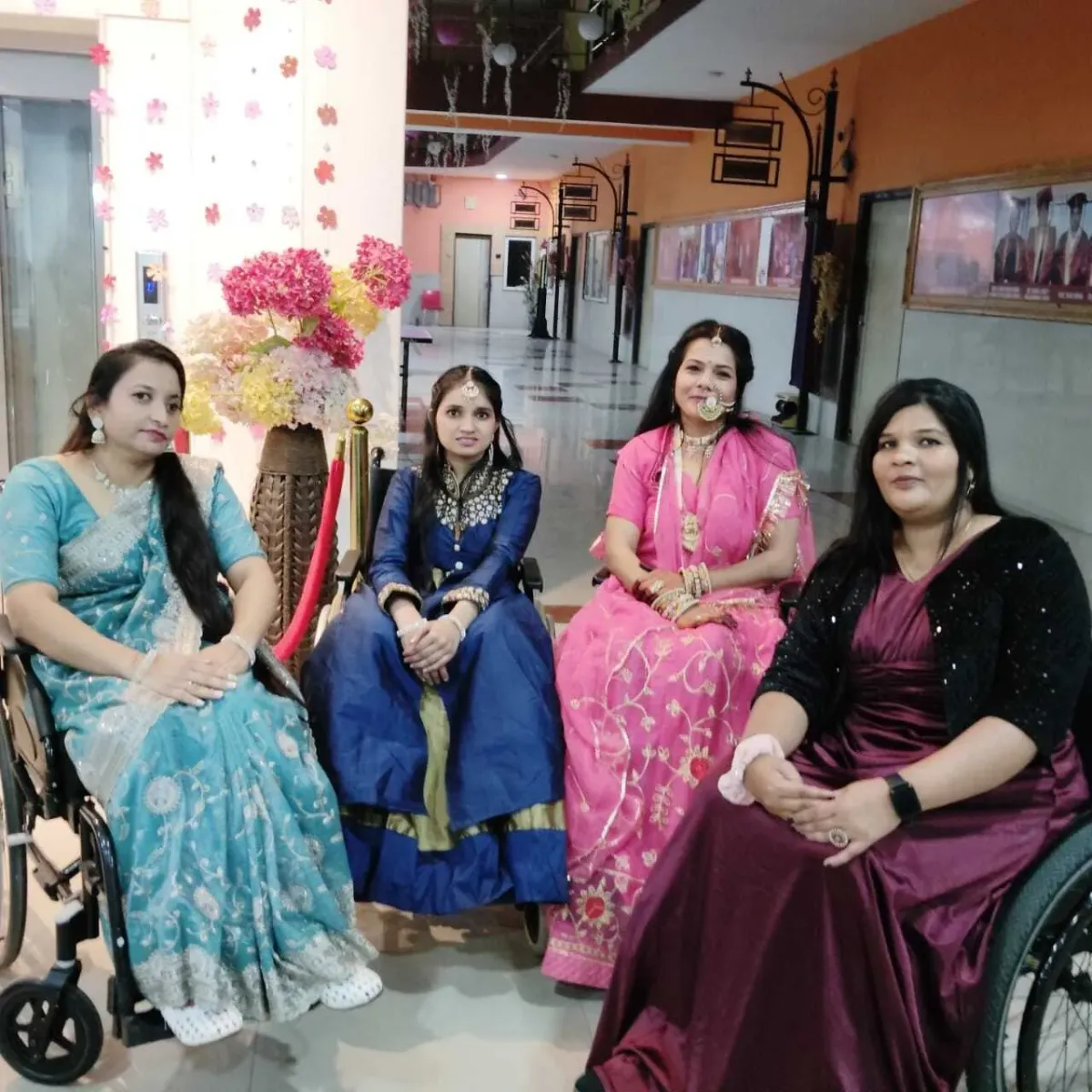
When DWW organized Astitva 2025, it was Nidhi’s first time back on a physical stage in years. “Standing there again, it felt like I had come back to myself,” she said. “Even my parents came to cheer me on.”
Akansha Singh from Fatehpur, Uttar Pradesh, also found DWW after years of struggling with a spinal tumor that greatly weakened her right knee. Multiple treatments and physiotherapy offered slow, uncertain recovery. A fracture during this time led her into depression. “My life was limited to four walls,” she said. “I had stopped going out, stopped meeting people.”
Joining DWW, she wasn't sure where she fit. “I didn’t know how to move. I didn’t even know if I should try,” she recalled. “But Priya kept saying, ‘Start where you are.’” Akansha began with small movements. Her body felt less stiff. The tightness eased. But the biggest change was in her confidence. “I started dancing regularly. My strength improved,” she told The Better India. “More than anything, I realized I can live again.”
“Earlier, I would avoid every social space,” Akansha said. “Now I wait for performances. That is not a small change.”
Today, Dance With Wheels has connected with over 45 women and girls with disabilities across 16 states in India. Some attend sessions regularly, others engage through WhatsApp, online discussions, or events. Many join when struggling emotionally, becoming more active as they regain confidence.
DWW sees dance as a way to rebuild identity. “There is no right or wrong here,” Priya said. Sessions include talks about daily challenges, access, confidence, and visibility. “You realize you are not alone,” she added. “That is the first step.”
For many, the impact is clear: speaking more openly, traveling independently, participating in public spaces. DWW also plans to introduce Digital Skills Training to create more learning and livelihood opportunities.
The Night They Forgot Their Disability
Astitva 2025 wasn't a competition. The nine performers were part of the larger DWW community, brought together by months of online practice. For several, it was their first trip outside their home cities, their first train ride. They had prepared virtually for months, coordinating across different locations, health needs, and schedules.
“For months, we practiced virtually through Google Meet sessions,” Priya said. “Trainers taught the choreography online, participants practiced at home, and we kept refining the movements together. Since everyone had different physical abilities and mobility levels, routines had to be adapted carefully for each participant.”
Intensive in-person rehearsals in Jaipur brought the virtual connections to life. “It was challenging because of internet issues, health concerns, pain management, and different personal schedules,” she said. “But the commitment of the girls was incredible.”
When they took the stage, it was more than just a performance. “Some of the girls were crying because, for the first time in their lives, people were clapping for them instead of feeling sorry for them,” Priya shared. Many had spent years feeling invisible, dependent, or judged. That day, they were seen as artists first. One participant told Priya, “Didi, today I forgot I have a disability.” Priya smiled, “It was actually about showing up.”
Priya’s work extends beyond DWW. She’s a para-athlete, winning gold in javelin and silver in shot put at the 15th Madhya Pradesh State Para Athletics Championship in 2025. She also mentors individuals with spinal cord injuries. But she doesn't see herself as the sole leader; she believes in creating conditions where others can lead. Several DWW members now lead sessions and mentor newcomers.
“Earlier, we would say I am someone with a disability,” Priya said. “Now we say we’re dancers.” That shift, she insists, is the real victory. They are building a space where movement becomes memory, confidence, and identity – and that’s a show worth watching.