Richardson Trading Post in Gallup, New Mexico has been a quiet anchor for Navajo artisans since 1913—a place where weavers, silversmiths, and potters could sell their work and where families could get cash when no bank would take them seriously.
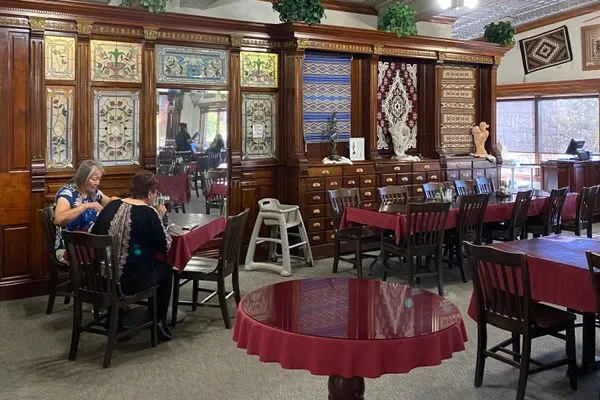
The store sits in what locals call the "Heart of Indian Country," surrounded by the Navajo Nation and the Trails of the Ancients Scenic Byway. Walk in today and you'll find 1,500 Native American rugs hanging in the rug room alone. The leather saddles number over a thousand. Turquoise and silver jewelry from local artisans fills the cases—each piece made by hand, each one different from the last. There's pottery from seven different pueblos, tribes, and nations in the area, stacked and displayed with the kind of care that says: these things matter.
The store's neon sign—"RICHARDSON CASH PAWN"—is a relic of Route 66's heyday, but it points to something deeper than nostalgia. The pawn system was survival infrastructure. When Navajo people needed cash and banks wouldn't serve them, trading posts became the only option. Bill Richardson, who ran the business for decades despite having no Native ancestry himself, spoke fluent Navajo and treated the pawn operation not as profit center but as community service. His father, who founded the post, didn't use it to get rich. He used it to give people access.
We're a new kind of news feed.
Regular news is designed to drain you. We're a non-profit built to restore you. Every story we publish is scored for impact, progress, and hope.
Start Your News DetoxToday, as online shopping and big-box stores have hollowed out countless small towns, Richardson's remains family-owned and committed to the same mission: keeping authentic handmade work visible, valued, and economically viable. That matters. When a weaver spends weeks on a single rug, or a silversmith hand-stamps each piece of jewelry, they're not just making objects. They're maintaining knowledge that goes back generations, keeping languages alive through the stories embedded in patterns, sustaining a way of seeing the world that doesn't fit neatly into the digital economy.
The trading post model—where artisans and community members work together to sustain each other—is increasingly rare. But in Gallup, it's still standing, still buying, still connecting people who make things with people who value them enough to come back.