
Imagine you and your partner are in a doctor's waiting room. Instead of flipping through old magazines, a nurse hands you a tablet with a game. You play a story about Laila and Caleb, who need help choosing birth control based on their lives and Laila's body.
This game, called What's My Method?, helps people learn about contraception. It also makes it easier to talk with their doctor. Elena Bertozzi, a game designer, works with doctors and experts to create games like this. She focuses on sensitive topics like vaccine hesitancy and reproductive health.
Bertozzi's team is testing if playing What's My Method? helps people choose a birth control method. They are finding that these health games are a powerful way to share information. They also let people learn from the choices they make in the game.
We're a new kind of news feed.
Regular news is designed to drain you. We're a non-profit built to restore you. Every story we publish is scored for impact, progress, and hope.
Start Your News DetoxThe Power of Play
Many adults see video games as trivial or even harmful. However, play is how intelligent beings learn about the world. It helps children develop their minds. For example, peek-a-boo teaches babies that things still exist even when they can't see them.
Digital games also help with learning. Games like Minecraft teach skills such as resource management and planning. The video game market is huge, expected to reach $300 billion by 2025. This means games often introduce new technologies to many people.
For instance, Microsoft's Kinect console brought motion capture technology to the public in 2010. Pokemon Go made augmented reality mainstream in 2016. Virtual reality headsets like Oculus (now Meta Quest) and Apple Vision Pro also introduce many to fully virtual worlds.
Gaming also connects people. Online games like Animal Crossing and Fortnite help billions socialize. This was especially important during the COVID-19 pandemic. Game use soared during lockdowns, helping players stay connected.
Students who grew up playing complex digital games are often better prepared for a digital world.
Gaming for Health
Games can do more than entertain. They can give players knowledge and the ability to solve real-life problems, especially in health. Patient information often comes in pamphlets or websites that are hard to understand. These don't always help with health literacy gaps.
Games, however, give specific information in a context players can understand and experience. Players can try different behaviors through avatars and see the results. This also builds empathy, which helps with learning.
Since 2010, Bertozzi's team has used digital games to share complex health information. They use animated graphics, audio, and interactive experiences.
In 2012, they worked with a hospital in New York to encourage flu vaccinations. Families who played their game, Flu Busters!, were 40% more likely to get vaccinated. The game showed how hard it is to avoid the flu and how vaccines help.
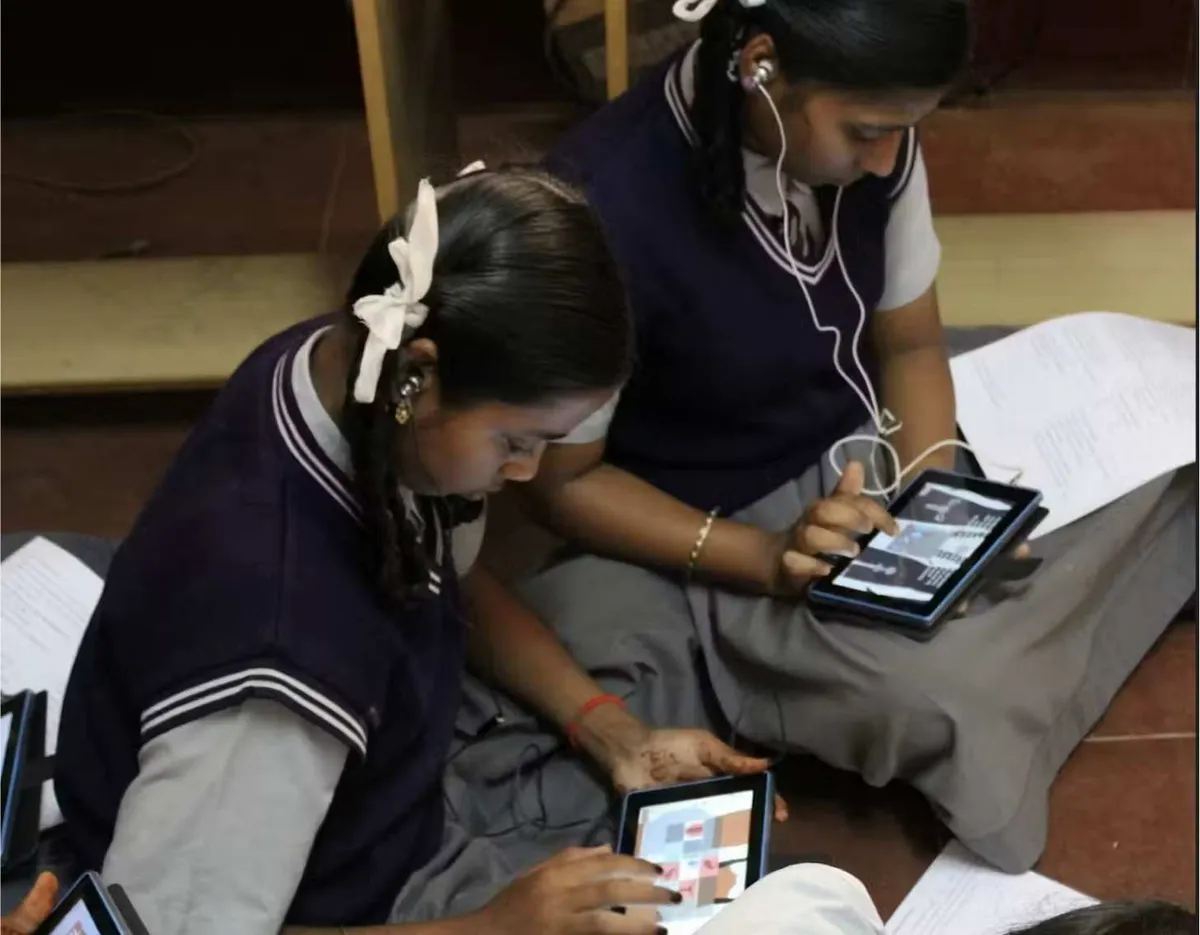
In India, they created a game to learn how teenagers make family planning decisions. The game was good for collecting anonymous data. It also gave young people the words and tools to understand their reproductive choices.
During the COVID-19 pandemic, Bertozzi's team developed Activate My Shield! This game uses armor as a metaphor to show how vaccines protect against diseases. It also addressed misinformation, like the idea that vaccines contained microchips. Players tried to put a microchip in a vaccine needle, showing how impossible it was.
Reaching Digital Natives
Bertozzi's team founded SolitonZ Games to distribute their free games on app stores. Other research groups are also making health games. These games cover many issues, like helping people with HIV stick to treatment, preventing teen vaping, and teaching children with asthma to manage their disease.
EndeavorRx, a video game, was approved by the FDA in 2020. It's a prescription therapy to improve attention in children with ADHD.
Research shows that digital games can easily fit into health care. Play is an effective way to deliver health information because people find games fun and engaging.
However, health campaigns have been slow to use game-based education. This might be because hospital administrators are not familiar with gaming. It's also hard to make changes in busy health care settings.
Bertozzi is hopeful that game designers can work with health experts to integrate gaming into health care. It makes sense to reach digital natives using the technology they already use every day.
Deep Dive & References
- Helps people choose a birth control method - Gates Open Research, 2022
- Games for health-related education - Gates Open Research, 2022
- Games are widely blamed for gun violence - Oxford Handbooks Online, 2017
- No causal evidence supporting the connection - Journal of Economic Behavior & Organization, 2021
- Ensure they keep learning - The Hechinger Report, 2023
- Resource management, planning, and spatial reasoning - Review of Educational Research, 2019
- Massively multiplayer online games - Social Sciences & Humanities Open, 2025
- Especially powerful during the COVID-19 pandemic - Proceedings of the ACM on Human-Computer Interaction, 2022
- People’s use of such games soared - Journal of Medical Internet Research, 2021
- Maintain social connections - Frontiers in Psychology, 2022
- Don’t effectively address gaps in health literacy - Agency for Healthcare Research and Quality, 2011
- Empathy, which further cements learning - Journal of Biomedical Semantics, 2015
- 40% more likely to get a flu vaccination - International Journal of Game-Based Learning, 2013
- Make decisions about family planning - Quinnipiac University
- Future reproductive choices - Gates Open Research, 2021
- Contained injectable microchips - PLOS ONE, 2021
- Encouraging people with HIV to adhere to their treatment - Journal of Medical Internet Research, 2018
- Helping teens avoid vaping - XR Pediatrics
- Teaching children with asthma - Annals of Allergy, Asthma & Immunology, 2020
- Authorized by the Food and Drug Administration - AAP News, 2020
- Improve attention in children who have attention-deficit/hyperactivity disorder - AAP News, 2020
- Have been slow to embrace game-based patient education - Information, 2023