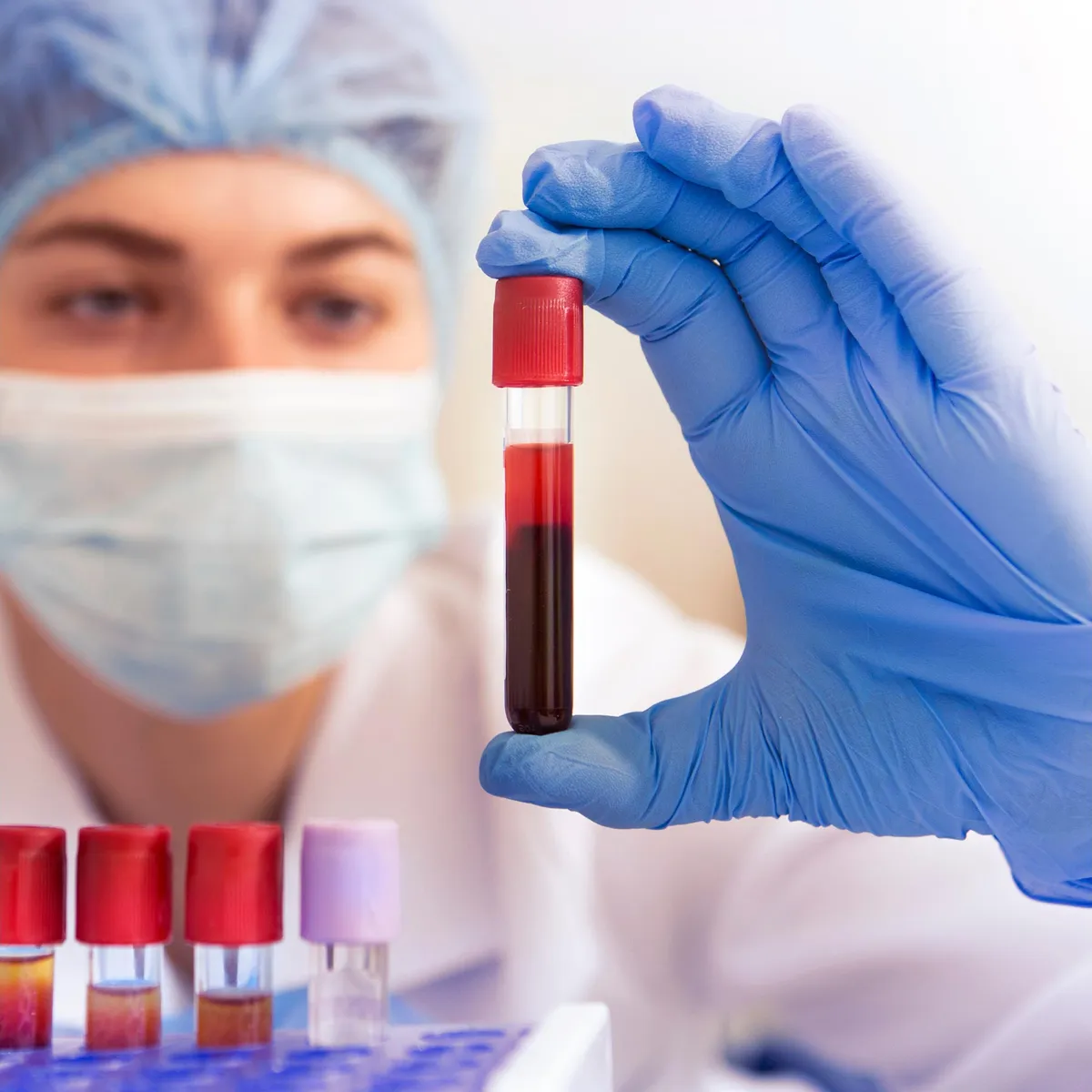
Imagine peering into the future of your brain, years before it decides to throw a party you didn't RSVP for. Scientists are getting closer to that reality with a blood test that might predict Alzheimer's disease long before traditional brain scans even hint at trouble.
Researchers at Mass General Brigham have been hot on the trail of a specific marker called pTau217. And what they found, published in Nature Communications, suggests we could soon be spotting Alzheimer's risk much, much earlier. Which, if you think about it, is both impressive and slightly terrifying.
The Brain's Crystal Ball
For a while, the gold standard for early Alzheimer's detection was a PET scan. Those fancy machines could spot amyloid buildup in the brain a good 10 to 20 years before any actual symptoms decided to show up. Think of it as a very expensive, very slow-motion alarm bell.
We're a new kind of news feed.
Regular news is designed to drain you. We're a non-profit built to restore you. Every story we publish is scored for impact, progress, and hope.
Start Your News DetoxBut now? This pTau217 marker in a simple blood test is showing up even earlier. We're talking before those amyloid PET scans even look problematic. Last year, the FDA gave the green light to the first blood test for Alzheimer's, which was a huge leap from the days of spinal taps and brain imaging. Because apparently, we're all a bit squeamish about needles in the spine.
In this particular study, scientists kept tabs on 317 healthy adults for about eight years. These folks, aged 50 to 90, were part of the Harvard Aging Brain Study. They got regular pTau217 blood tests, along with the usual amyloid and tau PET scans, and a battery of thinking ability tests. The mission: figure out if initial pTau217 levels could predict future brain gunk and a decline in cognitive skills.
And the results? A clear pattern emerged. People with higher pTau217 levels developed those Alzheimer's-related changes faster. This happened even when their early brain scans looked perfectly normal. Often, the biomarker started climbing before the amyloid PET scans gave any positive signals. Talk about an overachiever.
Conversely, participants who started the study with low pTau217 levels were largely in the clear, showing very little amyloid buildup over the years. Dr. Hyun-Sik Yang, a neurologist on the team, put it plainly: pTau217 can identify people who are going to become amyloid-positive, even when their current scans say otherwise. And if your pTau217 is low? You're probably staying amyloid-negative for quite a while.
Future-Proofing the Future
While you can't exactly waltz into your doctor's office for a pTau217 test tomorrow, Dr. Yang and his team are optimistic. They see this as a powerful tool for screening people for prevention trials and identifying those at higher risk before symptoms even begin to whisper.
With more testing, these blood tests could become as routine as, well, a blood test. And they offer a much cheaper option than those elaborate imaging methods. Dr. Jasmeer Chhatwal, a co-senior author, noted that the field is moving at warp speed, excited to see research discoveries quickly become real-world tools. Predicting who will become amyloid-positive isn't just a party trick; it's a serious step toward predicting Alzheimer's disease earlier than we ever thought possible. Now, if only they could predict who's going to eat the last slice of pizza.