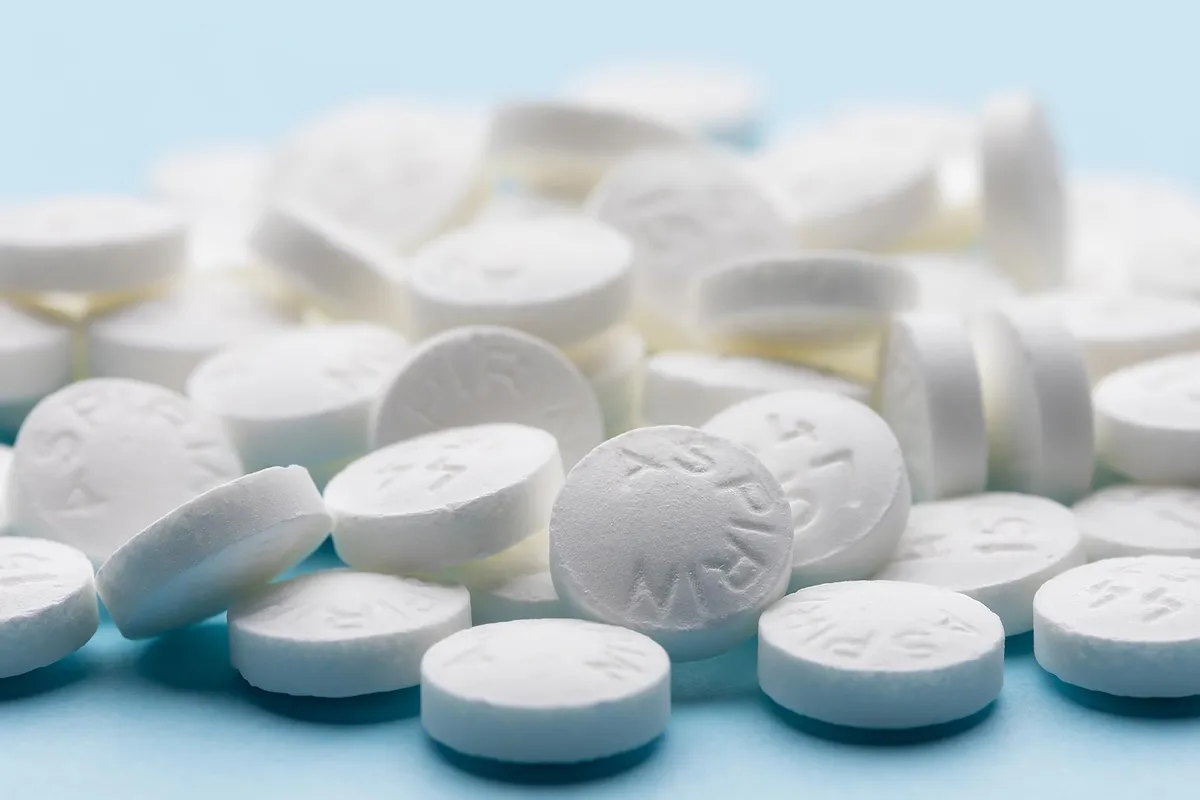
A common painkiller might help prevent colorectal cancer from returning after surgery. New clinical trial results suggest aspirin could be effective for some patients.
Researchers at Karolinska Institutet and Karolinska University Hospital in Sweden led a study. They found that colorectal cancer patients who took a daily low dose of aspirin after surgery were less likely to see their cancer come back. This was true only if their tumors had specific genetic changes.
The study focused on changes in the PI3K signaling pathway. This pathway helps control how cells grow. When mutations disrupt it, cancer can develop. About 37% of patients in the trial had these genetic changes.
We're a new kind of news feed.
Regular news is designed to drain you. We're a non-profit built to restore you. Every story we publish is scored for impact, progress, and hope.
Start Your News DetoxTrial Results Show Reduced Recurrence
Patients were randomly given either 160 mg of aspirin daily or a placebo for three years after surgery. The results showed a clear benefit. For patients with key PIK3CA mutations, cancer returned in 7.7% of those taking aspirin. This compared to 14.1% in the placebo group.
Patients with similar genetic changes saw recurrence rates of 7.7% with aspirin versus 16.8% with placebo. Overall, aspirin cut the risk of cancer returning by about half.
The ALASCCA trial included over 3,500 patients. They were treated at 33 hospitals across Sweden, Norway, Denmark, and Finland. This is one of the first studies to confirm earlier observations that aspirin might improve outcomes for colorectal cancer patients.
Colorectal cancer is a major global health issue. Nearly two million new cases are diagnosed each year. Even after surgery, many patients risk the disease returning, especially if cancer cells have spread.
Anna Martling, a professor at Karolinska Institutet, noted that aspirin is being tested as a precision medicine. She said it shows how genetic information can personalize treatment and save resources and suffering.
How Aspirin May Work
Researchers believe aspirin works in several ways. It can reduce inflammation and limit platelet activity, which might help cancer spread. It also interferes with tumor growth. These effects may make it harder for cancer cells to grow after surgery.

Martling added that while all molecular links are not fully understood, the findings support the biological reasons. They suggest the treatment could be very effective in specific groups of patients.
The study also showed improved disease-free survival. Nearly 89% of aspirin-treated patients remained cancer-free after three years. This compared to about 79% to 81% in the placebo group. However, the treatment did have risks. Severe side effects were reported in 16.8% of aspirin patients, versus 11.6% of those on placebo.
Benefits, Risks, and Accessibility
These findings are important because aspirin is widely available and inexpensive. It costs much less than most modern cancer treatments. If future guidelines adopt this approach, genetic testing could help identify which patients would benefit most from adding aspirin to their treatment.
Anna Martling highlighted that aspirin is globally available and very cheap compared to many new cancer drugs.
Deep Dive & References
Low-Dose Aspirin for PI3K-Altered Localized Colorectal Cancer - New England Journal of Medicine, 2025
The Swedish Research Council and the Swedish Cancer Society helped fund this study. The researchers reported no conflicts of interest.