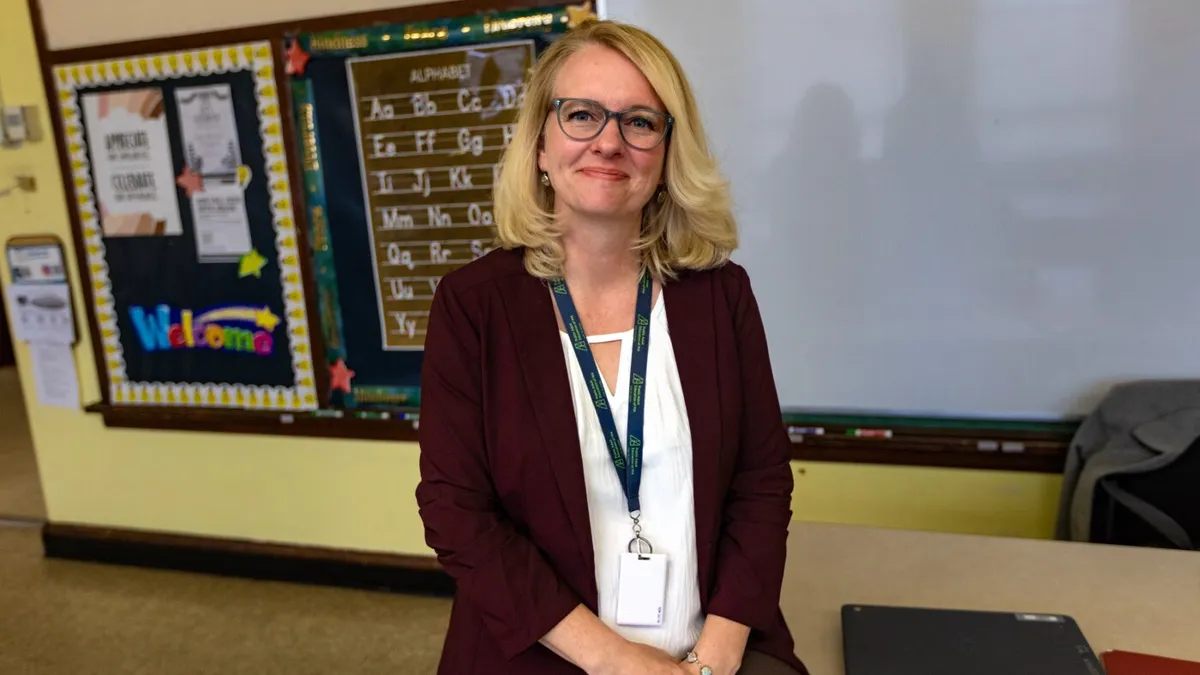
When Tammy MacDonald's primary care doctor died suddenly last August, she joined roughly 17% of American adults without a physician. She wanted a new one immediately. Ten local practices weren't accepting patients. Some quoted wait times of 18 to 24 months.
Then, in September—just as her blood pressure medications were running out—her health system launched Care Connect, an AI-assisted primary care program. MacDonald downloaded the app, spent about 10 minutes describing her symptoms to an AI agent, and had a video appointment with a doctor the next day.
"I don't have to leave work," she said. "And I gained some peace of mind, knowing that I have a plan."
We're a new kind of news feed.
Regular news is designed to drain you. We're a non-profit built to restore you. Every story we publish is scored for impact, progress, and hope.
Start Your News DetoxThe shortage of primary care providers is a national crisis, but Massachusetts feels it acutely. Mass General Brigham, the state's largest hospital chain, is betting that AI can bridge the gap while the system figures out why doctors keep burning out and leaving.
How it works, and why it matters
Care Connect employs 12 physicians who log in remotely from across the U.S., making the service available 24/7. The AI handles the initial conversation—patients describe colds, rashes, nausea, sprains, mild mental health concerns, or chronic disease issues. The tool then generates a suggested diagnosis and treatment plan for a doctor to review. If a video visit is needed, one happens within hours.
When MacDonald signed up, she was one of 15,000 patients in the MGB system without a primary care provider. By mid-December, each Care Connect doctor was seeing 40 to 50 patients a day. The program plans to expand across Massachusetts and New Hampshire by February, hiring more doctors as demand grows.
The underlying problem is straightforward: primary care doctors earn 30–50% less than specialists while their workload has grown for two decades. Burnout is rampant. In response, MGB committed $400 million over five years to primary care services, with Care Connect as one piece of that investment.
But not everyone sees it as a solution. Some MGB primary care physicians worry the AI program will gradually replace in-person care rather than fix the broken incentives that drove the shortage in the first place. "We're using this to basically fill a gap," said Dr. Michael Barnett, an MGB internist. "That sounds like a Band-Aid for a broken system to me."
Dr. Steven Lin, chief of primary care at Stanford University School of Medicine, agrees that AI works best for urgent issues—not ongoing chronic care. "Nothing beats a human who sees you regularly," he said. That's the real constraint. Care Connect isn't meant for emergencies or physical exams; patients needing tests or imaging get referred to clinics and labs.
The question isn't whether AI can triage symptoms—it clearly can, and fast. The question is whether it buys time for the system to fix pay and working conditions for primary care doctors, or whether it becomes a permanent workaround that lets the real problem fester.