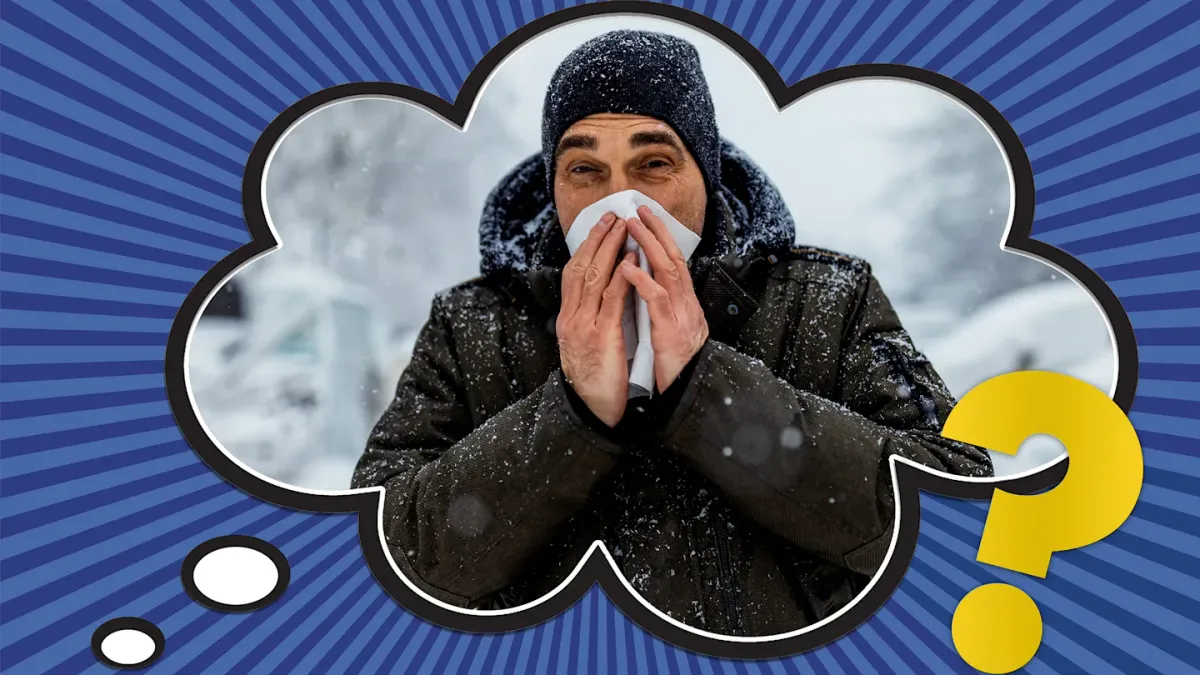
Winter brings a predictable surge in colds and flu. Flu clinics fill up. Your group chat becomes a chorus of coughs. But here's what's changed: we now understand why this happens—and more importantly, what actually stops it.
For decades, we blamed indoor crowding alone. People huddle inside, viruses spread, case closed. But the real story is more interesting, and it's given us actual leverage against seasonal illness.
The virus itself changes in winter
Influenza has a lipid coating—essentially a fatty shell that protects its genetic material. At warmer temperatures, this coating becomes unstable and breaks down easily, making the virus fragile and less able to infect you. But when temperatures drop, that coating hardens and stays intact. The virus becomes sturdier, more persistent, more dangerous. It's not that you're weaker in winter; the virus is stronger.
We're a new kind of news feed.
Regular news is designed to drain you. We're a non-profit built to restore you. Every story we publish is scored for impact, progress, and hope.
Start Your News DetoxThere's a second winter advantage viruses get: humidity. Cold air holds less moisture, both outdoors and in our heated homes. Without water molecules in the air to cling to, viral particles can travel farther when someone coughs or sneezes—and they stay airborne longer. Add poor indoor ventilation (windows sealed shut, air recirculating), and you've created an ideal environment for transmission.
A 2023 study in The Journal of Allergy and Clinical Immunology explored whether our immune defenses in the nose actually weaken as temperatures drop. The research was preliminary—only four subjects—but it hints at a third factor: our own biology might be working against us when it's cold.
What actually works
The good news is that none of this is inevitable. The measures that worked last winter still work this winter, and now we know why they work.
Handwashing interrupts transmission at the source. Disinfecting frequently touched surfaces removes the virus before it reaches your respiratory tract. Vaccination primes your immune system to recognize and neutralize the virus before it takes hold. These aren't feel-good suggestions—they're direct countermeasures to the specific mechanisms that make winter dangerous.
The less effective measure? Wet hair or going outside underdressed. Cold exposure doesn't meaningfully weaken your immune system, despite what your grandmother told you. The virus does the work; you just need to prevent it from reaching you in the first place.
What's shifted is our ability to see the problem clearly. Winter illness isn't some mysterious seasonal curse. It's a predictable biological event with identifiable causes and proven defenses. That clarity alone changes the equation.