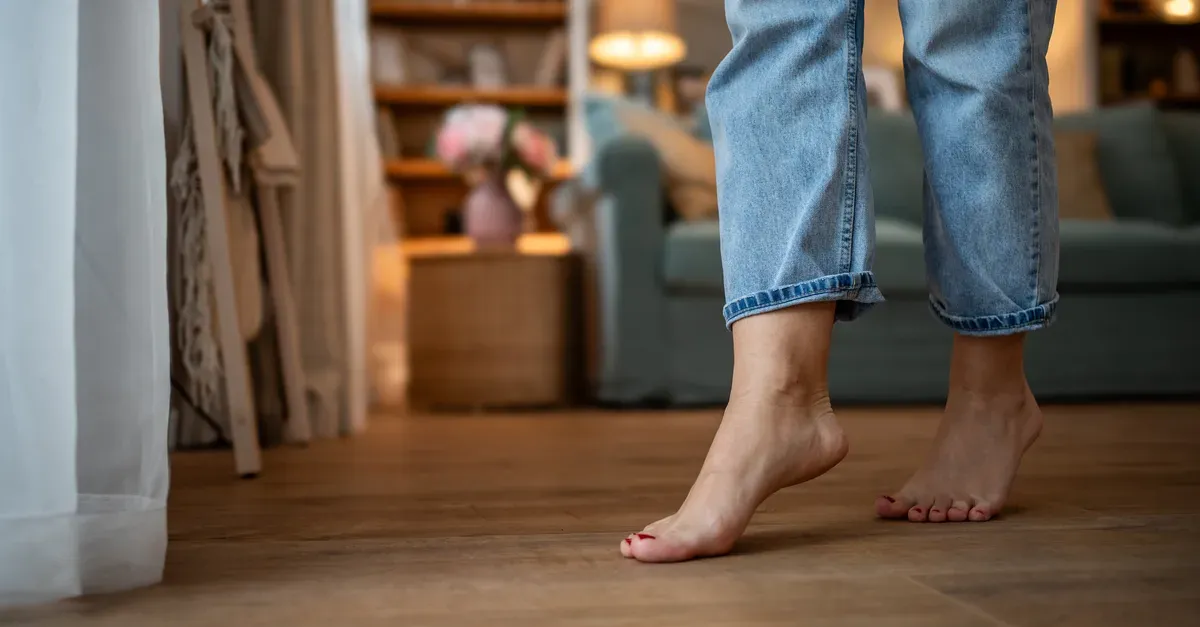
Kicking off your shoes when you get home feels good. But is it actually good for your feet? Doctors say yes — mostly, and with some important caveats.
The main benefit is straightforward: your feet get stronger. When you walk barefoot, the small intrinsic muscles in your feet have to work harder to stabilize and balance you. "I'm a big advocate for going barefoot at home," says Dr. Robert Conenello, a licensed clinical podiatrist. "The practice increases intrinsic muscular strength within the feet." These muscles naturally weaken as we age and spend years cushioned inside shoes, so any reinforcement matters. Stronger feet translate to better balance and mobility later in life.
There's also a skin benefit. Walking barefoot allows the skin on your feet to dry out properly, which reduces the damp environment where fungal infections like athlete's foot thrive. Dr. Hannah Kopelman, a dermatologist, notes another overlooked advantage: "Feeling the texture of different surfaces underfoot can be grounding and relaxing, almost like a mini reflexology session." It's a small thing, but it's real.
We're a new kind of news feed.
Regular news is designed to drain you. We're a non-profit built to restore you. Every story we publish is scored for impact, progress, and hope.
Start Your News DetoxThe practical trade-offs
The downsides are worth taking seriously, though they're mostly manageable. Barefoot walking exposes your feet to whatever's on your floor — dust, pet dander, cleaning chemicals — which can irritate sensitive skin or trigger allergies. There's also the obvious risk of stepping on something sharp or slipping on a wet surface.
For certain people, barefoot walking carries real risk. If you have diabetes, poor circulation, or neuropathy (nerve damage), even a small cut or scrape can become a serious infection before you notice it. Kopelman is direct about this: "even a minor foot injury can lead to serious health issues" in these cases. Repeatedly walking barefoot on hard floors can also contribute to plantar fasciitis or general foot fatigue.
Conenello suggests a practical middle ground: wear shoes or socks during tasks that keep you on your feet for long stretches, like cooking. "When standing for long periods barefoot, there can be excessive load to one area of the foot," he explains. Socks offer "minimal protection from minor abrasions or allergens while still allowing your feet to feel relatively free."
The takeaway is less about absolutes and more about knowing yourself. If you have healthy feet and clean floors, barefoot time at home is genuinely beneficial. If you have diabetes, circulation issues, or sensitive skin, the risks outweigh the gains. For everyone else, selective barefoot walking — especially on well-maintained floors — seems to be where the benefit lives.