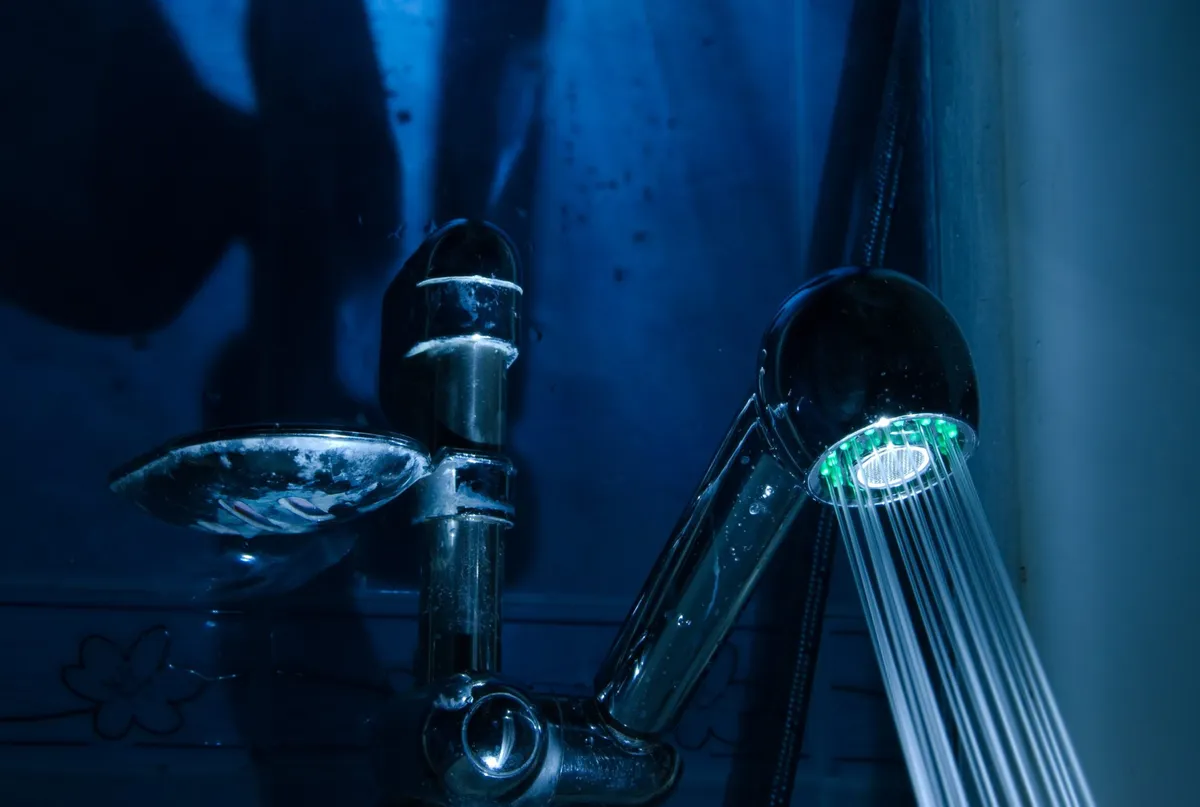
There's a reason a warm shower feels like permission to relax. Your body temperature spikes under hot water, then drops sharply when you step out—mimicking the natural cooling process your brain needs to initiate sleep. According to Chelsie Rohrscheib, a neuroscientist leading sleep research at Wesper, that one-degree drop in core temperature is what actually flips the switch. "For the brain to initiate sleep, the body must undergo a slight drop in core body temperature," she explains.
But temperature is only half the equation. The other half is light—or rather, the absence of it.
Your brain produces melatonin, the hormone that tells you it's time to sleep, based on light signals entering your eyes. Bright light suppresses melatonin. Dim light amplifies it. So a shower in darkness does something counterintuitive: it tells your brain that bedtime is coming, even though you're still awake. "Showering with the lights off promotes melatonin release, preparing the brain for sleep ahead of time," Rohrscheib says. The combination—warm water plus darkness—creates a biological one-two punch that conventional showers simply don't deliver.
We're a new kind of news feed.
Regular news is designed to drain you. We're a non-profit built to restore you. Every story we publish is scored for impact, progress, and hope.
Start Your News DetoxBeyond biology: the sensory reset
The physical mechanism is one thing. The psychological effect is another. In darkness, your other senses sharpen. You notice the temperature of the water more acutely, the scent of soap, the sound of the spray. This sensory focus naturally shifts your nervous system into parasympathetic mode—the relaxation response—which lowers cortisol and preps your body for rest.
Patricia Read, a sleep coach at Goldilocks Sleep Solutions, describes it as meditation by accident. "In the dark, we create space for our other senses to take over," she says. "We can focus more on the comforting feel of warm water, the pleasant smells we chose, and the soothing sounds." For people whose evenings are saturated with screens and stimulation, that sensory break can be genuinely restorative. The ritual itself—not just the biology—matters.
There's an important caveat here: dark showering works best when it doesn't feel like another task. If you're rushing through it to check a wellness box, or if you're anxious about whether it's "working," you're actually adding stress. The magic dissolves under pressure. It works as a ritual, not a performance.
What actually moves the needle on sleep
Dark showering isn't a cure for chronic insomnia or underlying sleep disorders. But it can be a useful signal in a larger sleep strategy. The evidence-backed foundations remain: a consistent sleep schedule (same bedtime and wake time, even weekends), avoiding caffeine at least six hours before bed, and keeping your bedroom dark, cool, and quiet. Heavy meals three hours before sleep also matter, since digestion interferes with rest.
Light exposure is perhaps the most powerful sleep signal of all. That's why dark showers fit naturally into an evening routine designed to progressively dim your environment. If you're still awake after 20 minutes in bed, sleep researchers recommend getting up and doing something calming in dim light for 10 to 15 minutes rather than lying there frustrated.
The real insight here is that better sleep rarely requires a dramatic overhaul. It's the accumulation of small signals—temperature, light, sensory focus, consistency—that teaches your brain when to shift gears. A dark shower is one of those signals. It's low-effort, physiologically sound, and it might genuinely help you transition from the day to rest. Whether it works for you depends less on the shower itself and more on whether it becomes part of a thoughtful routine, not a rushed obligation.