A Chinese consumer electronics company known for household appliances just unveiled an electric supercar that accelerates faster than most hypercars on the road. Dreame, which built its reputation selling vacuum cleaners and home tech, revealed the Kosmera Nebula 1 at CES 2026 in Las Vegas—a four-door electric concept with quad motors producing 1,876 horsepower and a zero-to-62 time of 1.8 seconds.
It's the kind of pivot that would seem implausible if it weren't happening across the Chinese automotive sector right now. Companies with no history in cars are entering the EV market with performance specs that rival established hypercar makers. Dreame's move signals something larger: the race for electric vehicle dominance is expanding beyond traditional automakers into the consumer tech space.
From Household Appliances to Performance EVs
Dreame was founded by Yu Hao and joined Xiaomi's ecosystem of companies in 2017. Until recently, the Beijing-based firm focused entirely on vacuum cleaners and home appliances—the kind of products that sit quietly in your closet. In August 2025, the company announced it was entering automotive and released teaser images of two concept cars that drew immediate comparisons to the Bugatti Chiron and Rolls-Royce Cullinan.
We're a new kind of news feed.
Regular news is designed to drain you. We're a non-profit built to restore you. Every story we publish is scored for impact, progress, and hope.
Start Your News DetoxThose early renderings sparked confusion. The proportions felt borrowed, the styling derivative. But by December, Dreame had clarified its vision: Kosmera would be its automotive division, and Nebula would be the name of this first model. The car that debuted at CES looked substantially different from those early hints—lighter, more athletic, less derivative.
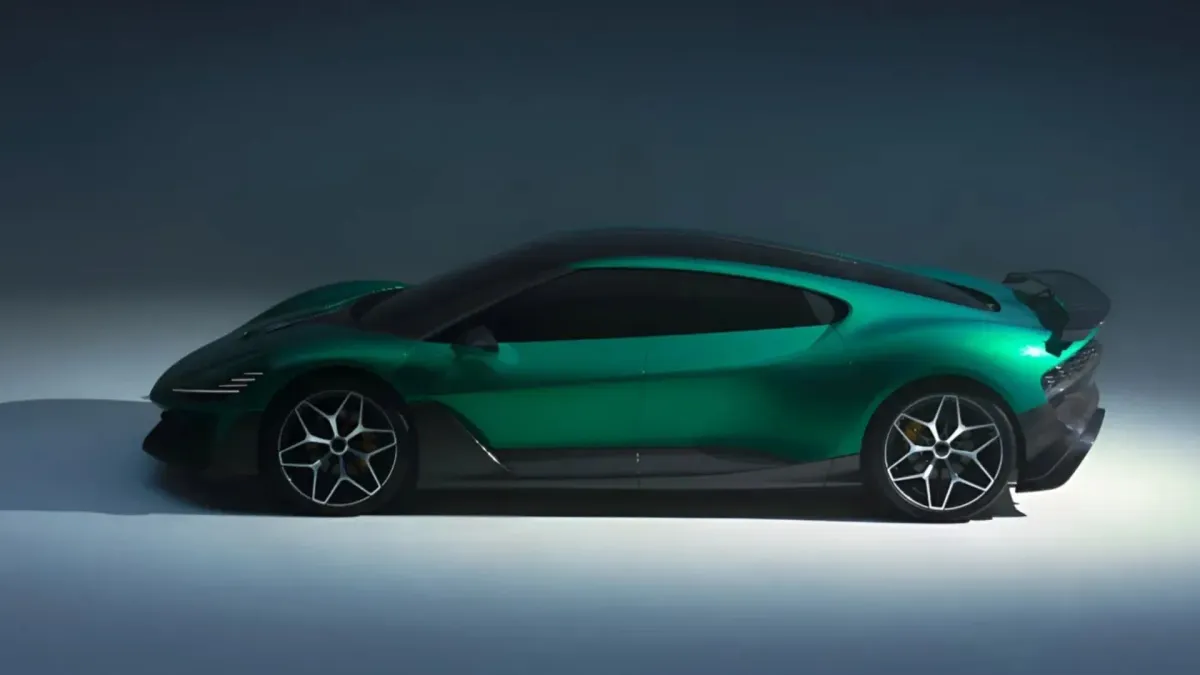
The Nebula 1 is finished in green with carbon fiber trim across the body, from the front pillars to the hood. The front end drops low and slopes toward headlights that echo modern Italian supercars rather than French hypercars. Six-spoke wheels, yellow brake calipers, and a full-width light bar at the rear underscore the performance intent. The car has no visible door handles, a design choice that may complicate Chinese market approval but signals Dreame's focus on global customers.
The Numbers That Matter
Four electric motors—one at each wheel—generate 1,399 kilowatts combined. That's 1,876 horsepower. The 1.8-second zero-to-62 time places the Nebula 1 in hypercar territory, competitive with machines that cost millions. For context, the Xiaomi SU7 Ultra (another Chinese EV) does the same sprint in 1.97 seconds, and GAC's Hyptec SSR manages 1.9 seconds. Dreame is claiming the fastest acceleration in this emerging category.
The company credits this performance to both the quad-motor setup and an active aerodynamic system—a reminder that raw power is only half the equation. The car needs to stay planted at extreme speeds, and Dreame has engineered for that.
What Happens Next
The Nebula 1 remains a concept with no revealed interior. Dreame has stated that its first production vehicle will launch in 2027. The company is also building a manufacturing plant in Berlin, Germany, in partnership with French banking group BNP Paribas—a site strategically located near Tesla's Gigafactory, a choice that makes Dreame's global ambitions unmistakable.
At CES, Dreame teased two additional vehicles: one closely related to the Nebula 1, and another with proportions suggesting a front-engined plug-in hybrid. The company is clearly planning a range, not a one-off concept.
What started as an appliance maker testing the waters of automotive has become something more deliberate. Dreame is diving into the high-stakes world of electric performance cars with the resources and ambition to compete globally. Whether the Nebula 1 reaches production, and whether it delivers on these acceleration claims, will tell us whether this pivot is genuine disruption or another overhyped concept that never makes it to the road.