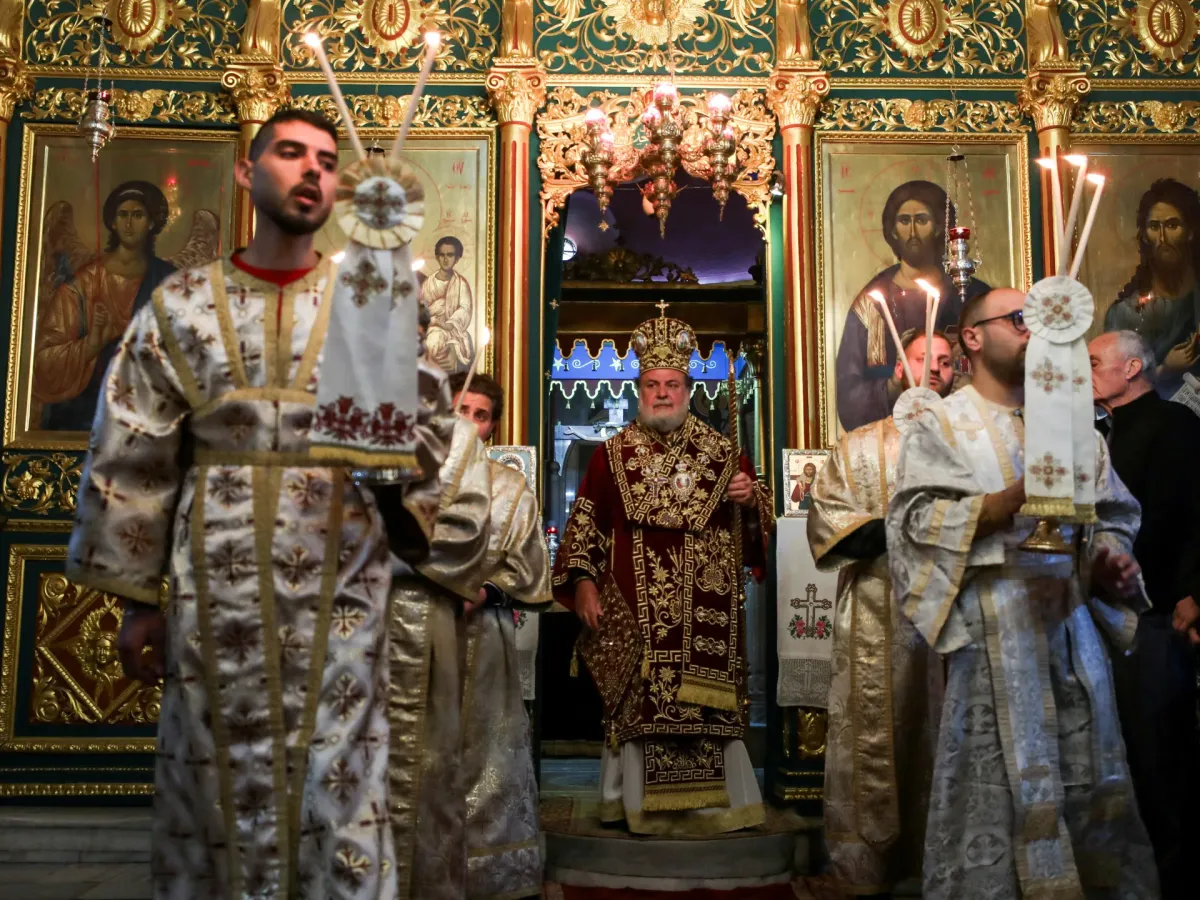
On January 7, churches across Russia, Serbia, Egypt, and Ethiopia will fill with worshippers celebrating the birth of Christ. To them, this is Christmas Day. Meanwhile, two billion other Christians marked the occasion two weeks earlier, on December 25. Both dates honor the same event. Neither group has the calendar wrong.
The split traces back to 1582, when Pope Gregory XIII introduced a reformed calendar to fix a persistent problem with its predecessor. The Julian calendar, used since Julius Caesar's time, added an extra 11 minutes to each year. Over centuries, this tiny error accumulated—the calendar drifted further and further from the actual solar year, pushing the seasons out of sync with the seasons themselves. The Gregorian calendar corrected this. Most of the world adopted it. But many Orthodox and Eastern Christian churches kept the Julian calendar to preserve their traditions, and they never adjusted the date of Christmas along with it.
So when the Julian calendar says December 25, the modern Gregorian calendar reads January 7. Same day, two different time-keeping systems.
We're a new kind of news feed.
Regular news is designed to drain you. We're a non-profit built to restore you. Every story we publish is scored for impact, progress, and hope.
Start Your News DetoxAmong the estimated 2.3 billion Christians worldwide, about 250 to 300 million follow the January 7 date. The Russian Orthodox Church represents the largest group, but the Serbian Orthodox, Georgian Orthodox, Coptic Orthodox (primarily in Egypt), and Ethiopian and Eritrean Orthodox Tewahedo churches also observe it. Ukraine historically celebrated on January 7 as well, though the government officially moved the public holiday to December 25 in 2023 to align with Western practice—a shift many Ukrainians still navigate personally.
The choice of December 25 itself wasn't based on historical certainty. No one knows the exact date Jesus was born. Early Christians selected December 25 partly because they believed Jesus was conceived on March 25, the date of the Feast of the Annunciation. That nine-month gap led them to mark his birth in late December. January 1 as New Year's Day has an even older origin: the Romans established it in 153 BC as the date when new government officials took office, long before Christianity existed.
This calendar divergence isn't unique to Christianity. Religions and cultures worldwide keep time differently. The Islamic calendar is purely lunar, comprising 354 days across 12 months, which means Islamic holidays shift relative to the Gregorian year. Jewish, Hindu, Sikh, Buddhist, and Chinese traditions use lunisolar calendars—blending lunar cycles for days with solar cycles for the broader year. The Persian and Kurdish calendars are solar, like the Gregorian one.
What looks like a contradiction—two Christmases on one calendar—is actually a reminder that the world still moves to multiple rhythms. A quarter of a billion people aren't defying the calendar. They're keeping time in a different language, one their communities have spoken for centuries.