Cancer researchers have engineered bacteria that do something counterintuitive: they thrive in the dead, oxygen-starved cores of tumors and consume them. The approach, developed at the University of Waterloo, exploits a fundamental weakness of solid cancers—their airless centers are perfect breeding grounds for specific microorganisms.
"Bacteria spores enter the tumor, finding an environment where there are lots of nutrients and no oxygen, which this organism prefers, and so it starts eating those nutrients and growing in size," says Dr. Marc Aucoin, a chemical engineering professor at Waterloo. "So we are now colonizing that central space, and the bacterium is essentially ridding the body of the tumor."
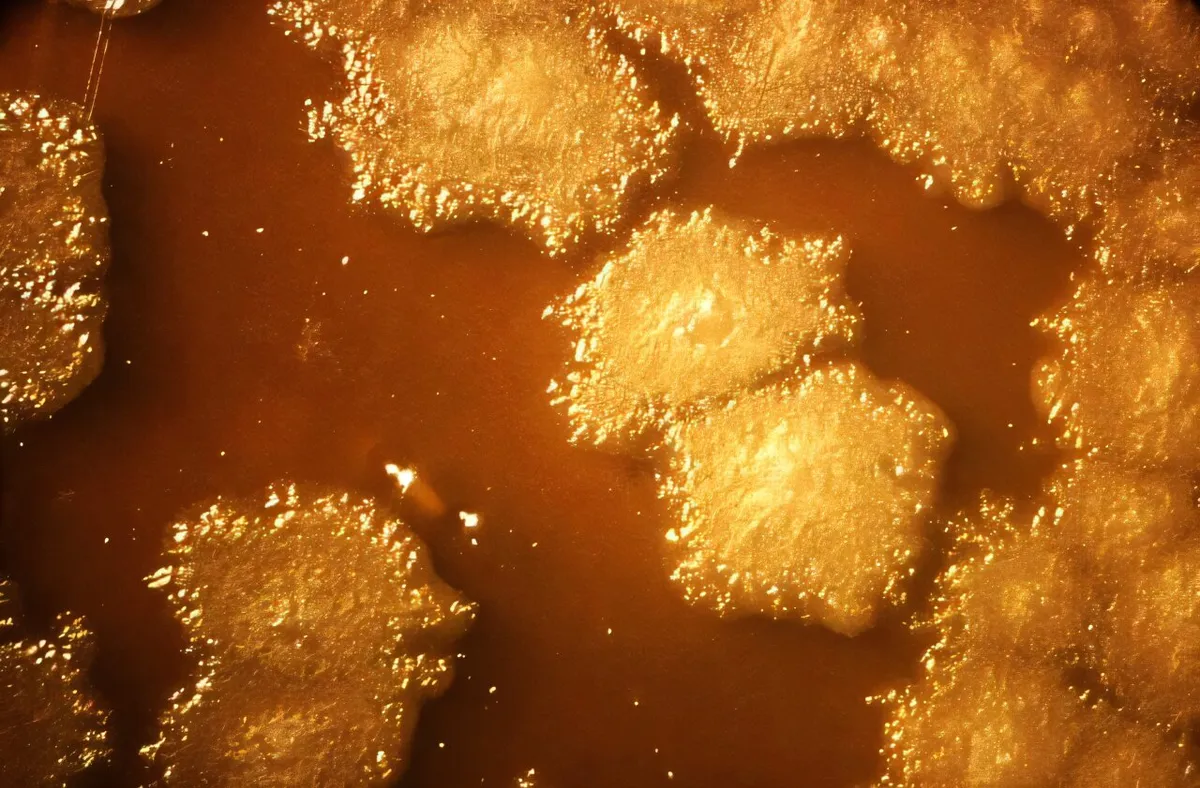
The organism at the heart of this work is Clostridium sporogenes, a bacterium commonly found in soil that lives only in oxygen-free environments. A tumor's core—dead cells, no blood flow, no oxygen—is essentially a welcome mat for this microbe. The bacteria multiply and consume the tumor tissue from within, a process that sounds like science fiction but works in principle.
We're a new kind of news feed.
Regular news is designed to drain you. We're a non-profit built to restore you. Every story we publish is scored for impact, progress, and hope.
Start Your News DetoxThere's a catch, though. When these cancer-eating bacteria reach the tumor's outer edges, where oxygen levels rise, they die. The mission goes incomplete. To solve this, the researchers engineered the bacteria with a gene from a related species that tolerates oxygen better, allowing the organisms to survive longer as they approach the tumor's boundary.
But introducing an oxygen-resistant gene creates a new risk: the bacteria could theoretically grow in oxygen-rich environments like the bloodstream, turning a treatment into a threat. The team needed a safeguard—a way to activate the oxygen-resistant gene only when conditions were right.
They used a biological process called quorum sensing, where bacteria release chemical signals that accumulate as their population grows. Once enough bacteria have multiplied inside the tumor, the signal reaches a threshold and triggers the oxygen-resistant gene to switch on. "Using synthetic biology, we built something like an electrical circuit, but instead of wires we used pieces of DNA," explains Dr. Brian Ingalls, a professor of applied mathematics at Waterloo. "Each piece has its job. When assembled correctly, they form a system that works in a predictable way."
In a 2023 study, the team showed that Clostridium sporogenes could be modified to handle oxygen. Their follow-up research, published in ACS Synthetic Biology, tested the quorum-sensing timing mechanism by engineering bacteria to produce a green fluorescent protein—essentially giving them a visible on-switch so researchers could see exactly when the system activated.
The next phase is combining both innovations—the oxygen-resistant gene and the quorum-sensing trigger—into a single bacterium and testing it against tumors in pre-clinical trials. The work builds on research by Ph.D. student Bahram Zargar and involves collaboration with a Toronto-based microbiology company co-founded by Zargar himself.
This isn't a cure yet. It's a proof of concept that's moved from theory to testable biology. But it represents a fundamentally different way of thinking about cancer: not as something to attack from outside, but as an environment to colonize from within.