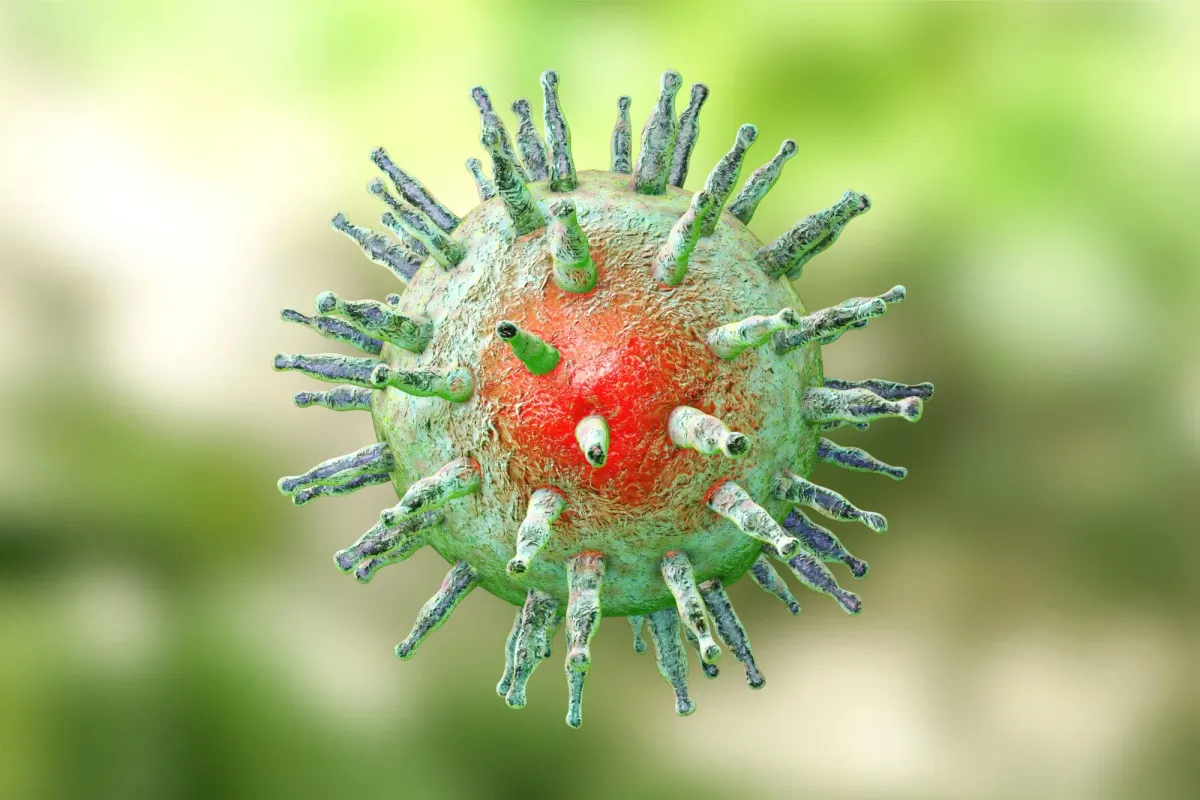
Nearly everyone on Earth carries Epstein-Barr virus. For most people, it stays dormant and harmless. But for transplant recipients—whose immune systems are deliberately weakened to prevent organ rejection—EBV can reactivate and turn deadly, triggering aggressive lymphomas that kill or disable thousands each year. Researchers at Fred Hutch Cancer Center just cleared a major hurdle toward stopping it.
The team engineered mice with human antibody genes, then used them to create fully human antibodies designed to block two critical viral proteins: gp350 and gp42. These proteins are how EBV latches onto and enters human immune cells. In lab tests, one antibody completely prevented EBV infection in mice with human immune systems. The other offered partial protection. The findings, published in Cell Reports Medicine, mark the first time scientists have successfully neutralized EBV using human-derived antibodies—a crucial step toward an actual treatment.
"Finding human antibodies that block Epstein Barr virus has been particularly challenging because EBV finds a way to bind to nearly every one of our B cells," explained Andrew McGuire, a biochemist at Fred Hutch. "We ended up taking a critical step toward blocking one of the world's most common viruses."
We're a new kind of news feed.
Regular news is designed to drain you. We're a non-profit built to restore you. Every story we publish is scored for impact, progress, and hope.
Start Your News DetoxWhy This Matters Now
Over 128,000 people receive solid organ or bone marrow transplants in the U.S. each year. All of them face a hidden risk: when their immune systems are suppressed to prevent rejection, dormant EBV can wake up and spread unchecked. The result is post-transplant lymphoproliferative disorder (PTLD)—a type of lymphoma that develops in roughly 1–2% of transplant recipients and carries a grim prognosis. Some patients survive; others don't. Currently, there's no reliable way to prevent it.
Children undergoing transplants face especially high stakes. Many haven't yet encountered EBV naturally, so they lack any built-in immunity. If the virus takes hold, the only option is often to reduce the immunosuppressive drugs—risking organ rejection—or treat the cancer itself, which can be brutal.
The antibodies McGuire's team developed could change that calculus. The idea is straightforward: infuse these antibodies into high-risk patients before or after transplant to block EBV from infecting or reactivating. Prevent the virus, prevent the cancer.
The Technical Challenge They Solved
EBV is slippery. Unlike many other viruses, it's evolved to bind with almost every type of human B cell, making it nearly impossible to find antibodies that stop it without triggering an immune backlash against the antibody itself. Previous attempts using animal-derived antibodies ran into this wall: patients' immune systems would attack the foreign antibodies, rendering them useless.
The solution was to use transgenic mice engineered with human antibody genes. These mice could produce fully human antibodies—antibodies that a patient's immune system wouldn't recognize as foreign. The team generated two antibodies targeting gp350 and eight targeting gp42, then tested them in mice with human immune systems. One gp42-targeting antibody showed complete protection. Another against gp350 showed partial protection. The approach itself—using humanized mice to discover human antibodies—is now validated as a tool for other intractable viruses too.
What Comes Next
Fred Hutch has filed for patent protection on the antibodies. McGuire and his team are now working with academic partners and an industry collaborator to move toward human trials. Safety testing in healthy volunteers comes first. If that succeeds, transplant recipients will be next.
The path from lab breakthrough to clinic is never guaranteed. But for the first time, there's a credible path forward for something that has eluded medicine for decades: a way to stop EBV before it becomes lethal.