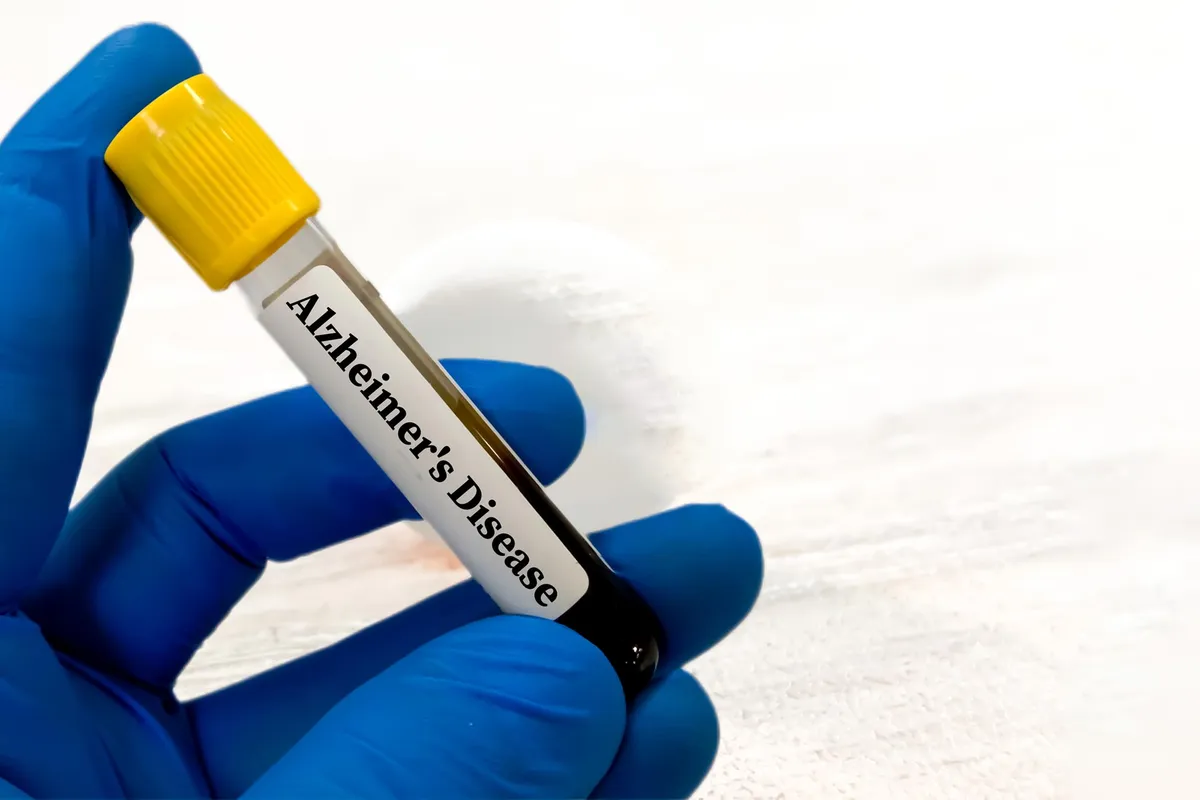
A single blood test can now estimate when someone will start showing signs of Alzheimer's disease — a breakthrough that could reshape how doctors approach prevention and clinical trials.
Researchers at Washington University School of Medicine developed predictive models that measure a protein called p-tau217 in blood plasma. By analyzing this protein's levels, they can forecast symptom onset with surprising precision: within about three to four years. For a disease that often arrives unannounced, that window of warning changes everything.
The team examined data from 603 older adults living independently to understand the timeline. They discovered something important: younger brains tolerate Alzheimer's-related changes longer than older ones. A 50-year-old with elevated p-tau217 might have years before symptoms emerge, while a 75-year-old with the same protein level could show decline much sooner. That distinction matters enormously for treatment planning.
We're a new kind of news feed.
Regular news is designed to drain you. We're a non-profit built to restore you. Every story we publish is scored for impact, progress, and hope.
Start Your News DetoxWhy This Matters Now
For decades, Alzheimer's research has been hampered by a cruel timing problem. By the time symptoms appear and someone gets diagnosed, significant brain damage has already occurred. Clinical trials for preventive drugs struggle because they need to track people for years to see if treatment actually delays decline.
This blood test rewrites that equation. Doctors could identify people at genuine risk of developing symptoms in the next few years — the exact window when preventive treatments might work best. That specificity makes clinical trials faster and cheaper, and it means fewer people get enrolled in studies where they might not benefit.
The researchers tested their model across multiple p-tau217 tests to ensure it works reliably, then did something notably generous: they released their code publicly and built a free web application so other scientists can test and refine the approach. That kind of openness accelerates the entire field.
Lead researcher Kellen K. Petersen noted the practical trajectory: "With further refinement, these methodologies have the potential to predict symptom onset accurately enough that we could use it in individual clinical care." Right now, the tool works best in research settings. But the path from research to clinic is becoming visible.
This work emerged from the Foundation for the National Institutes of Health Biomarkers Consortium, a public-private partnership designed to move discoveries like this from lab to real-world use. The findings appear in Nature Medicine.
The next phase involves testing whether this predictive window actually helps doctors intervene before decline begins — a question that will take years to answer, but one that suddenly feels answerable.